
Iranian officials carried out the executions of three young men this week, including a 19-year-old wrestling champion, sparking concerns among international human rights organizations that authorities may be launching a broader campaign of state killings targeting protesters.
The deaths of these three individuals mark the initial executions from the tens of thousands of people detained during Iranian security forces’ January suppression of widespread demonstrations. Human rights advocates warn that more than 100 additional protesters may be facing potential death sentences.
Saleh Mohammadi, the teenage wrestler, was executed alongside Mehdi Qasemi and Saeed Davoudi early Thursday morning in the city of Qom, located south of Tehran, according to Iranian state media reports. The trio had received death sentences under charges of “moharabeh,” translated as “waging war against God,” for their alleged involvement in the deaths of two police officers during demonstrations in their city.
Amnesty International condemned the convictions, stating the three men and others detained during the protests were subjected to “grossly unfair trials” where authorities used confessions obtained through torture.
According to Mahmood Amiry-Moghaddam, who directs the Oslo-based Iran Human Rights organization, the executions were “intended to instill fear in society and deter new protests” during the ongoing U.S.-Israeli military campaign against Iran.
Amiry-Moghaddam expressed concern that numerous additional “executions of protesters and political prisoners may be imminent.”
His organization has verified at least 27 death sentences handed down to individuals arrested during the demonstrations. An additional 100 people face charges carrying potential death penalties, while Iranian state television has broadcast hundreds of coerced confessions to capital crimes, according to Amiry-Moghaddam.
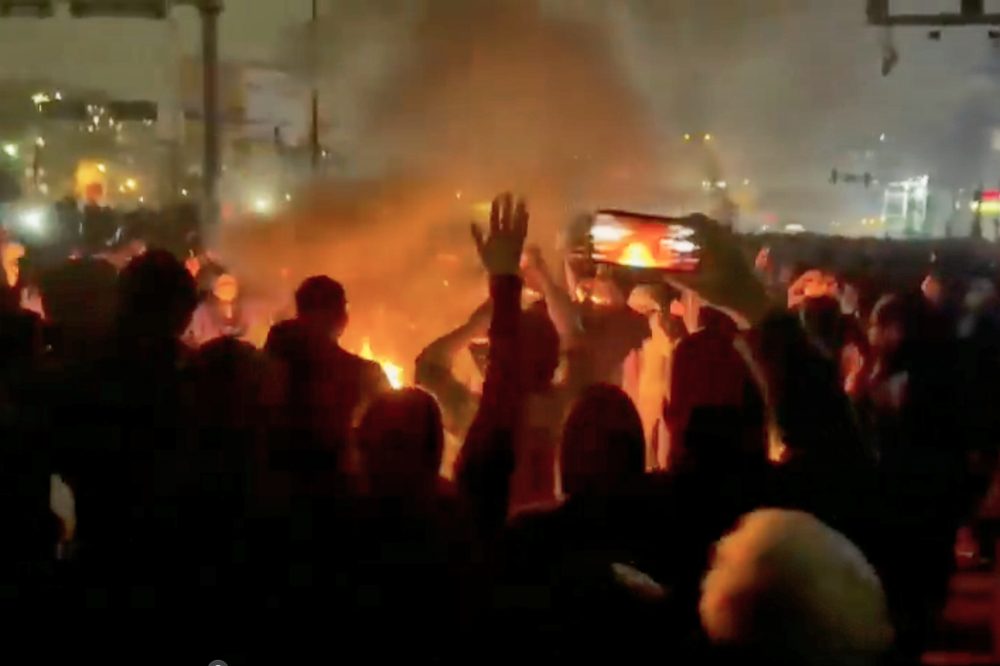
The nationwide demonstrations that started in late December reached their peak during January’s first week, triggering the most lethal government response since the Islamic Republic’s establishment in 1979.
Determining an accurate casualty count has proven difficult due to government-imposed internet restrictions. The U.S.-based Human Rights Activists New Agency, which maintains contacts throughout Iran, confirmed more than 7,000 deaths while investigating thousands of additional cases. The organization reported over 50,000 arrests within just six weeks. Iranian officials acknowledged more than 3,000 fatalities.
During the protest movement’s height, Iranian leadership indicated that rapid trials and executions would follow.
U.S. President Donald Trump had suggested military intervention might be necessary to halt the violent crackdown. However, he later announced that he had learned execution plans were suspended, indicating military action was no longer being considered.
One month afterward, Israel and the United States began an intensive aerial bombing campaign against Iran, striking military facilities and targeting senior political and security officials. The security agencies believed responsible for the protester crackdown are also being attacked.
Even during wartime, Iranian authorities have maintained their suppression of dissent. Officials report dozens of additional detentions since the war commenced on February 28, including some who participated in January’s protests.
Due to Iran’s internet shutdown, limited information is available about Thursday’s executed men. Amiry-Moghaddam noted that Davoudi was born March 20, 2004, meaning his execution occurred one day before his 22nd birthday. Qasemi’s age remains unknown.
Mohammadi had distinguished himself in wrestling, an extremely popular sport throughout Iran. He earned a bronze medal in 2024 at an international youth freestyle wrestling competition held in Krasnoyarsk, Russia.
His Instagram profile featured photographs and videos from competitions and training sessions, accompanied by motivational messages about perseverance. His final post in late December showed him exercising at a gym with the caption: “We endured beyond our imagination. Back again #bodybuilding #training #wrestling.”
“He was full of energy,” recalled Shiva Amelirad, an Iranian educator now living in Toronto who had spoken with Mohammadi in 2022 during his high school years.
Amelirad explained that Mohammadi had joined anti-government demonstrations that erupted earlier that year following Mahsa Amini’s death in police custody after her detention for improper headscarf wearing. Those protests also faced severe government suppression.
She said Mohammadi shared that exercise and eating ice cream were his only methods “to forget all this catastrophe that we are facing.”
“He always tried to show that he was happy,” Amelirad remembered.
Multiple human rights organizations report that Mohammadi, Qasemi and Davoudi were arrested in Qom on January 15. The details surrounding their arrests remain unclear, and it’s unknown whether they were previously acquainted.
They faced charges in connection with a police officer’s killing on January 8 and received convictions in early February, according to both Amnesty and Iran Human Rights.
While detained, Mohammadi suffered beatings and had one hand broken, Amnesty reported in a February 19 public letter to Iran’s judiciary criticizing the prosecution of numerous arrested demonstrators. Amnesty stated that Mohammadi rejected the charges and withdrew his confessions in court, claiming they were obtained through torture.
“Authorities have systematically subjected those arrested in connection to the protests to enforced disappearance, incommunicado detention, torture to extract forced ‘confessions,’” Amnesty stated in their letter.
Mizan, the Iranian judiciary’s official news outlet, confirmed Thursday’s executions of the three men, broadcasting footage of them wearing prison clothing in court. The agency claimed they had admitted to killing two police officers using “knives and swords,” and displayed video purporting to show them recreating the killings for court officials.
Amiry-Moghaddam from Iran Human Rights said the Islamic Republic is fighting for survival “and is well aware that the main threat to its existence comes not from external actors, but from the Iranian people demanding fundamental change.”