
CAPE CANAVERAL, Fla. — A last-ditch effort to save a NASA space telescope has hit yet another snag, this time due to a technical problem that surfaced at the worst possible moment.
Northrop Grumman’s specially equipped rocket-carrying aircraft lifted off from the Marshall Islands in the Pacific Ocean on Thursday, after being grounded by weather conditions throughout the week. However, once airborne, a malfunction prevented the crew from dropping the Pegasus rocket that was secured beneath the plane, NASA confirmed.
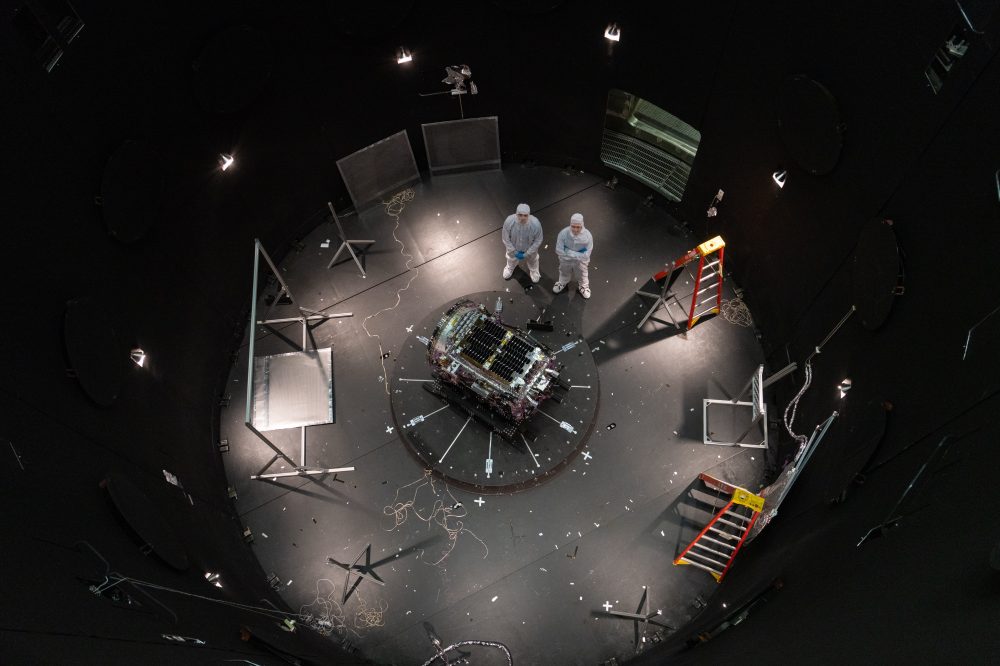
That Pegasus rocket is carrying a three-armed robotic vehicle, built by Katalyst Space Technologies, that was designed to latch onto the Swift Observatory and boost it back into a stable orbit. Without intervention, the aging telescope is expected to fall back to Earth by October. As of now, no new launch attempt has been scheduled.
NASA had already suspended Swift’s scientific operations earlier this year in an effort to keep the telescope in orbit as long as possible. Since its launch back in 2004, Swift has identified thousands of gamma ray bursts and stellar explosions, alerting other observatories to follow up with more in-depth study.
Eager to keep Swift’s cosmic surveillance going, NASA contracted Katalyst Space last September to carry out the $30 million rescue effort.