TOKYO, April 21 – Japan announced Tuesday a sweeping transformation of its defense export policies, marking the most substantial change in decades by eliminating barriers that previously restricted overseas weapons sales and clearing the path for international sales of warships, missiles and military equipment.
This policy shift represents Japan’s continued departure from the pacifist constraints that have defined its post-World War II security approach, as the nation works to strengthen its defense manufacturing sector.
Global conflicts in Ukraine and the Middle East have stretched American weapons manufacturing capabilities, creating new market opportunities for Japanese defense contractors. Meanwhile, U.S. partners across Europe and Asia are seeking to diversify their military supply chains amid uncertainty about Washington’s security guarantees under President Donald Trump’s administration.
Reuters has learned from Japanese officials and diplomatic sources that nations from Poland to the Philippines are investigating potential procurement deals as they upgrade their military capabilities. Sources indicate that among the initial transactions could involve selling used naval vessels to Manila.
Prime Minister Sanae Takaichi’s administration approved modifications that eliminate five export restrictions which had previously confined most military sales to rescue, transport, warning, surveillance and mine-clearing equipment. Going forward, ministers and officials will evaluate each proposed sale individually.
Japan will maintain three core export principles requiring rigorous vetting, oversight of third-party transfers, and prohibitions on sales to nations engaged in conflicts. However, government presentations indicate exceptions may be granted when considered essential for national security interests.
The nation anticipates these defense exports will fortify its industrial foundation by increasing production volumes, reducing individual unit costs, and creating manufacturing capacity that could be utilized during military emergencies.
Defense companies like Mitsubishi Heavy Industries possess capabilities to manufacture sophisticated systems including submarines, fighter jets and missile systems, but have historically depended on limited orders from Japan’s Self-Defense Forces as their sole customer.
Japan continues pursuing historic military expansion efforts, acquiring missiles, stealth aircraft and unmanned systems officials say are essential to counter potential threats from neighboring China to Japanese territory, particularly around islands along the East China Sea near Taiwan.
Beijing maintains its regional and global intentions remain peaceful.
Tokyo is also collaborating with Britain and Italy on developing next-generation fighter aircraft for mid-2030s deployment, representing a strategy to share development expenses and access emerging technologies.
Japan has progressively increased defense expenditures to reach 2% of GDP in recent years, with Takaichi’s government expected to announce additional increases when releasing its new security strategy this year.
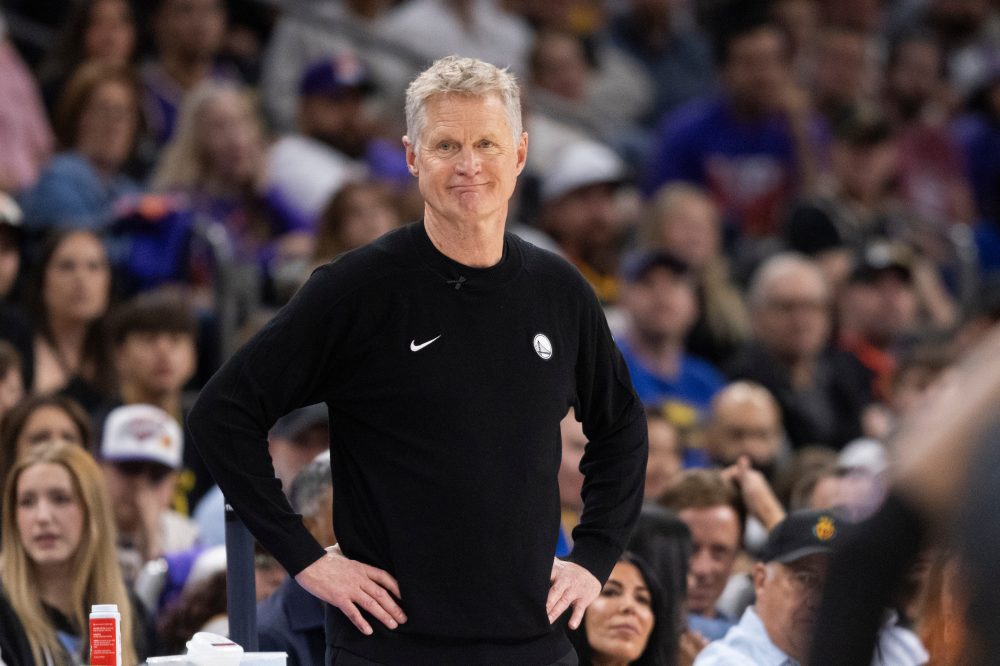
SAN FRANCISCO — Golden State Warriors star Draymond Green shared his doubts about head coach Steve Kerr’s future with the team during his podcast appearance Monday, suggesting the veteran coach may not return for another season.
“I hope he’s our coach next year. You want my opinion? I think not, just because it just feels like that, it felt like that was it,” Green stated on “The Draymond Green Show.” “I also hope I’m on this team next year. We also don’t know that.”
The Warriors organization faces an uncertain summer after their season concluded with a 111-96 defeat to Phoenix in the play-in tournament, leaving many questions about the team’s direction moving forward.
Kerr recently finished a two-year deal valued at $35 million with the franchise.
During his dozen seasons with Golden State, the 60-year-old coach has captured four NBA titles, though this past season proved challenging with season-ending injuries to Jimmy Butler and Moses Moody, plus Stephen Curry’s extended absence. The Warriors managed only a 10th-place finish in the Western Conference standings. While they defeated the Los Angeles Clippers in their initial play-in matchup, Friday’s loss in Phoenix ended their championship hopes.
Following that final game, Kerr gathered Curry and Green near the sideline, telling them: “I don’t know what’s gonna happen next, but I love you guys to death and I thank you. I appreciate you.” The heartfelt moment was later shared by the NBA on social platforms, though Kerr hadn’t anticipated the public nature of the exchange.
“I’ve never been so uncertain since early in my career on what happens next, but I’m truly at a loss now because you just don’t know what direction will be what,” Green explained. “Steph, myself, Steve, shared a moment in what could be our last time playing with Steve as our coach. I’m happy we got to share that moment and he didn’t miss the moment. It was a big deal.”
Young forward Gui Santos expressed his desire to see the core group remain intact.
“They did so much for the organization. Steve, Steph, Draymond, all of them are a big part of the organization,” Santos commented. “I love being coached by Steve. Draymond, I love having Draymond on the team. Steph, I don’t need to say nothing about him. Steph is Steph. It would be great to have all of them together next year, too.”
The trio has worked together throughout Kerr’s entire tenure with the Warriors. His overall coaching record stands at 604-353, while his postseason mark of 104-48 ranks among the elite. With a .684 playoff winning percentage among coaches who have led at least 100 postseason contests, Kerr trails only his former Chicago Bulls mentor Phil Jackson, who posted a .688 mark with a 229-104 record.
Following Friday’s elimination, Kerr indicated he would sit down with Warriors owner Joe Lacob and general manager Mike Dunleavy within the next couple of weeks.
“We’ll talk about what’s next for the Warriors, what the plan is this offseason,” Kerr explained. “And we will come to a collaborative decision on what’s next. I don’t know what’s going to happen. I still love coaching. But I get it. These jobs all have an expiration date. There’s a run that happens, and when the run ends, sometimes it’s time for new blood and new ideas and all that.”
“And, if that’s the case, then I will be just nothing but grateful for the most amazing opportunity any person could have to coach this franchise, in front of our fans in the Bay and to coach Steph Curry, to coach Dray and the whole group.”
While Santos and other Warriors players conducted their season-ending meetings with Kerr on Monday at Chase Center, many found it difficult to envision the organization’s future without his leadership.
“I owe Steve everything,” guard Pat Spencer shared. “He’s been like a second father to me since I’ve been here as far as just giving me guidance day in and day out.”
Los Angeles Dodgers relief pitcher Edwin Díaz faces a three-month absence after the team revealed Monday he needs elbow surgery to clear loose debris from the joint.
Díaz will go under the knife Wednesday at Los Angeles’ Kerlan-Jobe Orthopedic Clinic, with his return not anticipated until the season’s latter half.
The organization moved the 32-year-old right-handed pitcher to the 15-day injured list while bringing up southpaw Jake Elder from their Triple-A affiliate in Oklahoma City. Elder joined the Dodgers organization on April 1 in a cash transaction with Washington and has surrendered just two runs across 5 1/3 innings at Oklahoma City this year.
This season, Díaz carries a 1-0 record alongside a troubling 10.50 ERA, recording 10 strikeouts and converting four of five save chances through seven outings. His struggles peaked during Sunday’s 9-6 defeat in Colorado, where he surrendered three runs before being pulled without recording an out. Over his last two appearances, he has given up three earned runs in each outing.
The Dodgers committed significant resources to acquire the three-time All-Star last December, signing him to a three-year, $69 million contract after he walked away from his remaining two years and $38 million with the New York Mets.
The back-to-back World Series champions were scheduled to wrap up their four-game set against Colorado on Monday evening before heading to San Francisco for a Tuesday series opener as part of their seven-game road swing.
Every morning, preschool teacher Angela Hall begins her day by having her students sit in a circle at their Shreveport, Louisiana classroom. The children laugh together, share stories, and notice which friends aren’t present.
On Monday, one student observed: “Braylon, he’s not here,” Hall remembered.
Five-year-old Braylon Snow was among eight family members — seven siblings and their cousin — who died Sunday when their father opened fire in a tragic shooting that has devastated the Shreveport community and left educators struggling with grief.
At the Johnnie L. Cochran Head Start center where Hall teaches, students typically spot absent classmates right away during their daily routine of checking for missing friends.
“When they come back tomorrow, we can tell them, ‘Hey, we missed you, we’re glad you’re back,’” Hall explains to her students during this exercise.
However, Hall found herself unable to explain to the children that the boy she fondly called a “cool little dude” would never be coming back. She continued with the morning routine but, overwhelmed with grief, had to leave at midday.
“I’m no good to my babies right now because I just feel like I need to be in a moment of silence and just pray,” she explained.
The Head Start program has been busy preparing for graduation ceremonies scheduled for next month. Hall, who plays organ and piano at her Baptist church, composed a special song for the event.
The young students have been practicing in their caps and gowns, eagerly anticipating their transition to kindergarten this fall. Hall had been working diligently to ensure all her students were prepared for this milestone.
During Thursday’s morning arrival, Hall had excitedly told Braylon’s mother about his progress, sharing how he was now writing both his first and last names. The boy had also become more self-sufficient, pouring syrup on his pancakes independently and remembering to wash his hands without prompting.
“Braylon doesn’t give me any problems,” she had told his mother just days earlier.
Each day, Braylon would greet Hall — whom students called “Mrs. Hall” — with a gentle wave.
Throughout the school year, she had coaxed more smiles from the boy. He enjoyed outdoor playtime, engaging in games of chase and tag, and even some “a little wrassling,” which made her chuckle to recall.
“He was for the majority of the time kind of a quiet little soul in the classroom,” she reflected. “When he did get a little extra energy or something, it was just a joy to see him smile and laugh.”
Sunday changed everything. After attending church services, Hall visited her mother’s home, where she discovered news coverage of the shooting.
The massive scale of casualties initially seemed incomprehensible to her. When she learned Braylon was among the victims, along with one of his brothers who had attended Head Start the previous year, the reality hit hard.
“I just broke down and just started crying,” she said.
Monday morning brought another emotional moment when she made eye contact with a parent during drop-off. With young children present, neither adult could speak about what had happened.
“I just immediately broke down,” she recalled. The parent and a teaching assistant also became emotional.
Hall is now turning to her religious faith for comfort, praying for the victims, their families, and fellow educators.
“And I’m just praying for all the educators that were connected to these children because it’s tough because my parents’ babies, they become my babies. And I treat them like they’re my own. So I’m just really praying that he sustains us all during this time.
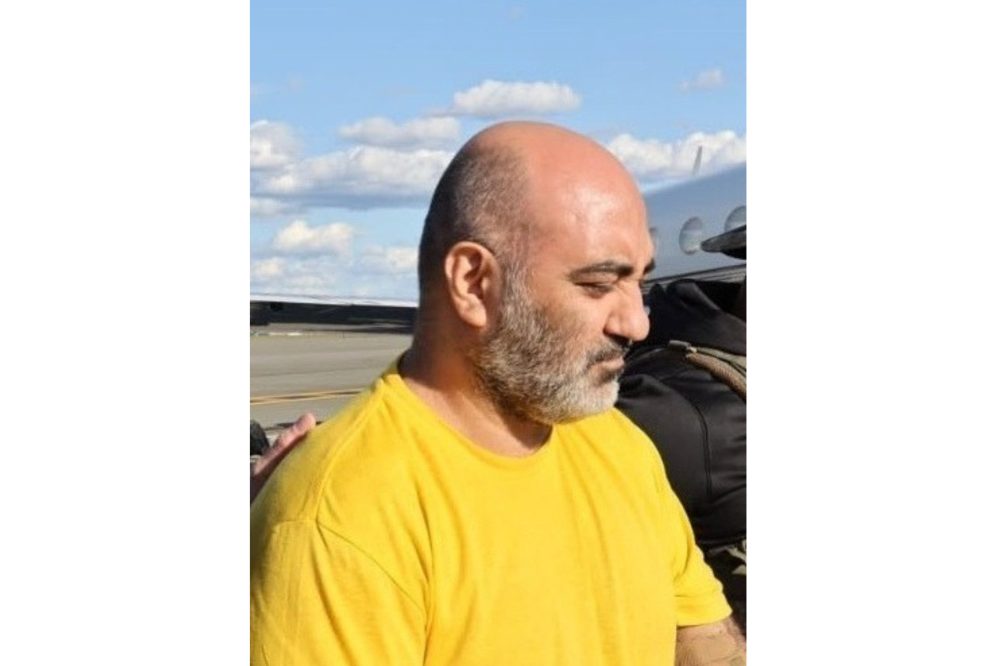
SEATTLE — A 44-year-old Iranian national has arrived in Seattle to face charges stemming from a decade-old case involving the illegal shipment of military sonar technology to Iran, federal authorities announced Monday.
Reza Dindar faces multiple charges including conspiracy, smuggling and money laundering after being indicted in 2014. U.S. authorities requested his arrest in Panama last July, and he was transported to Seattle on Thursday, according to the Department of Justice. Officials have not disclosed Dindar’s whereabouts during the years between his indictment and arrest.
Dindar appeared before a U.S. District Court judge Monday afternoon, with his formal arraignment scheduled for May 1. His legal representative, Farhad Alavi, declined to provide statements to The Associated Press on Monday.
Federal prosecutors allege that Dindar operated New Port Sourcing Solutions, a business based in Xi’an, China. The recently unsealed indictment details how Dindar and co-conspirators allegedly deceived a Washington state company in 2011 and 2012 to acquire components for three military sonar systems. Authorities say the group hid the equipment’s final destination and falsely claimed export licenses were unnecessary.
The sonar systems, valued at $97,600, were initially delivered to China before being secretly transported to Iran, violating U.S. trade restrictions first established in 1995 and extended in 2001, according to court documents.
In a separate incident, federal authorities announced the Saturday evening arrest of a 44-year-old Los Angeles woman at LAX airport. She faces allegations of assisting Iran in weapons trafficking to Sudan, which continues to experience civil conflict in its fourth year.
A California man has entered a guilty plea in connection with a devastating wrong-way collision that resulted in the death of a Los Angeles County sheriff’s recruit and left numerous others injured during a training exercise.
Nicholas Gutierrez, 25, of Diamond Bar, California, admitted guilt on Monday to charges including vehicular manslaughter with gross negligence and nine counts of reckless driving causing injuries, according to the Los Angeles County District Attorney’s Office. The court sentenced him to an eight-year suspended prison term along with five years of probation.
The incident occurred over three years ago in 2022 when Gutierrez’s SUV crossed into oncoming traffic in the Whittier area, striking 25 law enforcement recruits who were participating in a morning training run. At the time of the collision, 76 recruits from the Los Angeles Sheriff’s Department and various local police departments were running together in formation along the roadway.
Investigators concluded that Gutierrez had apparently dozed off behind the wheel before the crash occurred. The collision left ten recruits with severe injuries, including Alejandro Martinez, who succumbed to his injuries eight months following the incident.
Los Angeles County District Attorney Nathan J. Hochman described the guilty plea as representing “a step toward justice and a measure of closure for the victims and their families whose lives have been forever changed.”
Efforts to reach Gutierrez’s former defense attorney, Alexandra Kazarian, for comment were unsuccessful.
For the first time in the 41-year history of the NBA Defensive Player of the Year award, a player has achieved perfect unanimity in the voting process.
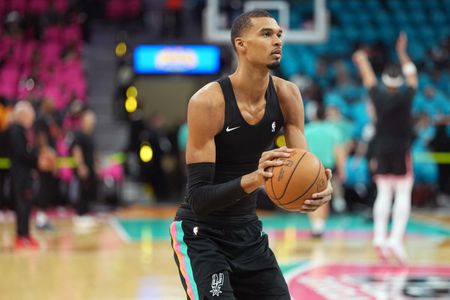
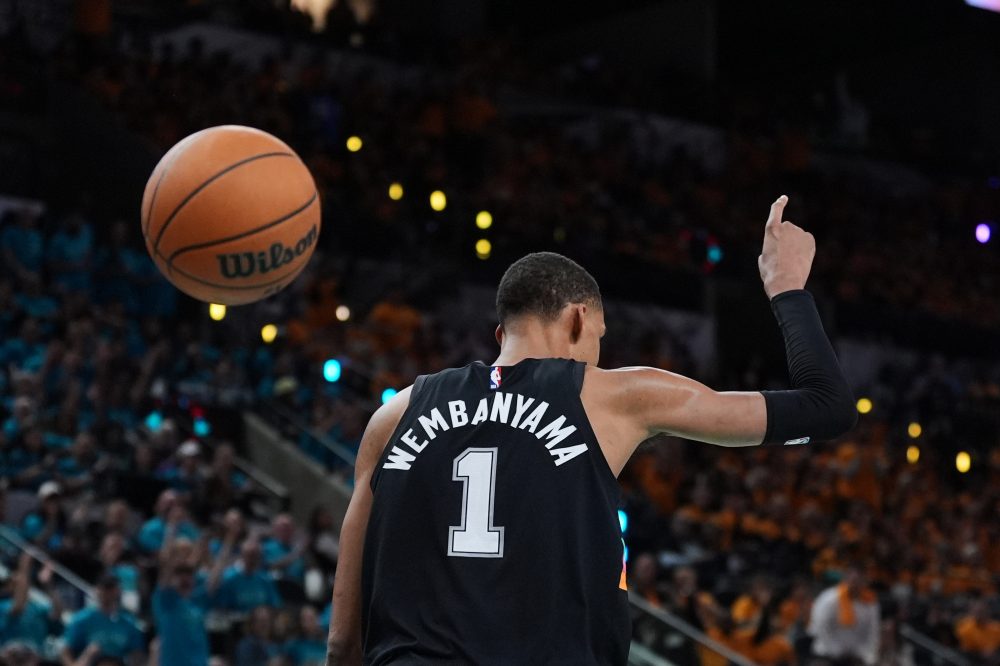
San Antonio Spurs center Victor Wembanyama made basketball history Monday when the NBA revealed he captured all 100 first-place votes to claim the defensive honor without a single dissenting ballot.
At 22 years and 98 days old, Wembanyama becomes the youngest recipient of this prestigious recognition while also marking his third consecutive season leading the NBA in blocked shots with 3.1 per contest.
The two-time All-Star posted personal bests this season with 25.0 points and 11.5 rebounds per game, adding one steal per contest as San Antonio posted the league’s second-best record at 62-20 and ranked third in defensive efficiency.
With his perfect 500-point voting total, Wembanyama joins Spurs legend David Robinson as the only players since the 1991-92 campaign to capture the award within their initial three NBA seasons.
This achievement extends an impressive organizational legacy, as San Antonio now boasts four different Defensive Player of the Year winners across five total awards: Alvin Robertson in 1986, Robinson, Kawhi Leonard in both 2015 and 2016, and now Wembanyama – more than any other franchise in league history.
Oklahoma City Thunder’s Chet Holmgren claimed second place with 239 points, earning 76 second-place selections, while Detroit Pistons’ Ausar Thompson finished third with 60 points from nine second-place votes. Minnesota’s Rudy Gobert received 41 points for fourth place, followed by Toronto’s Scottie Barnes with 21 points.
Trail Blazers head coach Tiago Splitter praised the young star’s impact following San Antonio’s 111-98 playoff victory over Portland on Sunday. “He changes the game so much,” Splitter said after watching Wembanyama establish a franchise playoff debut record with 35 points while contributing two blocks defensively.
Los Angeles Dodgers relief pitcher Edwin Diaz faces a lengthy recovery after team officials announced Monday he will need surgical intervention on his throwing arm.
The 32-year-old closer is scheduled for an operation Wednesday at the Kerlan-Jobe Orthopedic Clinic in Los Angeles to extract loose bone fragments from his right elbow. Medical staff anticipate Diaz won’t return to action until the latter portion of the 2025 season.
Team management has moved Diaz to the 15-day injured list while bringing up left-handed pitcher Jake Eder from their Triple-A affiliate in Oklahoma City.
The veteran reliever, who earned All-Star recognition three times during his tenure with Seattle (2018) and the New York Mets (2022, 2025), joined the Dodgers organization this year. Through seven outings in his debut season with Los Angeles, Diaz has recorded one victory and four saves, though he’s struggled with a concerning 10.50 earned run average after surrendering seven runs across six innings of work.
His statistical troubles reached a peak during Sunday’s contest against Colorado, when he allowed three runs on three hits without recording a single out during the eighth inning.
Throughout his nine-year professional career that began with Seattle in 2016, Diaz has compiled a 29-36 record with a 2.91 ERA over 527 relief appearances. The right-hander has accumulated 849 strikeouts while issuing 187 walks in 525 1/3 innings pitched.
Meanwhile, the newly recalled Eder brings limited major league experience at age 27. The southpaw made his big league debut last season with Chicago, appearing in one game before logging eight appearances with the Los Angeles Angels in 2025. His major league statistics show an 0-1 record with a 4.87 ERA, while posting a 3.38 ERA through three games and 5 1/3 innings at Oklahoma City this season.
Drivers traveling northbound on Interstate 95 should expect delays tonight due to ongoing construction work that has shut down two left lanes.
The Delaware Department of Transportation reports that the lane closures affect the stretch of I-95 North between Route 1 and Airport Road. Traffic restrictions are scheduled to remain in effect until 1:00 AM.
Motorists are advised to allow extra travel time and use caution when passing through the work zone area.
NBA history was made Monday when Victor Wembanyama achieved something no player had ever done before: earning every single vote for Defensive Player of the Year.
The San Antonio Spurs center’s unanimous selection was widely anticipated after a dominant defensive season. The 7-foot-4 phenom previously finished runner-up for the award as a rookie and was favored to win last season before a medical issue cut his campaign short.
Wembanyama, who won’t turn 23 until January, becomes the youngest player ever to claim the defensive honor.
“The real struggle might have been getting to 65 games,” Wembanyama said on NBC Sports Network, referencing the minimum games required for award consideration. “But I’m super, super happy to win this award and actually super proud to be the first-ever unanimous.”
Oklahoma City’s Chet Holmgren finished second in voting, while Detroit’s Ausar Thompson took third place, both helping their teams earn top playoff seeds. However, the outcome was never truly in question after Wembanyama dominated shot-blocking statistics for his third straight season and consistently disrupted opposing offenses.
“Best player in the world,” declared Spurs teammate Keldon Johnson.
The league will announce its Clutch Player of the Year award Tuesday, with finalists including Minnesota’s Anthony Edwards, Oklahoma City’s Shai Gilgeous-Alexander, and Denver’s Jamal Murray. Wembanyama also remains in contention for MVP, with that announcement scheduled for next week at the earliest.
Monday’s announcement brought several historic milestones along with Wembanyama’s victory.
Previous winners had all been at least 23 years old when they claimed the award, making Wembanyama the youngest by nearly a full year.
The Spurs organization now boasts four different Defensive Player of the Year winners since the award’s inception in 1982-83. Alvin Robertson won in 1986, David Robinson in 1992, and Kawhi Leonard captured back-to-back honors in 2015 and 2016.
Wembanyama joins Robinson and Michael Jordan as the only players in league history to win both Rookie of the Year and Defensive Player of the Year during their careers.
“I’ve had the chance to have great coaches over my career who have taught me great habits on defense,” Wembanyama said.
Perhaps most remarkably, Wembanyama achieved complete consensus among voters – a rare feat in professional sports awards.
Stephen Curry’s unanimous MVP selection in 2016 was the last time every voter agreed on a major award. In the decade since, only two other instances of 100% first-place vote agreement have occurred: Wembanyama’s Rookie of the Year win in 2024 and now this defensive honor.
No player in at least five decades has claimed two major individual awards unanimously, making Wembanyama’s achievement even more extraordinary. Historical voting records show this level of consensus is unprecedented, with even legendary players like LeBron James and Michael Jordan never achieving unanimous recognition for major awards.
The unanimous selection represents just the tenth known instance across all major NBA awards including MVP, Rookie of the Year, Sixth Man, Most Improved Player, Defensive Player of the Year, and Coach of the Year.
“I feel like he is one of the hardest workers that I’ve ever been around,” Johnson said. “He takes his craft very seriously. I feel like this is just a small token of what’s to come for Victor. He’s a special player now. He’s a special player on the court and even more special person off the court as well. This is just a small token, small flowers that’s given to him for Defensive Player of the Year.”
Both Holmgren and Thompson received their first career votes for the award. A panel of league reporters and broadcasters submitted ballots ranking their top three choices, with voting completed before playoff action began.
Minnesota’s Rudy Gobert, a four-time winner, placed fourth in this year’s voting. The remaining top ten included Toronto’s Scottie Barnes, Boston’s Derrick White, Oklahoma City’s Cason Wallace, Houston’s Amen Thompson, Atlanta’s Dyson Daniels, and New York’s OG Anunoby.
Detroit’s Jalen Duren, Golden State’s Draymond Green (2017 winner), and Miami’s Bam Adebayo shared eleventh place in the final tally.
As an MVP finalist alongside Oklahoma City’s Shai Gilgeous-Alexander and three-time winner Nikola Jokic of Denver, Wembanyama appears likely to earn All-NBA first-team recognition. Combined with his guaranteed All-Defensive team selection, the French star will collect at least four major honors from this award season.
“We often overlook the team aspect,” Wembanyama said. “I’m sitting here. I happen to be the guy who’s put in the spotlight, but I am part of a system and I couldn’t get this award and I couldn’t do what I do if it wasn’t for my teammates … and my coaching staff.”
Federal prosecutors have launched legal action against Washington DC and its water utility following a catastrophic sewage pipeline failure that released hundreds of millions of gallons of untreated waste into the Potomac River earlier this year.
The Justice Department filed the federal court action Monday targeting both the District of Columbia and DC Water over the environmental disaster that occurred when a massive 72-inch sewer main known as the Potomac Interceptor ruptured on January 19th. The pipeline failure sent raw sewage shooting from underground directly into the river in Montgomery County, Maryland, just outside the nation’s capital.
Officials say the rupture discharged approximately 244 million gallons of untreated sewage into the Potomac, highlighting serious concerns about America’s crumbling infrastructure systems. The damaged pipeline was originally constructed during the 1960s and had been showing signs of deterioration, according to DC Water officials.
The water authority acknowledged it was aware of the pipe’s declining condition and had started rehabilitation efforts on a nearby section about a quarter-mile away from where the break occurred. That repair work had begun in September and was recently finished when the catastrophic failure happened.
Federal prosecutors claim DC Water violated regulations by failing to adequately operate and maintain its sewage infrastructure to prevent untreated waste from entering the Potomac River and its tributaries, as well as other areas where people might be exposed.
“DC Water’s failure to maintain the Potomac Interceptor resulted in raw sewage flowing into the Potomac River and the surrounding environment, posing a direct risk to public health,” Principal Deputy Assistant Attorney General Adam Gustafson stated. “As cities grow and infrastructure ages, cities must invest in their wastewater system to prevent such catastrophes.”
The federal case represents one of two legal actions filed against DC Water on Monday. Maryland Attorney General Anthony Brown simultaneously filed a separate lawsuit in Montgomery County Circuit Court demanding civil penalties and compensation for environmental cleanup costs.
“The utility must take full responsibility for the damage caused and take immediate and lasting action to prevent future spills,” Maryland Department of the Environment Secretary Serena McIlwain said in her statement.
In response, DC Water issued a statement emphasizing its “fully committed to the long-term rehabilitation” of the Potomac Interceptor pipeline. The utility said its top priority was containing the overflow and fixing the damaged pipe section, which it accomplished by “all discharges to the Potomac River within 21 days. The repairs of the affected segment were completed in 55 days. DC Water is working now to accelerate the rehabilitation of more than 2,700 linear feet of pipeline in this area that was previously scheduled for improvement.”
The agency said both lawsuits were currently “under review.”
The environmental crisis generated political controversy, with President Donald Trump criticizing local Democratic officials, particularly Maryland’s Democratic Governor Wes Moore. Washington Mayor Muriel Bowser issued an emergency declaration in February and requested federal assistance from Trump, who approved an emergency declaration several days later that provided federal aid.
Emergency repairs were completed last month, allowing the pipeline to resume normal operations. While the leak has been largely contained, complete restoration of the damaged infrastructure may require several additional months. DC Water continues working with the Environmental Protection Agency to address the leak and assess the river’s environmental impact.
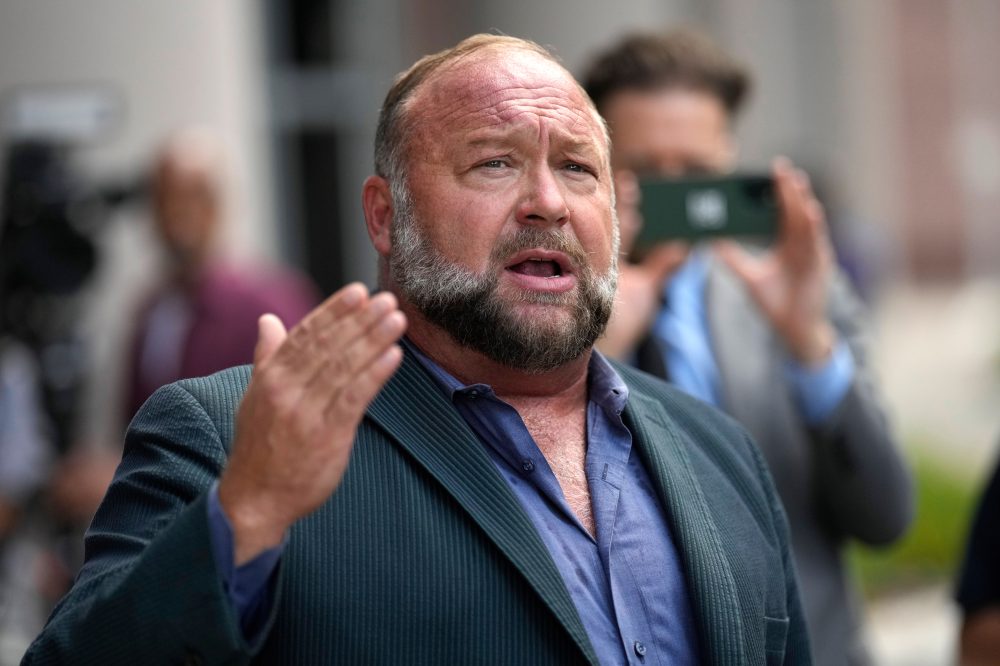
Comedy news website The Onion has submitted a fresh proposal to temporarily control the digital platforms belonging to conspiracy broadcaster Alex Jones while his media company undergoes liquidation proceedings stemming from massive defamation awards exceeding $1 billion to Sandy Hook shooting victims’ families.
According to a Monday filing with a Texas state judge, The Onion seeks an exclusive temporary license to operate the intellectual property of Free Speech Systems, Jones’ parent company. This arrangement would allow the satirical publication to publish its own material across Infowars’ website and social media channels.
The Onion’s CEO Ben Collins indicated the arrangement could take effect by April 30 if Austin Judge Maya Guerra Gamble gives approval. Collins revealed his company has already brought on staff to transform Infowars into a comedy platform, including comedian Tim Heidecker from the Tim and Eric comedy partnership known for Cartoon Network’s Adult Swim programming.
“We’ll build this into a bigger comedy network,” Collins explained during a Monday phone conversation, noting that Sandy Hook families would benefit financially from the new venture’s earnings.
“A big part of it for us is that the way people consume news now is they see somebody who has no idea what the (expletive) they’re talking about staring into their camera and just like coming up with conspiracy theories or telling you health hacks that will actually get you poisoned, things like that,” he said. “We’re going to create a bunch of characters and worlds around those kinds of things.”
Following the 2012 Sandy Hook massacre that claimed the lives of 20 young students and six staff members in Newtown, Connecticut, Jones falsely characterized the tragedy as a fabricated event involving paid actors designed to promote stricter gun regulations. Numerous family members of victims, plus an FBI investigator who worked the scene, filed lawsuits against Jones and his business for defamation and causing emotional harm.
During his Monday broadcast, Jones promised to challenge the licensing arrangement in court while recognizing he and his team might be forced from their current facility by month’s end. He indicated plans to continue broadcasting from an alternative studio he’s establishing, with shows streaming on his personal X profile and other emerging social platforms and websites, plus dozens of radio outlets. He’s also established separate websites for his product sales, including nutritional supplements and apparel that generate millions annually.
“I’m going to continue the exact same show,” he said. “It’ll just be called the ‘Alex Jones Show.’ So, it’s the same satellite, same system. It’s a different news site and news studio. So I’m not going anywhere.”
The proposed Onion licensing agreement would span six months with renewal options for an additional six-month period while a court-designated receiver works toward eventually selling Free Speech Systems’ assets and distributing proceeds to Sandy Hook families. The receiver backs this proposal, which requires The Onion to contribute $81,000 monthly for building rent housing Infowars’ studios, plus utilities and additional expenses.
During 2022 defamation trial proceedings in Connecticut, victims’ family members described how individuals they identified as Jones supporters targeted them with death and sexual assault threats, face-to-face intimidation, and hostile social media messages related to the false claims. Jones maintained no evidence connected him to others’ actions.
A Connecticut jury and judge granted the families and FBI agent damages exceeding $1.4 billion. In separate Texas litigation, parents of a Sandy Hook victim received nearly $50 million. Jones challenged both verdicts. His Connecticut appeal failed, while his Texas appeal remains active.
Jones declared bankruptcy in late 2022. During those proceedings, a November 2024 auction aimed at liquidating Infowars’ assets to satisfy defamation judgments resulted in The Onion being declared the successful bidder. However, the bankruptcy judge invalidated the auction outcome, pointing to procedural issues and problems with The Onion’s offer.
Efforts to liquidate Infowars’ assets subsequently transferred to Texas state court, where Guerra Gamble designated a receiver to handle Jones’ company’s asset liquidation. Jones is also challenging that decision, which has temporarily halted the liquidation process.
Legal representation for the Sandy Hook families involved in the Connecticut lawsuit confirmed their backing of The Onion’s proposal.
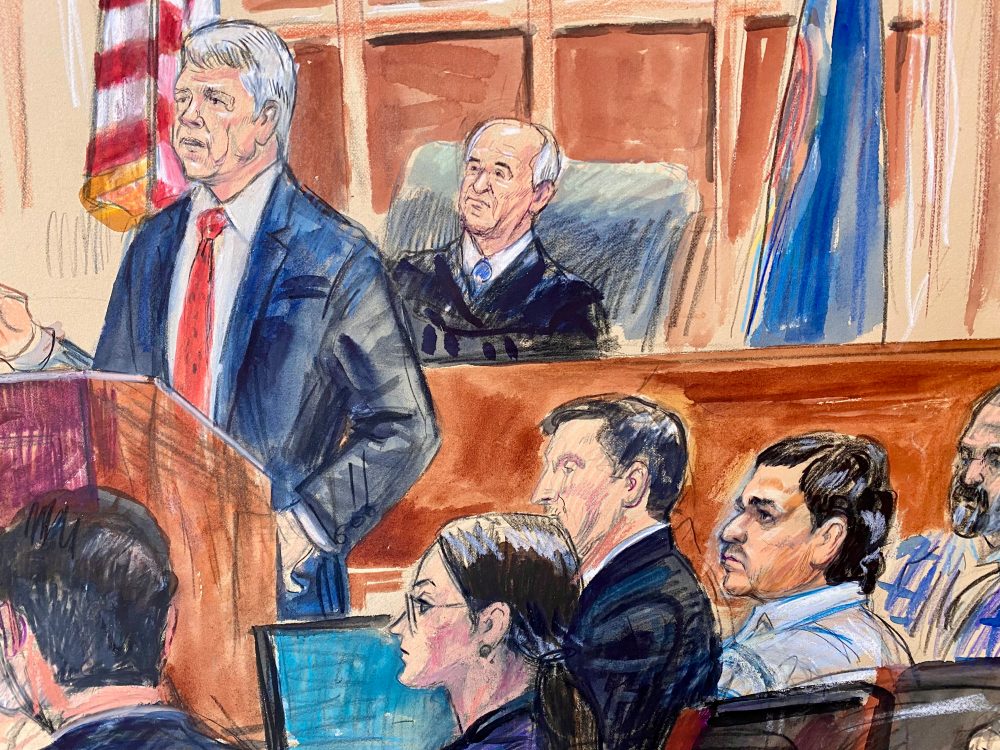
ALEXANDRIA, Va. — Defense attorneys argued Monday that federal authorities have charged an innocent man in connection with the devastating 2021 suicide bombing at Kabul’s airport that claimed nearly 200 lives during America’s turbulent exit from Afghanistan.
Mohammad Sharifullah faces accusations of reconnaissance work for the bomber who targeted the airport, resulting in the deaths of approximately 13 American military personnel and 160 Afghan civilians as the United States concluded its two-decade military presence in the region.
During opening statements at the Virginia federal courthouse, defense counsel Geremy Kamens maintained his client played no part in the terrorist plot and argued that Sharifullah’s admission of guilt was coerced.
“The U.S. government got the wrong man,” Kamens told the jury. “That is why we are proud to represent Mohammad Sharifullah in this trial.”
Federal prosecutor John Gibbs presented a different narrative, describing how Sharifullah, who also goes by Jafar, expressed violent intentions against American forces to a reporter, referring to them as invaders who entered his homeland following the September 11 attacks.
“The feeling was just to catch the crusaders and kill them,” Sharifullah reportedly stated to the journalist, according to Gibbs.
The defendant allegedly admitted to federal investigators that he became affiliated with ISIS-K, the regional Islamic State faction, around 2016. While denying direct involvement in planning the airport attack, Sharifullah reportedly acknowledged participating in numerous other operations for the terrorist organization, prosecutors said.
President Trump revealed Sharifullah’s apprehension during his March 2025 State of the Union speech. The suspect was transported to American soil the following day to face federal charges that could result in a life sentence upon conviction.
A panel of twelve jurors plus three alternates was selected Monday for the federal proceeding in Alexandria, where Sharifullah stands accused of providing material assistance to a designated terrorist group that resulted in fatalities. Court officials expect the trial to conclude within approximately one week.
The devastating attack occurred on August 26, 2021, as American forces coordinated massive evacuation efforts at Kabul’s airport. A single suicide bomber detonated an explosive device near the facility’s Abbey Gate entrance, killing 13 U.S. military personnel and roughly 160 Afghan nationals.
An investigation conducted by U.S. Central Command identified the Abbey Gate attacker as Abdul Rahman al-Logari, an Islamic State operative who had been freed from an Afghan detention facility by Taliban forces. According to FBI documentation, Sharifullah identified the bomber as someone he had encountered during his own imprisonment.
Congressional testimony from a former Marine revealed that he and fellow service members had observed two individuals acting suspiciously on the morning of the bombing but were denied authorization to intervene. The Central Command investigation ultimately determined that the snipers had not spotted the actual bomber and that the attack could not have been prevented.
The tragic incident sparked intense criticism of President Biden’s administration regarding the management of America’s Afghanistan withdrawal after twenty years of conflict. During his successful presidential campaign, Trump frequently condemned Biden’s handling of the chaotic evacuation and held him responsible for the Abbey Gate casualties.
The Justice Department dismissed one of the prosecutors working on the Abbey Gate case last year following public criticism from a conservative media personality regarding his service during the Biden presidency. Michael Ben’Ary’s removal was part of a wider elimination of Justice Department officials considered insufficiently aligned with Trump’s Republican administration.
Authorities also accuse Sharifullah of involvement in additional ISIS-K operations. Federal investigators claim he provided weapons training before other group members executed a March 2024 assault on a Moscow entertainment venue that resulted in approximately 140 deaths.
Defense attorney Kamens suggested his client made false admissions while under pressure during detention in Pakistan. The lawyer proposed to jurors that the airport bombing may have been facilitated from within by Taliban sympathizers who controlled airport security operations that day.
“The Pakistanis wanted him to confess, and their intelligence service tortures people,” Kamens stated.
Thirteen people aboard a hot air balloon got an unexpected close-up view of a California family’s backyard Saturday when their pilot was forced to make an emergency touchdown in Temecula.
Hunter Perrin had no clue about his surprise visitors until a neighbor knocked on his door to deliver the startling news. The massive balloon, carrying a pilot and dozen passengers, touched down flawlessly on Perrin’s narrow strip of grass.
“I was watching TV and my wife was doing yoga,” Perrin explained to The Associated Press. “There was a man standing in front of my door saying, ‘They just landed.’ What? I was very confused.”
The anxious group of travelers found themselves relieved to reach solid ground in Perrin’s compact backyard, which measures just 10 feet across.
“It was unbelievable, like something out of a Disney fairy tale,” Jenna Perrin remarked. “The balloon didn’t hit our house or our trees. It was kissing the fence.”
Among the passengers were Brianna Avalos and her spouse, who had chosen the balloon ride to mark their decade of marriage. According to Avalos, the pilot announced the need for an emergency touchdown due to insufficient fuel and changing wind conditions.
“At first I was like, ‘Oh my God! We’re in a backyard! This is crazy!’” Avalos shared with KABC-TV.
The striking blue balloon, decorated with golden stars and a crescent moon design, created quite a sight as it settled into the yard, dwarfing the Perrin residence. After helping all passengers exit safely, the pilot took the balloon back up and set it down on a nearby street for dismantling.
“He was an amazing pilot,” Avalos praised.
Denni Barrett, who owns Magical Adventure balloon company, chose not to reveal the pilot’s identity but commended his decision-making skills, saying he had “exercised great judgment” and “done the right thing.”
“Most of our landings are in wine country,” Barrett noted, speaking about the typical vineyard locations in Riverside County. “Usually they’re bigger backyards.”
Iran has promoted Ahmad Vahidi to lead its Islamic Revolutionary Guard Corps, a move that security experts say represents a troubling shift toward more aggressive military policies in Tehran.
Security analysts warn that Vahidi’s promotion concentrates substantial power in the hands of someone with a long history in Iran’s overseas military operations and intelligence activities. Before Qassem Soleimani took over, Vahidi led the Quds Force between 1988 and 1998, where experts say he played a key role in establishing Iran’s network of proxy organizations throughout the Middle East, especially in Lebanon.
The promotion occurs as Iran’s power structure appears to be shifting away from civilian leadership toward informal networks connected to the Islamic Revolutionary Guard Corps. Behnam Ben Taleblu from the Foundation for Defense of Democracies explained to Fox News that the Iranian system functions as “a system of men, not laws, but one whose success rested on institutionalizing their power,” with key decisions flowing through military-connected officials.
Iran expert Beni Sabti from Israel’s Institute for National Security Studies told Fox News that Vahidi now holds a central role in strategic planning. “In my view, he is more dominant right now, even if they are coordinated. This is not a time for internal competition,” Sabti said.
Western intelligence agencies and analysts have connected Vahidi to numerous major terrorist attacks, including the 1983 Beirut barracks bombing that claimed 241 American military lives, the 1996 Khobar Towers assault in Saudi Arabia, and a 2008 strike on the US Embassy in Yemen. Authorities in Argentina have also implicated him in the 1994 AMIA Jewish community center bombing in Buenos Aires that killed 85 people, as well as the 1992 Israeli Embassy bombing in the same city.
Middle East policy journalist Lisa Daftari told the news agency, “By any standard, Vahidi is considered a radical even within the regime’s hardline elite, and his rise is a warning that Tehran’s war machine now calls the shots.”
Yigal Carmon, who founded and leads the Middle East Media Research Institute, told Fox News, “Trusting him is a grave mistake. He belongs to the hard ‘DEATH TO AMERICA’ corps.”
Vahidi continues to face sanctions from both the United States and European Union related to Iran’s nuclear and missile development programs as well as alleged violations of human rights.
Growing tensions between Gulf Cooperation Council nations and the Arab League have sparked discussions about potential withdrawal from the decades-old regional organization, following what many see as an inadequate response to Iranian aggression.
Questions surrounding the GCC states’ continued participation in the Arab League have intensified after the organization faced criticism for its handling of the Israeli-American-Iranian conflict and subsequent Iranian strikes against Gulf nations and Jordan.
Critics from Gulf nations, including social media commentators and individuals connected to government circles, contend that the Arab League has failed to adopt “decisive stances” or issue strong condemnations of Iranian attacks on Gulf territories. Many argue the organization primarily follows Egyptian policy directions rather than seeking broader Arab consensus, pointing to its Cairo headquarters and the tradition of appointing former Egyptian officials as secretaries-general.
Following the Iranian attacks on Gulf states and Jordan, the Arab League released multiple condemnatory statements. The initial declaration on February 28 “condemned these attacks and affirmed its full solidarity with the Arab states in confronting them and its support for any measures they take to defend themselves and protect their people.”
The organization’s Ministerial Council convened an emergency virtual session on March 8, 2026, explicitly denouncing attacks on Arab nations’ sovereignty and territorial integrity, according to the post-meeting statement.
However, controversy erupted from comments made by Arab League Secretary-General Ahmed Aboul Gheit during a March 8, 2026 media appearance, when he characterized Iranian escalation against Gulf civilian targets as a “huge mistake.”
Aboul Gheit further stated that “no member of the Arab League has asked us to sever relations with Iran.”
These remarks triggered sharp criticism from Gulf officials, media personalities, and government-connected figures who viewed them as evidence that the Arab League was failing to effectively address the crisis.
During the March 29, 2026 Arab League meeting, Kuwaiti Foreign Minister Sheikh Jarrah Jaber Al-Ahmad Al-Sabah declared that “successive experiences have revealed the limited effectiveness of the joint Arab action system within the framework of the Arab League, which necessitates a frank and responsible review. Despite its symbolic status, the Arab League has proven a clear inability to keep pace with rapidly evolving challenges and to play an effective role in safeguarding Arab security.”
Lieutenant General Dhahi Khalfan Tamim, Dubai’s deputy police and public security chief known for his outspoken political commentary, wrote on his official X account on March 24, 2026: “The Gulf States’ announcement of their withdrawal from the Arab League is not a true Arab League.”
Jamal Sanad Al-Suwaidi, vice chairman of the Emirates Center for Strategic Studies and Research Board of Trustees and someone with close ties to Gulf leadership, posted on March 31, 2026: “The Gulf States are considering withdrawing from the Arab League.”
Dr. Khaled Al-Subaie, director of the Khaled Center for Media Studies and Consultations in Saudi Arabia and an individual close to Saudi decision-making circles, used his official X account on April 4, 2026, to advocate for “the Gulf states to refuse to attend the meetings of the League of Arab States, not to recognize it and its decisions, and to close its offices in these countries.” He also urged “not paying any amounts into the budget of the League of Arab States.”
Saudi political analyst Qasim Sultan explained to The Media Line: “The role of the Arab League has been weakening over time, and I believe this is due to the weakness of successive secretaries-general. Most of them are former Egyptian officials, over 70 years old. Therefore, this position, despite its importance, has become a place for some former Egyptian officials to retire, profit, and gain.”
“I believe it is necessary to move the headquarters of the Arab League from Egypt to Riyadh, and the established practice of the Secretary-General being Egyptian should not be changed, as it is not exclusive to any one country,” he continued.
“Its charter should also be amended to make its decisions more binding on Arab states, to expedite its decision-making process, and to work more effectively on joint coordination, as is the case in the European Union, rather than functioning as a forum that accomplishes virtually nothing,” Sultan added.
Kuwaiti political journalist Abdullah Al-Khamis informed The Media Line that “The Gulf states pay the majority of the Arab League’s budget, as previously announced at Arab League meetings.” He condemned the League’s inaction during Iranian attacks on Gulf states and its “weak” responses, noting: “It has also failed to engage in any international coordination, contenting itself with a few feeble statements.”
“I believe that an Arab coordination council should be formed, a better alternative to this League. This council should consist of the Gulf states, Jordan, Morocco, and Syria. These countries largely agree on their decisions and are also influential in international affairs,” Al-Khamis suggested.
Al-Khamis delivered harsh criticism of the Arab League’s effectiveness: “This Arab League was stillborn. It has never taken any decisive action throughout its history, nor has it been able to be influential in international decisions. It has not taken any real action, whether economic, political, or in negotiations with any of the other major blocs.”
Former Iraqi Army General Amin Abdul Aziz told The Media Line: “What needs to be activated first in the Arab League is military unity.” He expressed frustration over the absence of military exercises and coordination, stating: “Therefore, in the absence of any unified Arab military force, we shouldn’t expect any effective decisions from the Arab League.”
He added: “Many events have taken place in the Arab world, and we haven’t seen any unified positions, only a few weak statements that are ineffective. Therefore, the Arab League needs a complete overhaul, or it should be dissolved outright.”
Abdul Aziz identified the selection process as a fundamental problem, explaining that “the mechanism for selecting the Secretary-General of the League, which has traditionally been to choose him permanently from Egypt and to be a former Egyptian official—a requirement not stipulated in any law or charter of the Arab League—is the crux of the matter.”
He noted that “when a former Egyptian official, whether a foreign minister, prime minister, or someone else, serves in a position, he still carries Egyptian thinking and policies, and therefore doesn’t represent all Arabs.”
Egyptian political analyst and journalist Sarah Azab dismissed allegations that Egypt bears responsibility for the Arab League’s ineffectiveness, describing such claims as politically motivated. She characterized these accusations as “simply attempts to undermine Egypt, and these claims are untrue.”
Azab highlighted Egypt’s historical role in the organization, explaining that leadership positions have traditionally been filled by individuals with international credibility and that Cairo enjoys broad regional support. “Egypt, being the largest Arab country and the most experienced in international politics, enjoys Arab consensus to assume this responsibility,” she stated, adding that she would welcome an alternative candidate “if they found someone better to head this organization from outside Egypt, but perhaps they haven’t found anyone.”
Azab characterized the League’s difficulties as institutional rather than leadership-related, arguing that divisions among member nations represent the primary challenge. “The problem within the Arab League lies in the conflicting interests of its members, not in the League itself,” she explained, pointing to varying responses to Iranian actions in the Gulf region. She observed that some nations maintain diplomatic relationships with Tehran and have avoided condemning attacks, making consensus difficult to achieve.
She also questioned why criticism seems concentrated primarily on Egypt while overlooking other nations. “Why don’t we see these media attacks on the Sultanate of Oman … or even semi-official attack on Algeria, Mauritania, or other countries that did not take a position?” she asked.
Azab contended that the focus of criticism misrepresents the real issue. “Why only on Egypt, and to show as if the weakness of the Arab League is because of Egypt?” she said, concluding that “the Arab League is weak only because of the conflict of interests of the members.”
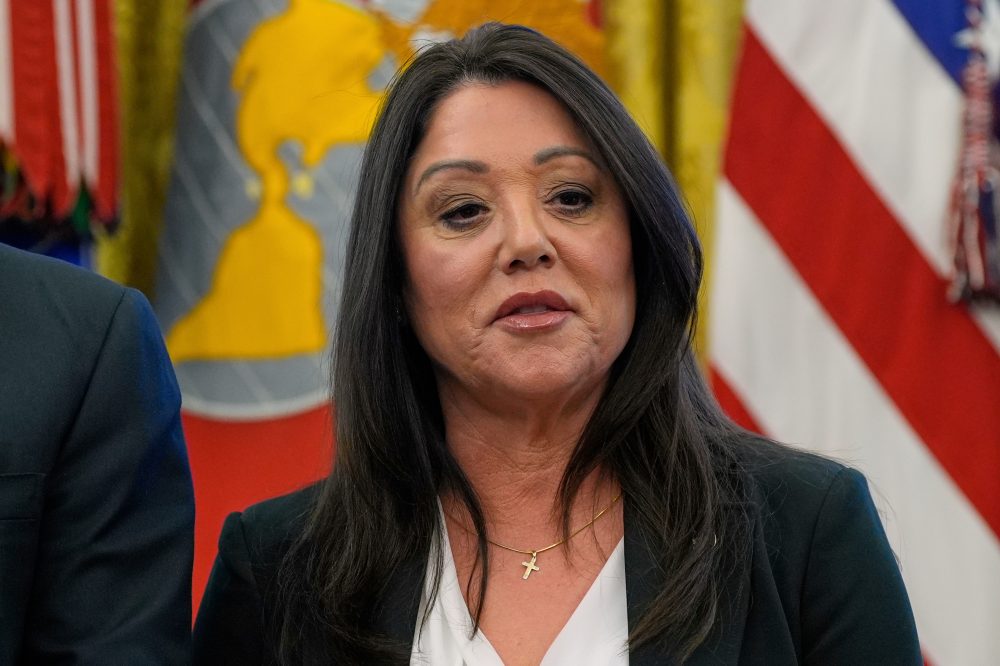
WASHINGTON — Labor Secretary Lori Chavez-DeRemer has stepped down from President Donald Trump’s Cabinet, the White House announced Monday, following numerous accusations of misconduct including an inappropriate relationship with a staff member and consuming alcohol during work hours.
This marks the third departure from Trump’s Cabinet, coming after the president dismissed Homeland Security Secretary Kristi Noem in March and removed Attorney General Pam Bondi earlier this month.
In contrast to previous Cabinet exits, Chavez-DeRemer’s departure was revealed through a White House staff member rather than Trump’s own social media announcement.
“Labor Secretary Lori Chavez-DeRemer will be leaving the Administration to take a position in the private sector,” stated White House communications director Steven Cheung on X. “She has done a phenomenal job in her role by protecting American workers, enacting fair labor practices, and helping Americans gain additional skills to improve their lives.”
Cheung announced that Keith Sonderling, currently serving as deputy labor secretary, will step into the acting labor secretary role. NOTUS initially broke the story of Chavez-DeRemer’s resignation.
Her exit comes after investigations that began emerging in January regarding her conduct in office.
Last Wednesday, The New York Times disclosed that the Labor Department’s inspector general was examining evidence showing Chavez-DeRemer and her senior staff and relatives regularly sent personal communications and requests to junior employees.
According to the newspaper, both Chavez-DeRemer’s spouse and father had text exchanges with young female workers. Some employees received instructions from the secretary and her former deputy chief of staff to give special attention to her family members, sources familiar with the probe told the Times.
These communications came to light during a wider examination of Chavez-DeRemer’s management style that started after the New York Post reported in January about a complaint filed with the Labor Department’s inspector general alleging she had a relationship with a subordinate.
Additional accusations included drinking alcohol while on duty and directing staff to organize official travel primarily for personal purposes.
Initially, both the White House and Labor Department dismissed the misconduct reports as unfounded. However, official denials became less emphatic as additional allegations surfaced, making her potential departure a topic of speculation in Washington.
At least four Labor Department personnel have already been removed from their positions as the investigation continued, including Chavez-DeRemer’s former chief of staff and deputy chief of staff, plus a security team member with whom she allegedly had the affair, according to The New York Times.
“I think the secretary demonstrated a lot of wisdom in resigning,” commented Sen. John Kennedy, R-La., on Monday following the announcement of her departure.
The Senate confirmed Chavez-DeRemer to Trump’s Cabinet with a 67-32 vote in March 2025. She previously served as a House Republican representing a competitive Oregon district and had garnered uncommon union support for a Republican before losing her reelection bid in November 2024.
During her congressional term, Chavez-DeRemer supported measures that would simplify federal unionization processes and separate legislation designed to protect Social Security benefits for government workers.
Several major labor organizations, including the International Brotherhood of Teamsters, endorsed Chavez-DeRemer for Labor Secretary, noting she is the daughter of a Teamster member. Trump’s selection of her was seen by political analysts as an attempt to attract voters connected to labor organizations.
However, other influential labor leaders remained doubtful when she was chosen, questioning whether Chavez-DeRemer would pursue pro-union policies within a Republican administration. During her Senate confirmation process, some senators wondered if she could maintain her labor-friendly reputation in an administration that terminated thousands of federal workers.
Beyond the recent misconduct allegations, Chavez-DeRemer maintained a relatively low profile among Trump’s Cabinet selections but implemented significant measures supporting the administration’s deregulation goals.
The Labor Department moved to revise or eliminate over 60 workplace regulations deemed outdated during her time in office. These rollbacks affected minimum wage standards for home health care workers and individuals with disabilities, along with regulations covering exposure to dangerous materials and mining safety protocols. These changes faced criticism from union representatives and workplace safety advocates.
The proposed modifications also included removing requirements for employers to provide proper lighting at construction sites and seat belts for agricultural workers in most employer-supplied vehicles.
Under Chavez-DeRemer’s leadership, the Trump administration terminated millions of dollars in international funding that a Labor Department unit managed to fight child labor and forced labor globally, halting efforts that had contributed to reducing child laborers worldwide by 78 million over twenty years.
The Labor Department oversees extensive responsibilities regarding the American workforce, including publishing unemployment statistics, regulating workplace health and safety standards, investigating minimum wage, child labor and overtime violations, and enforcing laws related to union formation and wrongful terminations.
Satirical news publication The Onion has announced it reached an agreement to acquire Infowars, the media platform owned by conspiracy theorist Alex Jones.
The comedy website revealed its plans to purchase the controversial media company, with intentions to transform it into a satirical version of its current format if the deal receives necessary approvals.
Under the proposed arrangement, The Onion would take control of Jones’ media empire and potentially convert the platform that has been known for promoting conspiracy theories into a parody operation.
The acquisition represents an unusual turn for both organizations – The Onion gaining control of a serious conspiracy-focused outlet while Infowars would transition from its current format to becoming the subject of satire rather than producing controversial content.
The deal still requires approval before The Onion can officially assume ownership and begin implementing its vision for the transformed platform.
WASHINGTON — The White House announced Monday that Labor Secretary Lori Chavez-DeRemer has departed from President Donald Trump’s Cabinet amid mounting allegations that she misused her authority, including claims of an inappropriate relationship with a staff member and consuming alcohol during work hours.
This marks the third Cabinet official to exit Trump’s administration, following the president’s dismissal of Homeland Security Secretary Kristi Noem in March and the removal of Attorney General Pam Bondi earlier this month.
In a departure from typical protocol, Chavez-DeRemer’s resignation was not announced through Trump’s social media channels but rather by a White House spokesperson.
White House communications director Steven Cheung posted on X that “Labor Secretary Lori Chavez-DeRemer will be leaving the Administration to take a position in the private sector. She has done a phenomenal job in her role by protecting American workers, enacting fair labor practices, and helping Americans gain additional skills to improve their lives.”
Cheung announced that Keith Sonderling, who currently serves as deputy labor secretary, will step into the acting secretary role. The resignation was initially reported by NOTUS.
Her resignation comes after investigations that began emerging in January regarding her conduct in office.
Last Wednesday, The New York Times published findings that the Labor Department’s inspector general was examining evidence showing Chavez-DeRemer and her senior staff and family members regularly sent personal communications and requests to junior staff members.
According to the newspaper’s reporting, both Chavez-DeRemer’s spouse and father had text message exchanges with young female employees. Sources familiar with the investigation told the Times that some staff members received instructions from the secretary and her former deputy chief of staff to “pay attention” to her family members.
These communications came to light during a wider probe into Chavez-DeRemer’s management style that started after The New York Post reported in January about a complaint filed with the Labor Department’s inspector general alleging she had a relationship with a subordinate.
Additional accusations included claims that she consumed alcohol while on duty and directed staff to organize official travel that served primarily personal purposes.
Initially, both the White House and Labor Department dismissed the misconduct reports as unfounded. However, their denials became less emphatic as additional allegations surfaced, leading to speculation in Washington about her job security.
The New York Times reported that at least four Labor Department officials have already been removed from their positions as the investigation advanced, including Chavez-DeRemer’s former chief of staff and deputy chief of staff, plus a security detail member with whom she allegedly had the affair.
“I think the secretary demonstrated a lot of wisdom in resigning,” commented Sen. John Kennedy, R-La., on Monday following the announcement of her departure.
The Senate confirmed Chavez-DeRemer to Trump’s Cabinet with a 67-32 vote in March 2025. A former GOP House member, she previously represented a competitive district in Oregon and had garnered uncommon union support for a Republican before losing her reelection bid in November 2024.
During her congressional tenure, Chavez-DeRemer supported measures that would facilitate federal-level unionization efforts and backed separate legislation designed to protect Social Security benefits for public sector workers.
Several major labor organizations, including the International Brotherhood of Teamsters, endorsed Chavez-DeRemer for Labor Secretary, noting her background as a Teamster’s daughter. Political analysts viewed Trump’s selection of her as an attempt to court voters with labor union connections.
However, other influential labor leaders remained doubtful when she was nominated, questioning whether Chavez-DeRemer would pursue pro-union policies within a Republican administration. During her Senate confirmation proceedings, some senators expressed concerns about her ability to maintain that reputation in an administration that terminated thousands of federal workers.
Beyond the recent misconduct allegations, Chavez-DeRemer maintained a relatively low profile among Trump’s Cabinet appointments while implementing significant steps to advance the administration’s deregulation objectives.
The Labor Department under her leadership initiated efforts to revise or eliminate over 60 workplace regulations deemed outdated. These rollbacks affected minimum wage standards for home health care workers and individuals with disabilities, along with regulations covering exposure to dangerous materials and mining safety protocols. Union leaders and workplace safety advocates criticized these efforts.
The proposed modifications also included removing requirements for employers to provide sufficient lighting at construction sites and seat belts for agricultural workers in most employer-supplied vehicles.
Under Chavez-DeRemer’s leadership, the Trump administration terminated millions of dollars in international grants that a Labor Department division managed to fight child labor and forced labor globally, halting programs that had contributed to reducing the worldwide number of child laborers by 78 million over two decades.
The Labor Department oversees extensive responsibilities related to the American workforce, including publishing unemployment statistics, regulating workplace health and safety standards, investigating disputes over minimum wage, child labor and overtime compensation, and enforcing laws regarding union organization and wrongful terminations.
The tech giant Apple announced that Chief Executive Officer Tim Cook will be leaving his leadership position, concluding an almost 15-year tenure that witnessed the company’s market worth climb by over $3.6 trillion throughout a period of remarkable success driven by iPhone sales.
The 65-year-old Cook will transfer his executive responsibilities to John Ternus, Apple’s hardware engineering chief, effective September 1st, while continuing his association with the California-based tech company in the role of executive chairman. This leadership change mirrors similar moves by Amazon’s Jeff Bezos and Netflix’s Reed Hastings when they concluded their successful runs as chief executives.
“It has been the greatest privilege of my life to be the CEO of Apple and to have been trusted to lead such an extraordinary company,” Cook said in a statement. “I love Apple with all of my being, and I am so grateful to have had the opportunity to work with a team of such ingenious, innovative, creative, and deeply caring people.”
The 50-year-old Ternus brings 25 years of experience at Apple to his new position, having spent the last five years managing the engineering behind the iPhone, iPad and Mac product lines — experience that positioned him as a leading choice to replace Cook.
“I am profoundly grateful for this opportunity to carry Apple’s mission forward,” Ternus said in a statement.
This leadership change occurs during a crucial period for the technology company. The rise of artificial intelligence has created significant industry disruption not seen since the original iPhone launch in 2007. Apple has faced challenges in the AI space after difficulties delivering promised new AI-powered features that were announced almost two years ago.
Recently, Apple partnered with Google — a frontrunner in artificial intelligence development — to enhance the iPhone’s Siri virtual assistant, making it more conversational and capable.
Despite facing criticism that he didn’t possess the same visionary qualities as his predecessor, Cook successfully built upon the iPhone’s success and other innovations from the Steve Jobs era, elevating Apple to extraordinary levels of success far beyond what seemed possible when the company nearly faced bankruptcy in the 1990s.
After nearly 15 years leading Apple, CEO Tim Cook has announced his departure from the role he took over following Steve Jobs’ death. Cook, 65, will transfer his responsibilities to John Ternus, Apple’s hardware engineering chief, effective September 1st, while continuing with the Cupertino, California-based company in an executive chairman position.
Cook’s leadership tenure witnessed Apple’s market capitalization grow by more than $3.6 trillion, primarily driven by the iPhone’s massive success. His transition follows a pattern similar to other tech giants like Amazon’s Jeff Bezos and Netflix’s Reed Hastings, who also moved to chairman roles after successful CEO runs.
“It has been the greatest privilege of my life to be the CEO of Apple and to have been trusted to lead such an extraordinary company,” Cook said in a statement. “I love Apple with all of my being, and I am so grateful to have had the opportunity to work with a team of such ingenious, innovative, creative, and deeply caring people.”
Ternus, 50, brings 25 years of Apple experience to the top role, with the last five years spent directing engineering for the iPhone, iPad, and Mac product lines. His extensive background in hardware development positioned him as the leading candidate for succession.
“I am profoundly grateful for this opportunity to carry Apple’s mission forward,” Ternus said in a statement.
The leadership change arrives during a challenging period for Apple as the company navigates the artificial intelligence revolution that has transformed the tech landscape since Jobs introduced the original iPhone in 2007. Apple has faced difficulties implementing AI features it promised nearly two years ago, eventually partnering with Google this year to enhance Siri’s conversational capabilities.
Despite facing criticism that he lacked Jobs’ innovative vision, Cook successfully built upon his predecessor’s foundation, elevating Apple to unprecedented heights from a company that nearly faced bankruptcy in the 1990s.
NEW YORK — New York Yankees pitcher Cam Schlittler remains undeterred about making his first appearance at Fenway Park Thursday night, despite disclosing that Red Sox supporters have sent threatening messages to him and his family.
The right-handed pitcher has previously handled similar hostile situations and delivered strong performances against Boston in high-pressure playoff scenarios, giving him confidence heading into his Fenway debut.
Born and raised in Walpole, Massachusetts, Schlittler originally cheered for the Red Sox during his childhood. However, he revealed to the New York Post that he and his relatives have been targeted with death threats in anticipation of Thursday’s matchup. The 25-year-old athlete characterized these messages as typical fan harassment and indicated he doesn’t believe police intervention is necessary.
“Most normal fans could care less, right?” Schlittler told the newspaper. “It’s just those diehards that just have nothing else in their lives other than baseball or sports that really care about this, and the fact that I play for the Yankees makes it worse for them.”
When his family faced similar online harassment during last year’s AL Wild Card Series against Boston, Schlittler delivered a masterful response on the mound. He made history as the first playoff pitcher to throw at least eight shutout innings while recording 12 strikeouts and issuing zero walks, leading the Yankees to a 4-0 series-clinching victory at home.
The towering 6-foot-6 hurler has continued his impressive form this year. Through five appearances, he holds a 2-1 record with an outstanding 1.95 ERA, striking out 36 batters across 27 2/3 innings pitched.
Schlittler acknowledges that his early-season success will likely intensify the hostile reception from Boston faithful.
“It’s gonna be bad, it’s gonna be bad,” Schlittler told the Post. “I’m not nervous about it, but it’s gonna be loud. … They’re gonna probably have dudes that are my age or a little bit younger, sitting right outside the bullpen, yelling whatever, probably throwing stuff at me, trying to grab me.
“That’s kind of what I expect. So I know the guys are excited for it and I’m excited for it.”
SHREVEPORT, La. — In what marks the nation’s most devastating mass shooting in more than two years, a 31-year-old Louisiana man murdered eight children, seven of whom were his own offspring, while also injuring his wife and another woman during a Sunday morning rampage.
The tragic events unfolded across two residential locations in a Shreveport neighborhood, with the perpetrator identified as Shamar Elkins. Following the attacks, Elkins perished during a high-speed chase that concluded when law enforcement officers opened fire, according to police officials.
Authorities have yet to establish a clear motive behind the killings, though relatives indicated that Elkins and his spouse were going through a separation. Community advocates are now demanding action on domestic violence issues as the tragedy continues to impact the city, particularly affecting schools where the victims were students.
The violence commenced in the early morning hours within a neighborhood located south of Shreveport’s downtown area.
Emergency dispatchers received their initial call at approximately 5:55 a.m. from someone reporting they were positioned on a rooftop where a shooting victim was located, according to Shreveport Police Chief Wayne Smith. Within five minutes, authorities were informed that Elkins had opened fire on everyone inside the residence on 79th Street.
Troy Brown, who is Elkins’ brother-in-law, revealed that his spouse and 12-year-old daughter managed to flee by climbing onto the home’s roof.
Law enforcement personnel responded rapidly, but at 6:07 a.m., dispatchers received another emergency call regarding a second assault on nearby Harrison Street. The caller reported being shot by Elkins before he escaped the scene, Smith explained. Police subsequently learned the shooter had taken a vehicle, sparking a chase that ultimately resulted in gunfire.
Approximately one hour after the first emergency call, Elkins was declared deceased. Smith noted that investigators have not determined whether the gunman was killed by police bullets or took his own life.
Legal documents reveal that Elkins received probation in 2019 following a guilty plea for unlawful weapon use. The police report from that incident stated Elkins discharged five shots at a vehicle, later telling officers that someone inside had threatened him with a firearm.
Louisiana state law prohibits individuals convicted of illegal weapon use from possessing firearms for a minimum of 10 years following completion of their sentence and probation period. Police spokesman Chris Bordelon stated that investigators were unaware of previous domestic violence incidents involving Elkins.
Officials have not disclosed how or where Elkins acquired the firearm used in Sunday’s attack.
Military records show Elkins enlisted in the Louisiana National Guard from 2013 to 2020, achieving the rank of private without any overseas deployments, a guard representative confirmed. His military roles included signal support system specialist and fire support specialist.
Brown disclosed that Elkins had voluntarily admitted himself to a Department of Veterans Affairs medical facility in January for slightly more than a week. He noted that Elkins seemed “better when he came home” and appeared normal just one day prior to the shooting.
The child victims ranged from 3 to 11 years old. In addition to Elkins’ seven children, his nephew was also killed, the Caddo Parish coroner’s office confirmed.
Relatives portrayed the shooter’s wife, Shaneiqua Elkins, as a devoted mother who took pride in her children’s academic achievements and ensured they were well-dressed for family gatherings.
Francine Monro Brown, a cousin of Shaneiqua Elkins, shared that she frequently observed the children enjoying themselves in their yard on Sunday mornings while driving to church services. She described them as “happy” and “joyful.”
Crystal Brown, a relative of one of the shooting victims, explained that Elkins and his wife were in the process of separating and had been having disputes about their marriage before the tragedy occurred.
This Shreveport incident represents the most fatal shooting in the United States since January 2024, when eight individuals were killed in a Chicago-area community, based on data compiled by The Associated Press and USA Today working with Northeastern University.
SACRAMENTO, Calif. — A federal judge ruled Monday that Carlos Ivan Mendoza Hernandez will not be released from custody, citing concerns that he may attempt to flee before trial. Mendoza sustained multiple gunshot wounds when Immigration and Customs Enforcement officers opened fire during his arrest in April.
The 36-year-old man, who holds citizenship in both El Salvador and Mexico, faces federal charges for allegedly assaulting an officer. Authorities claim he struck an ICE agent’s vehicle with his car and then backed into another law enforcement vehicle during a traffic stop on April 7.
Defense attorney Patrick Kolasinski argues that his client acted out of panic when ICE agents surrounded his vehicle and had no intention of harming anyone. Kolasinski also challenges government assertions that Mendoza was a suspected gang member sought by Salvadoran authorities for murder-related questioning.
According to his legal team, court records from El Salvador show Mendoza was cleared of murder charges, and he has consistently denied any gang affiliation.
Mendoza has required multiple surgical procedures to treat his gunshot injuries.
The Department of Homeland Security maintains that ICE officers discharged their weapons in self-defense after Mendoza attempted to drive toward them. The incident occurred in Patterson, located approximately 75 miles southeast of San Francisco, during what DHS described as a targeted enforcement operation.
This shooting is part of a pattern of similar incidents that occurred during heightened immigration enforcement efforts under the Trump administration. Several of these cases have raised questions about the circumstances surrounding the use of force, with some incidents involving video evidence that contradicted initial official statements.
Mendoza’s case is set to return to court in early May.
Federal authorities have requested that Wayne County, Michigan hand over all voting records from the 2024 election, marking an expansion of similar efforts previously focused on 2020 election materials in Georgia and Arizona.
While earlier federal requests targeted 2020 presidential election documents from the race former President Trump lost, this new demand centers on the most recent election cycle in a battleground state that Trump carried.
The April 14 correspondence from U.S. Assistant Attorney General Harmeet K. Dhillon seeks ballots and additional documentation from Wayne County, home to Detroit and its heavily Democratic voter base. The county recorded nearly 865,000 votes in 2024, according to state officials.
Michigan’s top Democratic leaders have united in opposition to the federal request. In a joint Sunday statement, Democratic Attorney General Dana Nessel accused the current administration of turning the Justice Department into a political weapon aimed at meddling in state-run elections.
“If this administration wants to bring this circus to our state, my office is prepared to protect the people’s right to vote,” Nessel stated.
The federal letter cites concerns about potential voting irregularities in the 2024 contest, pointing to three documented fraud cases from 2020 and a civil court challenge involving absentee ballot handling. However, Nessel’s office notes that Michigan authorities already identified and prosecuted those three incidents, while a judge threw out the civil case after determining that allegations of “sinister and fraudulent motives” were “incorrect and not credible.”
Governor Gretchen Whitmer joined the criticism in the coordinated response. “Michigan’s elections are safe and secure,” Whitmer said in the joint statement. “This demand is a poorly disguised attempt to justify more doubt and misinformation about our elections as well as direct federal interference.”
State officials have 14 days from receiving the request to provide the materials, or federal authorities could pursue a court mandate. However, Nessel appears unlikely to cooperate quickly, raising several procedural objections including the outdated nature of the cited fraud cases, their rarity, and jurisdictional issues since the request targets Wayne County Clerk Cathy Garrett while voting materials remain with 43 individual municipal clerks throughout the county.
Garrett has not yet responded to requests for comment on the matter.
This Michigan request follows successful federal efforts to obtain election documentation from other competitive states. FBI agents executed a court-approved search warrant in January at the election offices of Fulton County, Georgia, a Democratic stronghold that has faced numerous conspiracy theories related to Trump’s 2020 defeat. Fulton County authorities are currently fighting in court to recover their confiscated records.
In Arizona, federal prosecutors used a grand jury subpoena last month to compel the state Senate to surrender FBI records connected to a controversial 2020 election review in Maricopa County, which encompasses Phoenix. State Democrats criticized the Republican Senate leader for cooperating, emphasizing that numerous independent reviews, investigations and legal challenges have found no evidence supporting claims of widespread electoral fraud.
JACKSONVILLE, Fla. — A wildfire burning through northeast Florida forced major disruptions to Amtrak passenger rail service on Monday, with multiple routes canceled or rerouted due to safety concerns.
Officials suspended the Auto Train service that typically runs between Sanford, Florida near Orlando and Lorton, Virginia in the Washington area for Monday. This popular route allows travelers to bring their vehicles along for the journey.
The Silver Meteor line, which normally connects Miami with New York City, was modified to begin and end in Jacksonville rather than continuing to South Florida on Monday. Railway officials also scrapped one of the route’s two daily departures scheduled for Tuesday.
Similarly, the Floridian line that travels from Miami to Chicago through Washington was rerouted to start and finish in Savannah, Georgia, with one of its Tuesday runs also eliminated.
To assist stranded passengers, Amtrak arranged bus transportation between Jacksonville and Miami for those affected by the Silver Meteor and Floridian route changes on Monday.
The Florida Forest Service reported the wildfire has consumed approximately 2,700 acres along the boundary between Putnam and Clay counties, located south of Jacksonville in the state’s northeastern region.
NEW YORK, April 20 – Apple’s stock dropped slightly in after-hours trading Monday following news that CEO Tim Cook will retire from his leadership position after almost 15 years running the technology giant. The 65-year-old executive’s announcement caught investors off guard, with many questioning whether his replacement can continue the company’s remarkable growth trajectory.
Cook will transition to executive chairman starting September 1st, passing leadership duties to John Ternus, Apple’s longtime hardware engineering chief. This leadership change comes as the iPhone manufacturer prepares for major industry shifts driven by artificial intelligence technology. Cook originally took the helm following Apple founder Steve Jobs’ departure, transforming the company into a worldwide technology leader producing hundreds of millions of devices each year.
According to Apple’s official statement about Cook’s tenure: “Under Cook’s leadership Apple has grown from a market capitalization of approximately $350 billion to $4 trillion, representing a more than 1,000% increase, and yearly revenue has nearly quadrupled, from $108 billion in fiscal year 2011 to more than $416 billion in fiscal year 2025. … Apple operates over 500 retail stores and has more than doubled the number of countries in which its customers can visit an Apple Store. During his tenure, Apple has grown by more than 100,000 team members and increased its active installed base to more than 2.5 billion devices.”
The leadership announcement means Apple’s upcoming earnings report scheduled for April 30th will receive heightened scrutiny from investors and analysts.
Financial experts shared their perspectives on Cook’s departure:
Rick Meckler from Cherry Lane Investments in New Vernon, New Jersey said: “Tim Cook did an amazing job. And I’m not surprised that the initial reaction is for the stock to be a little bit lower. But he will be executive chairman. I imagine he’ll still be part of the larger strategy of the company. He has been an incredibly successful CEO coming into a situation that you thought would be hard to replace the person before. I hate to see him leave the CEO spot, as an investor.”
Art Hogan, chief market strategist at B. Riley Wealth Management in Boston, commented: “He would never leave if the numbers were going to be bad, so I think that that’s the important thing. They’re about to report numbers, and you know they’re going to be good. You know the guidance is going to be positive. And you know we’re going to start hearing more about how they are going to use artificial intelligence to improve their products. He’s been a transformational Apple CEO that’s always had a steady hand at the wheel. I think that will be his legacy. He had massive shoes to step into, and he was the right person for the job. That’s the way he’ll be remembered.”
Tim Ghriskey, senior portfolio strategist at Ingalls & Snyder in New York, noted: “The company has done very well. And you know, its stock price, the value of the company, have increased dramatically. A lot of that is being in the right place at the right time, but I think they’ve made the right moves, and I think they’ve grown their user base. Earnings are upcoming, so he probably wanted to get it out there, so it didn’t become an issue in the earnings.”
Jacob Bourne, an analyst at eMarketer in New York, observed: “This transition shouldn’t come as a shock, as Cook is at retirement age and Ternus has long been rumored as the successor. Cook staying on as CEO through September before continuing as executive chairman should provide some degree of reassurance to investors even as markets react negatively to the near-term uncertainty. Cook successfully steered Apple through multiple periods of turbulence, and handing the reins over during another turbulent moment, which includes supply chain disruptions, tariffs and the AI race, is notable timing, though a fresh CEO also brings the opportunity for fresh solutions. Ternus’ hardware engineering background signals that Apple’s commitment to consumer hardware isn’t going anywhere, even as the company works to close the gap on AI.”
The tech world received major news Monday when Apple announced that John Ternus, the company’s senior vice president of hardware engineering, will step into the chief executive role beginning September 1.
This leadership transition signals a significant shift for one of the globe’s most influential technology companies, occurring as competitors increasingly focus on artificial intelligence products that could challenge Apple’s dominance in consumer electronics.
Ternus brings more than two decades of experience within Apple to his new position. He originally came aboard the company’s product design division in 2001 and earned promotion to vice president of hardware engineering twelve years later in 2013.
His ascent continued in 2021 when he joined Apple’s executive leadership team as senior vice president of hardware engineering, working directly under Cook’s supervision.
Throughout his tenure, Ternus has supervised Apple’s major hardware initiatives across multiple product lines, including the iPhone, iPad, Mac computers, Apple Watch, and AirPods. His leadership has been particularly instrumental in revitalizing Mac computer sales, helping that product category gain increased market presence in recent years.
Most recently, Ternus presented the company’s iPhone Air during last fall’s product announcement, representing the most significant iPhone redesign since 2017.
The incoming CEO will assume his duties on September 1, taking over from Cook, who has guided Apple since 2011. Cook will remain with the company as executive chairman following the transition.
At 50 years old, Ternus matches the same age Cook was when he succeeded Apple co-founder Steve Jobs in 2011. Ternus will also receive appointment to Apple’s board of directors effective September 1.
Prior to his Apple career, Ternus worked as a mechanical engineer at Virtual Research Systems. He earned his bachelor’s degree in Mechanical Engineering from the University of Pennsylvania.
Electric vehicle manufacturer Tesla has reached a settlement agreement in a wrongful death case involving a fatal 2018 crash in Florida that claimed a teenager’s life, according to court documents.
The legal resolution came just as the case was scheduled to go to trial today in Fort Lauderdale state court. Court filings from last week indicated that Tesla had agreed to settle the claims against the company, and a Sunday court order formally removed Tesla from the lawsuit.
The tragic incident involved an 18-year-old driver operating a 2014 Tesla Model S at 116 mph around a curve with a posted speed limit of 25 mph. The driver lost control of the vehicle, which crashed into two concrete barriers, killing both the driver and a teenage passenger.
Central to the lawsuit were allegations that a Tesla service technician had secretly deactivated speed-limiting technology that prevented the car from exceeding 85 mph. The driver’s parents claimed they were unaware this safety feature had been disabled, according to court records.
Tesla consistently rejected any responsibility for the crash, arguing that the driver’s “reckless” behavior behind the wheel caused the accident “with or without a speed limiter.” Defense attorneys for the driver’s estate similarly disputed the allegations made against them.
Neither Tesla representatives nor legal counsel for either side responded to requests for comment regarding the settlement. The financial terms of the agreement remain confidential, though a court official confirmed Monday that the case had been resolved.
This settlement represents another in a series of legal resolutions for Tesla regarding vehicle crashes. The company settled a separate wrongful death case last year involving a 2021 incident near Dayton, Ohio, where a Tesla caught fire after crashing, killing the driver. Tesla denied fault in that case as well, and settlement details were not made public.
However, Tesla has not been successful in all crash-related litigation. In February, a federal court in Florida rejected the company’s attempt to overturn a $243 million jury award stemming from a 2019 Autopilot-involved crash that killed a 22-year-old woman and seriously injured her boyfriend. Tesla is currently appealing that verdict.
The University of Maryland Eastern Shore Hawks athletics program reached new heights this weekend, securing a fourth-place finish at the NEC Championships that marks the best result in the program’s history.
The achievement represents a breakthrough moment for the Hawks, who have been working toward this level of competitive success in conference championship competition.
This historic finish at the NEC Championships demonstrates the continued growth and development of the University of Maryland Eastern Shore’s athletic programs as they compete at the highest levels of collegiate sports.
A freeze warning is in effect for New Castle County tonight through Tuesday morning as temperatures are expected to plummet to dangerous levels for this time of year. The National Weather Service issued the warning at 2:30 PM today, forecasting sub-freezing temperatures as low as 27 degrees from midnight tonight until 9:00 AM Tuesday morning. The warning also extends into southeastern Pennsylvania, affecting Delaware and Philadelphia counties. These unseasonably cold conditions pose a serious threat to crops, gardens, and sensitive vegetation across the region. Frost and freeze conditions could kill tender plants and potentially damage unprotected outdoor plumbing. Residents are urged to take immediate action to protect their gardens and outdoor plants by covering them or bringing potted plants indoors. Property owners should also check that outdoor pipes are properly insulated or consider letting faucets drip slightly to prevent freezing. The freeze warning is set to expire at 9:00 AM Tuesday morning, with temperatures expected to gradually warm throughout the day. This late-season freeze is unusual for late April and serves as a reminder that spring weather can be unpredictable in our region.
A Freeze Warning is in effect for much of the Delmarva Peninsula from 2 AM to 9 AM Tuesday morning, as temperatures are expected to plummet to as low as 28 degrees.
The National Weather Service in Mount Holly issued the warning Monday afternoon for Kent and inland Sussex counties in Delaware, along with Caroline, Kent, Queen Anne’s, and Talbot counties in Maryland.
The sub-freezing temperatures pose a significant threat to crops and sensitive vegetation that may have already started sprouting with recent warmer weather. Frost and freeze conditions could kill tender plants and potentially damage unprotected outdoor plumbing.
Residents are urged to take protective action now. Cover or bring indoors any sensitive plants, disconnect and drain garden hoses, and ensure outdoor pipes are properly insulated. Farmers and gardeners should consider covering crops with blankets or tarps overnight.
This late-season freeze warning is particularly concerning as many plants have already begun their spring growth cycle. The warning expires at 9 AM Tuesday, with temperatures expected to rise above freezing as the sun comes up.
Stay with TV Delmarva for continued updates on this developing weather situation.
Apple’s longtime chief executive Tim Cook is preparing to transition out of his leadership position, marking the end of an era for the tech giant. The 65-year-old executive will pass the CEO torch to John Ternus, who currently oversees Apple’s hardware product development, effective September 1st.
Cook won’t be leaving Apple entirely, however. He will continue his involvement with the technology company based in Cupertino, California, by taking on the role of executive chairman following the leadership change.
Ternus, who will assume the top executive position, has been leading Apple’s hardware products division and will now guide the company’s overall strategic direction as it moves forward under new leadership.
Labor Secretary Lori Chavez-DeRemer has stepped down from her cabinet position while facing an internal investigation into alleged misconduct.
Chavez-DeRemer’s departure represents the third cabinet official to exit during President Trump’s second administration.
The former secretary had been serving in the role when the internal probe began, though specific details about the nature of the misconduct allegations have not been disclosed.
Her resignation adds to the ongoing turnover within the Trump administration’s senior leadership positions.
Listen to the Evening Delmarva Farm Report Update — April 20, 2026
DELMARVA — A freeze warning is in effect tonight across Delmarva as temperatures drop to the low 30s. The National Weather Service issued the warning this afternoon for all areas through 9 tomorrow morning. Growers should protect tender plants and newly emerged crops.
The cold snap mirrors what happened across the Midwest today, where agronomists are urging farmers to take their time assessing frost damage to corn and soybean fields. According to Lance Tarochione, an agronomist working with Dekalb and Asgrow in western Illinois, soybean plants can typically withstand temperatures as low as 28° without significant damage.
Meanwhile, Iowa farmers are making substantial progress with spring planting. 14% of corn fields are now seeded as producers take advantage of improved conditions.
Markets
Corn at Laurel Grain Company in Laurel, Delaware is bringing $5.02 a bushel for May delivery. Soybeans there are at $11.26 for May.
Nationally, soybean planting is running well ahead of normal with 12% of acreage complete, more than double the 5-year average of 5% for this time of year.
Forecast
Temperatures will drop to 33° tonight under mostly clear skies with that freeze warning in effect. Tuesday looks sunny with a high near 53°. Rain chances return Tuesday night into Wednesday.
This article is based on the Delmarva Farm Report Update Evening Edition, April 20, 2026. Hosted by Tom Bradley.
The intensity of playoff hockey is on full display as the Stanley Cup playoffs kick into high gear, with physical confrontations dominating the ice in the opening round.
Teams are delivering punishment at an unprecedented rate, recording an average of 86.9 hits per game across the first seven matchups. The Carolina Hurricanes set the pace with a crushing 57-hit display during their 2-0 victory against Ottawa.
This level of aggression surpasses last year’s playoff intensity, when teams combined for 79.2 hits per game through the initial 10 contests and maintained a 78-hit average throughout the tournament. The heightened physicality typically peaks during the first round as teams establish their playoff identity.
“Sometimes, the best way to manage your emotions is to get into it, get physical, give a hit, take a hit,” explained Avalanche captain Gabriel Landeskog, whose squad holds a 1-0 series advantage over the Los Angeles Kings entering Tuesday’s Game 2. “Whatever you’ve got to do to get involved physically, that tends to settle you down a bit.”
Despite their reputation for speed, Colorado demonstrated they could match opponents’ physical intensity during their 2-1 triumph over Los Angeles. The Avalanche recorded 35 hits – with only Utah registering fewer at 30 – a dramatic increase from their regular season average of just over 16 hits per contest.
Los Angeles responded with 49 hits in Sunday’s opener.
“You’re battling against the same team, so it’s going to be like that all playoffs,” noted center Scott Laughton.
The post-whistle confrontations add another layer to the playoff atmosphere, featuring scrums, shoves and glove-to-face encounters that often escape penalty calls.
Teammate protection remains paramount. Landeskog confronted Adrian Kempe after the Kings forward delivered a hit to defenseman Cale Makar’s back, resulting in roughing penalties for both players.
Players must navigate the delicate balance between delivering impactful hits and avoiding costly penalties.
Montreal’s Josh Anderson exemplified this challenge when his high hit on Lightning defenseman Charle-Edouard D’Astous behind the net removed the player from the game midway through the second period. Tampa Bay capitalized on the resulting power play after Anderson received a charging penalty. The Canadiens ultimately prevailed 4-3 in overtime on a power-play goal following Jake Guentzel’s high-sticking infraction.
Buffalo continued their season-long commitment to physical hockey during their 4-3 comeback victory, out-hitting Boston 53-38. Top-line forward Alex Tuch dominated with 10 hits after recording just 82 throughout the entire regular season.
Tensions boiled over during the Knights-Mammoth matchup, with forward Nic Dowd exchanging heated words with Utah’s Logan Cooley. Late in the third period, Cooley shoved Dowd following a faceoff, leaving Dowd bloodied near his eye after the ensuing scrum.
“It’s an emotional game,” Dowd observed.
Monday brought additional consequences when Mammoth defenseman Sean Durzi received a $5,000 fine for head-butting Knights defenseman Rasmus Andersson during the first period. Durzi was penalized for roughing on the play.
Game 2 matchups continue Tuesday with Montreal leading Tampa Bay 1-0 (7 p.m. EDT on ESPN2). The Lightning have struggled in recent playoff openers, losing four of their last five Game 1s since capturing consecutive Stanley Cup championships in 2020 and 2021.
“Game 1s are Game 1s,” Lightning coach Jon Cooper remarked. “I’ve been part of series where we’ve won them and lost the series, lost and won the series, and everything in between. That isn’t as much of a concern as how we lost it. If that’s going to be the way we keep going, then this series may not go as long as we thought.”
Buffalo leads Boston 1-0 with Game 2 scheduled for Tuesday at 7:30 p.m. EDT on ESPN. The Sabres transformed from Eastern Conference cellar-dwellers in early December to division champions, partly through their refusal to back down during physical contests.
“That’s been part of our strength, where we can wear people down,” coach Lindy Ruff recently explained. “Some of the guys that maybe aren’t quite as tenacious become tenacious.”
Vegas holds a 1-0 series lead over Utah heading into Tuesday’s 9:30 p.m. EDT Game 2 on ESPN2. The Golden Knights dominated the third period with a plus-47 goal differential during the regular season and outscored the Mammoth 3-0 in that frame during Game 1.
“Love the way we played,” said forward Cole Smith, sporting a cut on his lip.
Colorado leads Los Angeles 1-0 with Game 2 set for Tuesday at 10 p.m. EDT on ESPN. The Kings employed a grinding style that limited the league’s highest-scoring team to just two goals.
“Holding them to two, I think they’ve asked themselves the same question: Are they going to continue to win with two goals?” Kings interim coach D.J. Smith questioned.
LIMA, Peru — Officials in Peru now have a firm deadline to complete their presidential election vote counting after the country’s electoral tribunal established May 15 as the final date for results.
The electoral tribunal announced Monday that Peru’s elections agency ONPE must publish complete vote tallies by that date and identify the two candidates who will compete in the runoff election.
The April 12 election featured more than 30 presidential hopefuls, with the top two vote-getters scheduled to face off in a June 7 runoff since no candidate secured a majority of votes.
The race has been complicated by an extremely narrow gap between the second and third-place finishers, along with voting irregularities that required some polling locations in Lima to remain open an extra day.
Election officials continue processing vote tallies from distant regions and overseas consulates. ONPE must now examine hundreds of tally sheets that electoral observers have disputed.
Current results with 93.5% of ballots tallied show conservative candidate Keiko Fujimori in the lead with 17.05% of votes, making her advancement to June’s runoff nearly certain.
Nationalist congressman Roberto Sánchez, who previously served as a minister under former President Pedro Castillo before his imprisonment, holds second place with 12% of votes. Ultra-conservative Rafael López Aliaiga, Lima’s former mayor, trails closely behind with 11.91%.
The eventual winner will become Peru’s ninth president within a decade, taking over from José María Balcázar, who assumed the interim presidency in February. Balcázar replaced another temporary leader who was removed due to corruption charges after serving only four months.
LOS ANGELES — The competitive race for California’s governorship has lost another Democratic contender as former state controller Betty Yee withdrew her candidacy on Monday.
Yee’s departure comes just over a week following the exit of former U.S. Representative Eric Swalwell, who also dropped out amid sexual assault allegations he has disputed.
The former controller had hoped to make history as California’s first female governor but struggled with campaign fundraising and consistently ranked low in voter polls since launching her bid in 2024. Throughout her campaign, she marketed herself as a pragmatic leader “who focuses on solutions rather than soundbites” and embraced the nickname “boring Betty” to highlight her steady approach.
Despite these two departures, the race to succeed outgoing Democratic Governor Gavin Newsom remains highly competitive with no frontrunner emerging. Following Yee’s withdrawal, six prominent Democrats and two major Republican candidates remain among more than 50 names appearing on the ballot.
Voters will receive mail-in ballots in early May ahead of the June 2 primary election. Due to timing constraints, Yee’s name will still appear on ballots despite her campaign suspension.
While Swalwell’s departure significantly altered the race dynamics given his position among top Democratic contenders, Yee’s exit has less impact as she remained at the bottom of polling with minimal voter backing.
Democratic Party leaders worry that having too many candidates could result in being completely excluded from November’s general election. California’s primary system advances only the two highest vote recipients to the general election, regardless of their party affiliation.
Recent polling conducted in late March and early April by the nonpartisan Public Policy Institute of California showed several candidates in tight competition: Democrats Tom Steyer and former U.S. Representative Katie Porter, along with Republicans Steve Hilton and Chad Bianco, plus Swalwell. Other candidates trailed significantly behind. This polling data was gathered before Swalwell’s withdrawal from the race.
A 70-year-old pilot remains hospitalized in critical condition after his small aircraft went down Monday morning in the parking area of a California auto parts retailer, fire department officials report.
Emergency responders received the crash report at approximately 11 a.m. at an O’Reilly Auto Parts location in Pacoima, a neighborhood in northern Los Angeles, the Los Angeles Fire Department confirmed.
Fire crews pulled the elderly man from the wreckage and transported him to a nearby medical facility where he remains in serious condition. Authorities verified that no passengers were aboard the aircraft and no additional people sustained injuries in the incident.
Images captured by area media outlets reveal the aircraft completely inverted in the store’s parking area, positioned mere feet from customer vehicles. The front section of the plane sustained significant damage in the impact.
The aircraft struck electrical power lines during the incident, prompting law enforcement to clear out surrounding businesses and homes as a precautionary measure, authorities reported.
Drivers in Delaware will need to find alternate routes as a major road closure is now in effect for nearly two years of construction work.
Governor Lea Road has been shut down in both directions between Red Lion Road and South Old DuPont Highway, according to DelDOT officials. The extensive closure is scheduled to remain in place through May 8, 2026.
Motorists who regularly travel this route should plan for significant delays and seek alternative paths during the construction period. DelDOT has not yet released specific details about detour routes or the nature of the construction work being performed.
The lengthy timeline suggests major infrastructure improvements are planned for this section of roadway. Drivers are advised to check DelDOT’s traffic updates regularly for any changes to the closure schedule.
Motorists traveling southbound on Old Mill Bridge Road are facing lane restrictions today due to ongoing construction work.
The Delaware Department of Transportation reports that the right lane is currently closed to traffic in the stretch between County Lane and Waters Run. The construction-related closure is expected to remain in effect until 6 PM this evening.
Drivers are advised to use caution when traveling through the work zone and to allow extra time for their commute while crews complete their work.
Financial markets experienced mixed reactions Monday as tensions between the United States and Iran intensified and shipping through the Strait of Hormuz came to a halt, though relatively restrained market movements indicate investor optimism about potential diplomatic solutions.
Crude oil prices climbed significantly during Monday’s trading session while major U.S. stock market benchmarks declined. The modest nature of these market shifts suggests traders remain hopeful that talks between the nations will restart and produce favorable outcomes.
Market analyst Jamie McGeever noted in his commentary how the technology sector’s recent comeback has ironically highlighted the artificial intelligence challenges facing the industry, particularly risks related to market concentration and elevated energy expenses.
Monday’s trading session brought notable developments across various asset classes. Asian markets posted gains with major indices rising approximately 0.5 percent, while European markets moved in the opposite direction with key benchmarks falling roughly 1 percent. Wall Street’s three primary indices declined, ending the Nasdaq’s remarkable 13-day winning streak, though the Russell 2000 managed a 0.5 percent gain to reach a new record high.
Within the S&P 500, six sectors advanced while five retreated. Companies developing psychedelic medications saw their shares rally significantly. Apple’s stock dropped 1.5 percent in after-hours trading following news that Tim Cook would step down as chief executive, though the shares recovered most of their losses.
Currency markets saw the dollar weaken slightly, with the Canadian dollar and Norwegian krone leading gains among major developed market currencies. The Indian rupee and South African rand were among the biggest decliners in emerging markets.
Bond markets showed mixed activity as Japanese government bond yields fell, with 30-year rates hitting their lowest level in three weeks. British 10-year gilt yields increased by 7 basis points, while U.S. yields rose 2 basis points at the short end of the curve.
Energy markets experienced the most dramatic moves, with Brent crude surging 5.6 percent and West Texas Intermediate jumping 6.9 percent. Despite these gains, both oil benchmarks remained well below the $100 per barrel threshold. Precious metals declined approximately 1 percent.
The market’s resilience to ongoing Middle East conflicts continues to strengthen, defying expectations from when tensions first began escalating. Few would have predicted eight weeks ago that oil would remain under $100 per barrel while the S&P 500 and Nasdaq reached record highs, the VIX stayed below 20, and the 10-year Treasury yield held at 4.25 percent.
Kevin Warsh, former Federal Reserve governor and nominee to replace Jerome Powell as Fed Chair, faces Senate confirmation hearings Tuesday. Warsh is expected to tell lawmakers he remains “committed to ensuring that the conduct of monetary policy remains strictly independent.”
However, President Donald Trump, who selected Warsh for the position, has repeatedly expressed his preference for lower interest rates and shown less commitment to Fed independence. Senators are likely to press Warsh on how he would lead the central bank while resisting potential White House pressure.
This week’s earnings spotlight shifts to technology companies, with IBM, Intel, and Tesla scheduled to release quarterly results. While the tech-heavy Nasdaq ended its historic 13-day winning streak Monday, the pullback from Friday’s record high amounted to just 0.3 percent.
Concerns about capital expenditure returns, market concentration risks, rising energy costs, and Mythos security issues remain in the background for now. The upcoming earnings reports will provide early indicators of whether renewed artificial intelligence optimism is warranted.
Looking ahead to Tuesday, market participants will monitor Middle East developments, energy market movements, New Zealand’s first-quarter inflation data, Taiwan’s March export orders, UK February employment figures, Germany’s April ZEW investor sentiment index, and U.S. March retail sales data.
A Delaware artificial intelligence firm has destroyed 3 million dating profile photographs and related facial recognition technology following a federal privacy investigation involving OkCupid users.
Clarifai confirmed to federal regulators this month that it eliminated the user images and associated AI models after the Federal Trade Commission reached a settlement with the dating platform over privacy rule violations.
The dating service reached an agreement with the FTC in late March for sharing user photographs and personal information to help develop Clarifai’s facial recognition systems back in 2014. Some Democratic lawmakers criticized the settlement as insufficient.
According to documentation reviewed by Reuters, Clarifai provided written confirmation to federal regulators on April 7 that the data had been removed from their systems.
The Delaware company also informed the office of Massachusetts Representative Lori Trahan on April 16 that it had eliminated all AI models created using the dating app data and had not distributed the information to other organizations, her office confirmed.
Trahan, a Democrat, described the confirmation as “a step in the right direction,” while adding that “the FTC should have never settled for less in the first place.”
“Misconduct by AI companies should never go unnoticed or unanswered, and I’ll continue plugging gaps left by this partisan FTC to ensure Americans’ privacy and safety comes first,” Trahan said in a statement.
FTC spokesperson Joe Simonson responded: “This is a completely baseless issue manufactured by Democrats who do nothing but lie for a living.”
Federal regulators lack the power to impose financial penalties for the violations identified in this case. Clarifai, which obtained the information after making a request to OkCupid, faced no accusations of misconduct.
The company did not respond to inquiries about the number of AI models removed or their operational duration.
The Delaware-based firm specializes in facial recognition software that can identify people in photographs and videos while analyzing characteristics like age, ethnicity, and gender, according to company information. Clarifai has secured government military contracts and received funding from technology giant Nvidia and other investors.
Company founder Matthew Zeiler pursued the dating app data in 2014, when several OkCupid executives had financial stakes in Clarifai, court records show.
“We’re collecting data now and just realized that OKCupid must have a HUGE amount of awesome data for this,” Zeiler wrote in an electronic message to OkCupid co-founder Maxwell Krohn.
Federal regulators determined the information sharing violated OkCupid’s stated privacy practices and federal laws prohibiting misleading business conduct. OkCupid and its parent company Match Group, which operates Tinder and additional dating services, committed to accurately representing their privacy policies under the settlement terms.
The federal investigation began after a New York Times report in 2019 during the previous Trump presidency.
WASHINGTON – University of Delaware freshman Scott Conte has been honored with the Atlantic 10 Men’s Lacrosse Defensive Player of the Week award following his outstanding showing against St. Bonaventure, according to Monday’s conference announcement.
This marks the second occasion this season that Conte has received this prestigious weekly recognition from the Atlantic 10 Conference.
The first-year Blue Hen’s defensive prowess in the St. Bonaventure contest caught the attention of conference officials, earning him the weekly accolade among all A-10 men’s lacrosse defenders.
WASHINGTON – President Donald Trump publicly disagreed Monday with his Energy Secretary’s forecast regarding when Americans might see relief at gas pumps, stating fuel costs will decrease immediately once the Iranian conflict concludes.
Energy Secretary Chris Wright appeared on CNN Sunday, suggesting that while gasoline under $3 per gallon “could happen later this year, that might not happen until next year.”
“I think he’s wrong on that. Totally wrong,” Trump responded to a Hill reporter, insisting prices should decline “as soon as this ends.”
Wright acknowledged during his CNN appearance that “with the resolution of this conflict, you’ll see prices go down,” though the war’s conclusion remains uncertain. A temporary ceasefire is approaching its expiration date, and prospects for successful future negotiations remain questionable.
The disagreement comes as Trump and Republican lawmakers face mounting political pressure before November’s midterm elections, having promised to reduce living costs for Americans. Despite these commitments, fuel expenses continue climbing, inflation persists, and the president’s poll numbers have declined.
AAA reported Monday’s average regular gasoline price at $4.04 per gallon, a significant jump from $3.15 one year earlier. Global oil markets climbed 5% during Monday’s trading.
The ongoing military action, which began February 28 with American and Israeli strikes against Iran, has now lasted two months. Iran responded by blocking the Strait of Hormuz, a crucial maritime shipping route. Trump initially predicted the operation would conclude within four to six weeks.
Elevated fuel costs have created a ripple effect across the economy, driving up prices for airline travel, housing, agricultural fertilizers, and food products nationwide.
While Trump previously acknowledged gas prices might remain elevated through November, he has downplayed public concerns. Treasury Secretary Scott Bessent offered a more optimistic timeline last week, forecasting prices could return to approximately $3 per gallon during summer months.
Maryland State Police officials are calling on residents to bring their unwanted prescription medications to collection sites this Saturday as part of a nationwide drug disposal initiative.
The National Prescription Drug Take Back Day event will run from 10 a.m. to 2 p.m. on Saturday, April 25, 2026, at Maryland State Police facilities across the state. Residents can drop off expired or unused medications without any questions being asked.
Due to ongoing construction work, the Forestville Barrack has temporarily moved its operations. Prince George’s County residents should instead visit the College Park Barrack for medication disposal during the event.
Beyond this special event, Maryland State Police facilities maintain secure collection containers that operate around the clock throughout the year. Residents can find their nearest location by visiting the Maryland State Police website at https://mdsp.maryland.gov/Organization/Pages/FieldOperationsBureau/allbarracks.aspx.
The twice-yearly initiative represents a partnership between the Drug Enforcement Administration and police departments across the country. Officials say the program offers residents a secure and confidential method to get rid of potentially dangerous medications while raising awareness about prescription drug abuse.
The previous collection event in October demonstrated strong community participation, with the DEA gathering over 11,000 pounds of medications from 95 locations throughout Maryland, involving 28 different law enforcement agencies. Maryland State Police contributed more than 1,700 pounds to that total.
Individual Maryland State Police facility collections from October 2025 included:
Since launching their participation in 2014, Maryland State Police have facilitated the removal of approximately 36,000 pounds of prescription medications through this program.
Additional information about Maryland’s efforts to address overdose issues can be found at the state’s Office of Overdose Response website: https://stopoverdose.maryland.gov.
Casino operator Caesars Entertainment has lengthened its exclusive negotiation window for a massive $18 billion acquisition deal with billionaire businessman Tilman Fertitta, according to a Bloomberg report released Monday.
The news outlet cited sources with knowledge of the ongoing talks when reporting the extension of discussions between the gaming company and the potential buyer.
The proposed buyout would represent one of the largest deals in the casino industry if completed.
QUITO, April 20 – Ecuador’s President Daniel Noboa announced Monday that he will appoint a new energy minister within the coming week and replace the current health minister as part of a cabinet restructuring.
The president made the announcement through a social media post on X, where he also revealed plans to implement curfews across nine provinces starting May 3 and continuing through May 18.
The cabinet reshuffle and security measures represent significant policy moves for the South American nation as it continues to address various domestic challenges.
Motorists traveling through the Moonlight Court and Abbey Road intersection should plan for potential delays due to construction activity causing periodic lane restrictions.
According to DelDOT traffic reports, the intermittent lane closures are currently in effect and will continue through 5:30 PM today.
Drivers are advised to use alternate routes when possible or allow extra travel time when passing through the area during the construction period.
Weather officials have issued a freeze warning for the region, alerting residents to prepare for potentially damaging cold temperatures this weekend.
The National Weather Service office in Mount Holly, New Jersey announced the freeze warning on Saturday at 2:30 PM, with the advisory remaining in effect until 9:00 AM on Sunday morning.
The warning indicates that freezing temperatures are expected during the overnight hours, which could cause significant damage to tender plants, crops, and other temperature-sensitive vegetation that may have emerged during recent warmer weather.
Residents are advised to take protective measures for any outdoor plants or gardens that could be vulnerable to frost damage during this period.
Motorists traveling along Route 1 near Paynter Road should plan for potential delays as construction crews continue work that requires periodic lane restrictions.
The Delaware Department of Transportation reports that the intersection area will experience intermittent lane closures throughout the day, with work expected to wrap up by 3 PM this afternoon.
Drivers are advised to use caution when approaching the work zone and consider alternate routes if possible to avoid potential traffic backups during the construction period.
The Houston Astros made several roster moves on Monday, sidelining infielder Nick Allen due to back spasms and sending him to the injured list. The team also reassigned right-handed pitcher J.P. France to their Triple-A affiliate in Sugar Land through an outright assignment.
Houston filled Allen’s spot on the active roster by promoting infielder Braden Shewmake, who was recently obtained in a trade, from their Sugar Land farm club. Additionally, the organization transferred right-hander Cristian Javier to the 60-day injured list as he continues dealing with a shoulder injury.
The 27-year-old Allen has posted a .250 batting average this season while crossing home plate five times across 14 appearances. Throughout his professional career spanning time with Oakland from 2022-25 and now Houston, Allen maintains a .214 lifetime average with nine long balls and 65 runs batted in over 396 total games.
France, who is 31 years old, struggled this season with an 8.10 earned run average through three appearances for the Astros. Over parts of four campaigns with Houston, the pitcher carries a 4.49 ERA across 34 total outings, including 28 as a starter. The team designated him for assignment last week before he passed through waivers unclaimed.
The 28-year-old Shewmake was Atlanta’s top selection in the 2019 amateur draft and came to Houston via trade with the New York Yankees this past Sunday. During his 31 major league contests split between the Braves and Chicago White Sox, Shewmake has compiled a .118 career batting mark with one home run and four RBIs.
CAPE CANAVERAL, Fla. — Jeff Bezos’ space company Blue Origin has suspended operations of its massive New Glenn rocket following a weekend mission that went awry, leaving a satellite stranded in an incorrect orbital path.
The Federal Aviation Administration has ordered a halt to all New Glenn launches while investigators examine what caused Sunday’s mission failure at Cape Canaveral Space Force Station.
During the launch, the rocket’s reusable first stage successfully completed its job, touching down on a floating platform in the ocean as planned. However, problems arose with the second stage, which failed to carry the satellite high enough to reach its intended operational orbit.
According to Blue Origin CEO Dave Limp, who spoke Monday, initial findings suggest one of the second stage engines didn’t generate sufficient power during the critical phase of flight.
Officials haven’t announced when or where the malfunctioning upper stage and its AST SpaceMobile payload might crash back to Earth. The satellite was intended to expand AST SpaceMobile’s constellation that enables direct communication between space and cellular phones.
This marks just the third mission for the towering New Glenn vehicle, Blue Origin’s primary rocket for orbital deliveries. The space agency NASA has selected New Glenn as a potential launcher for Blue Moon spacecraft in its Artemis lunar exploration initiative. The rocket faces competition from SpaceX’s Starship for future astronaut moon landings planned for 2028.
Standing over 320 feet tall, the rocket honors John Glenn, who became the first American astronaut to complete an Earth orbit in 1962.
A crucial border passage linking Iraq and Syria resumed operations Monday after remaining closed for more than ten years, with government representatives emphasizing its importance for commercial activity and petroleum shipments.
The border point, called Rabia on the Iraqi side and Yarubiyah in Syria, ceased functioning when Syria’s civil conflict erupted in 2011. ISIS fighters later captured the location in 2014 before Kurdish forces from Iraq eventually regained control.
According to Syria’s official SANA news service, representatives from both nations met at the border facility to explore ways to enhance cooperation and streamline commercial movement “in line with shared interests.”
Nadia al-Jubouri, who serves on Iraq’s Nineveh provincial council, stated during the reopening ceremony that the restored crossing will enable “trade exchange and oil transportation toward this great gate.”
Iraq depends on petroleum sales for approximately 90% of its national budget, with the majority of its oil currently shipped through the Strait of Hormuz. This narrow waterway at the Persian Gulf’s entrance serves as a vital passage for about 20% of global oil shipments.
MEXICO CITY — A deadly shooting at Mexico’s renowned Teotihuacán archaeological site on Monday left one Canadian visitor dead and six others wounded, according to Mexican government officials.
The violence erupted at the ancient pyramid complex, located approximately one hour north of Mexico City, when an armed individual began firing at tourists and visitors. Following the attack, the gunman took his own life, Mexican authorities confirmed in an official statement.
Six people sustained injuries during the incident, with officials reporting that four victims suffered gunshot wounds while two others were hurt in falls that occurred during the chaos. The wounded included visitors from Colombia, Russia, and Canada, according to local government reports. All injured individuals were transported for medical care.
Mexican President Claudia Sheinbaum addressed the tragedy through social media, announcing that a full investigation would be conducted and confirming communication with Canadian diplomatic officials.
“What happened today in Teotihuacán deeply pains us. I express my most sincere solidarity with the affected individuals and their families,” Sheinbaum stated in her message.
California’s top legal official has accused Amazon of wielding its massive market influence to force competing retailers, including Walmart, to inflate prices on their own websites to prevent them from offering better deals than the online retail giant, according to court documents made public Monday.
State Attorney General Rob Bonta filed the antitrust lawsuit against Amazon in San Francisco Superior Court two years ago, claiming the company broke California’s competition and fair business laws. While the case is set for trial next year, Bonta wants a judge to immediately halt what he calls Amazon’s illegal practices.
The newly released court documents describe how the alleged price manipulation typically works: Amazon’s Seattle headquarters identifies products sold cheaper on rival websites, then demands vendors either raise those competing prices or face consequences like restricted promotional opportunities or complete removal from Amazon’s marketplace.
One specific case outlined in the filing involves Amazon, clothing manufacturer Levi Strauss & Co., and Walmart working together to coordinate pricing on khaki pants. Amazon reportedly sent Levi Strauss links showing pants priced lower on Walmart’s website, expressing hope that the issue could be “resolved over the next few days.”
Within 24 hours, Levi Strauss had contacted Walmart about raising the pants’ price back to $29.99, the court filing states.
“This is about protecting Californians from paying more than they should for everyday products, especially at a time when affordability feels farther and farther out of reach,” Bonta, a Democrat, explained during a virtual press briefing Monday.
Amazon’s representatives rejected Bonta’s legal motion as “a transparent attempt to distract from the weakness of its case” using what they called “supposedly ‘new’” evidence.
“Amazon is consistently identified as America’s lowest-priced online retailer, and we’re proud of the low prices customers find when shopping in our store. Amazon looks forward to responding in court at the appropriate time,” the company stated.
A Walmart representative responded via email that the company “does not comment on litigation in which we are not a party. We will always work hard on behalf of our customers to keep our prices low.”
Levi Strauss has not yet provided a response to requests for comment.
Bonta explained that his office is targeting Amazon specifically because “the unlawful conduct stems from and originates from Amazon,” though he hasn’t ruled out pursuing other retailers and suppliers later.
The alleged price coordination scheme affects numerous product categories, including household decorations, gardening supplies, and pet products, according to the court filing.
The court hearing for Bonta’s request for an immediate injunction is scheduled for July.
George R. Ariyoshi, who broke racial barriers by becoming America’s first Asian American state governor, passed away Sunday evening at the age of 100.
The longtime Hawaii leader died peacefully with his family by his side, current Hawaii Governor Josh Green announced Monday. Ariyoshi served as the island state’s chief executive for 13 years, from 1973 through 1986.
“Governor Ariyoshi devoted his life to Hawaiʻi with humility, discipline and an unwavering sense of responsibility to the people he served,” Green said. “He led our state during a pivotal moment with quiet strength and integrity, and his legacy as a trailblazer and public servant will endure for generations.”
The Democratic politician initially assumed the governor’s office in October 1973 when Governor John Burns became seriously ill with cancer. Ariyoshi had been serving as lieutenant governor after winning that position three years earlier.
He secured the governorship in his own right during the 1974 election and successfully defended it twice more, in 1978 and 1982. Current Hawaii law limits governors to two terms, but no such restriction existed during Ariyoshi’s tenure.
His political ascent paralleled the Democratic Party’s emergence as the dominant force in Hawaiian politics. The Democrats seized legislative control from Republicans in 1954, the same year Ariyoshi claimed his first victory for the Territorial House of Representatives, serving two terms there.
In 1958, he captured a territorial Senate seat and transitioned to state senator when Hawaii achieved statehood the following year. Ariyoshi continued his state Senate service through three additional election cycles in 1964, 1966, and 1968 before ascending to lieutenant governor.
Born George Ryoichi Ariyoshi on March 12, 1926, he entered the world in modest circumstances in a small two-room apartment near Honolulu Harbor. His parents had emigrated from Japan, settling in the working-class Kalihi district close to downtown Honolulu.
His father Ryozo had been a sumo wrestler in Fukuoka Prefecture before becoming a dock worker and dry cleaning business owner in Hawaii. His mother Mitsue originated from Kumamoto, Japan.
In his 1997 memoir titled “With Obligation to All,” Ariyoshi reflected on childhood challenges including a speech impediment.
“The fact that we had no money did not seem to be a barrier, but I had a barrier of a different kind,” he wrote, explaining his determination to become an attorney if he could overcome his speaking difficulties.
After completing his studies at McKinley High School in 1944, Ariyoshi enlisted with the U.S. Army’s Military Intelligence Service, working as an interpreter in Japan during the final phase of World War II.
Post-war, he initially enrolled at the University of Hawaii before transferring to Michigan State University, where he completed his bachelor’s degree in history and political science in 1949. He subsequently obtained his law degree from the University of Michigan Law School in 1952.
During his mainland education, Ariyoshi found acceptance rather than discrimination. “On the contrary, I enjoyed the fact that Hawaii had a reputation even then for people of different backgrounds coming together and living harmoniously,” he noted in his autobiography.
He established his legal practice in Hawaii in 1953, the year following his law school graduation. When elected lieutenant governor, Ariyoshi stepped away from private law practice and resigned from various corporate board positions.
His motivation for seeking higher office stemmed partly from a commitment to advancing minority representation.
“The new state of Hawaii had produced United States representatives and senators of Caucasian, Chinese and Japanese ancestry, reflecting our diversity,” he explained. “But only Caucasians had been governor.”
During Ariyoshi’s gubernatorial years, Hawaii experienced explosive tourism growth and rapid population expansion. “I was convinced that neither our infrastructure nor our environment would support this rate of growth,” he recalled.
A memorable moment occurred in 1975 when Ariyoshi and his wife Jean Hayashi Ariyoshi attended their inaugural National Governor’s Conference in Washington, D.C. President Gerald Ford invited them to a formal White House dinner.
As described in Jean Ariyoshi’s book “Washington Place: A First Lady’s Story,” while the couple danced together, she whispered to him: “Look at the little girl from Wahiawa dancing at the White House.”
His response was: “And she’s dancing with the kid from Kalihi.”
John Waiheʻe, who served as Ariyoshi’s lieutenant governor starting in 1982, succeeded him as governor in 1986 with Ariyoshi’s endorsement, becoming the first person of Native Hawaiian heritage to hold the office.
Ariyoshi leaves behind his wife Jean, daughter Lynn, and sons Donn and Ryozo.
A pair of Southwest Airlines aircraft narrowly avoided a midair collision Saturday evening at Nashville International Airport when an air traffic controller’s instructions placed the jets on a dangerous collision course.
The close call occurred around 5:30 p.m. when one aircraft was attempting a second landing approach due to gusty wind conditions while another Southwest plane was departing from a parallel runway. Audio recordings from LiveATC.net reveal that both pilots received collision avoidance system warnings and immediately took corrective action, with one aircraft climbing and the other descending to prevent impact.
Flight tracking data indicates the aircraft came within roughly 500 feet of each other, with one jet passing directly over the other. According to FlightRadar24 information, this distance meets the official criteria for a near midair collision, though investigators will determine the exact separation during their review.
The incident began when the pilot of Southwest flight 507 executed a go-around maneuver due to windy conditions and received air traffic control instructions to turn. However, this direction put the aircraft directly in the path of another Southwest jet that had just become airborne. When the controller recognized the danger and instructed the departing plane to remain below 2,000 feet, the pilot reported already exceeding that altitude.
This near-miss comes less than a year after a tragic collision between an American Airlines passenger jet and an Army Black Hawk helicopter near Washington, D.C., which claimed 67 lives on January 29, 2025. That crash highlighted concerns about midair collisions, though such incidents remain uncommon in commercial aviation due to sophisticated collision avoidance technology.
Most annual close calls involve smaller aircraft lacking these safety systems, while several actual collisions occur yearly among general aviation planes, including a February 2025 Arizona crash that resulted in two fatalities.
The Federal Aviation Administration has launched an investigation into Saturday’s incident. Agency officials confirmed that flight 507 “received instructions from air traffic control that put the flight in the path of another airplane that was departing from a parallel runway. Both flight crews responded to onboard alerts.”
Southwest Airlines spokesperson Lynn Lunsford praised the pilots’ response to the emergency situation. “Southwest appreciates the professionalism of its pilots and flight crews in responding to the event. Nothing is more important to Southwest than the safety of our customers and employees,” Lunsford said in a statement.
The spokesperson confirmed that windy conditions at Nashville International Airport necessitated the initial go-around attempt and that both flight crews properly followed air traffic control directions and collision avoidance system guidance to prevent a catastrophic outcome.
WINSTON-SALEM, N.C. — What began as an arranged altercation between teenagers turned into deadly gun violence Monday morning at a Winston-Salem park, claiming two lives and wounding multiple others, according to law enforcement officials.
The fatal incident unfolded approximately 10 a.m. at Leinbach Park, located close to Jefferson Middle School, Winston-Salem police announced on social media.
Multiple individuals sustained gunshot wounds, with two victims dying from their injuries, the North Carolina State Bureau of Investigation confirmed in an official statement.
Assistant Chief Jason Swaim of Winston-Salem police explained that two young people had arranged to meet at the park location for a physical confrontation. During the altercation, a weapon was fired, Swaim stated, which “resulted in multiple victims being shot.” Law enforcement has identified “numerous people” connected to the incident, though investigators continue working to establish each person’s role, including whether they were perpetrators, victims or witnesses.
Swaim assured the community that educational institutions in the vicinity of the park remained secure and confirmed that Jefferson Middle School parents were able to retrieve their children from the school.
The violent episode took place in a park situated within a suburban residential neighborhood in the northwestern section of Winston-Salem, a municipality with approximately 250,000 residents historically recognized as the headquarters of R.J. Reynolds Tobacco Co.
Professional golfer Bryson DeChambeau reportedly conducted discussions about potentially leaving LIV Golf while participating in The Masters Tournament earlier this month, according to a report from The Athletic published Monday.
The 32-year-old golfer, who is in the final year of his initial LIV Golf agreement, allegedly met with unidentified “organizations” regarding his departure from the controversial league while competing in the season’s first major championship at Augusta, Georgia.
Earlier this year, DeChambeau had the chance to rejoin the PGA Tour through the Returning Member Program but chose not to take advantage of the opportunity. This program was established around the time Brooks Koepka left LIV to resume his competitive career in the United States.
Jon Rahm and Cam Smith also turned down the chance to return through this program. The three golfers were the only LIV players eligible for this pathway, which was limited to competitors who had been away for a minimum of two years and captured either a major championship or Players Championship between 2022 and 2025.
These reported discussions at The Masters occurred as speculation grew that LIV Golf might be facing closure. However, LIV Golf CEO Scott O’Neil stated last week that the organization would continue operating and confirmed the league has secured funding through the 2026 season.
The current season includes seven remaining tournaments, with five scheduled to take place in the United States, following last week’s competition in Mexico. DeChambeau expressed dissatisfaction with the course conditions at the Mexican event before withdrawing after two rounds due to a wrist injury.
The next event on the calendar is LIV Golf Virginia, taking place at Trump National Golf Club from May 7-10.
DeChambeau has experienced recent success, winning back-to-back playoff victories in March at LIV Golf Singapore and LIV Golf South Africa. The two-time U.S. Open winner has captured five LIV Golf championships during his tenure with the league.
When LIV Golf launched in 2022, DeChambeau reportedly signed a $125 million deal spanning 4½ years. Recent reports from The Daily Telegraph suggest he had been seeking up to $500 million for a new contract to continue with the league.
WASHINGTON – Top executives from five budget airline companies are scheduled to sit down with Transportation Secretary Sean Duffy on Tuesday, pushing for congressional action to temporarily eliminate federal taxes as fuel prices climb due to the ongoing Iran conflict.
The Association of Value Airlines, which speaks for Spirit Airlines, Frontier Airlines, Allegiant Air, Sun Country and Avelo, recently sent a letter to congressional leadership requesting lawmakers approve legislation that would halt the 7.5% federal excise tax on airline tickets along with the $5.30 per segment fee. According to the association, eliminating these charges would help airlines recover approximately one-third of the additional expenses they’re facing from elevated jet fuel prices.
The request comes as the aviation industry grapples with increased operational costs stemming from geopolitical tensions that have driven up energy prices worldwide.
Soccer enthusiasts traveling to Philadelphia for World Cup matches will receive complimentary transportation home following each of the six games scheduled in the city, Philadelphia Soccer 2026 announced Monday. The free rides are made possible through a collaboration with travel rental company Airbnb.
This initiative creates a notable difference compared to other host cities that are significantly increasing transportation costs during the global tournament.
Just last Friday, New Jersey revealed that round-trip public transit passes to matches will be priced at $150, representing more than a ten-fold price hike. Similarly, Boston fans must pay $95 for round-trip bus service to Gillette Stadium.
Though standard pricing will remain in effect for trips to matches at Lincoln Financial Field stadium in Philadelphia, SEPTA (Southeastern Pennsylvania Transportation Authority) will offer complimentary train service for the journey home. This service begins at halftime and runs for two hours following each match’s conclusion.
“My Administration has invested millions of dollars to ensure SEPTA trains remain in good service as we embark on an epic year for sports in Philadelphia,” Governor Josh Shapiro said in a statement.
“And I’m glad Airbnb is stepping up to provide free rides for fans so they can get home safely and affordably.”
The city is scheduled to host five group stage matches, starting with the Ivory Coast versus Ecuador matchup on June 14, plus one round of 16 game.
WASHINGTON – Federal aviation regulators announced Monday they are mandating a comprehensive investigation following a malfunction during Blue Origin’s New Glenn 3 rocket mission on Sunday.
The Federal Aviation Administration has directed Blue Origin to carry out a complete mishap investigation and must give final approval to the company’s report and any remedial measures before flight operations can continue. While the rocket achieved a successful liftoff from its Florida launch site, the second stage experienced problems that prevented the AST SpaceMobile communications satellite from reaching its designated orbital position.
The space company will be prohibited from conducting additional launches until federal regulators review and approve both the investigation findings and proposed corrective measures.
The University of Delaware’s women’s lacrosse program received national recognition as head coach Amy Altig was chosen to serve as co-head coach for Team USA’s Girls National Team Development Program at the U-19 level, according to an announcement from USA Lacrosse.
Altig will be responsible for coaching the national squad during two major upcoming tournaments. The team will compete in the Rivalry Challenge scheduled for September, followed by the Brogden Cup competition in October.
The appointment highlights the growing reputation of Delaware’s lacrosse program under Altig’s leadership and brings national attention to the Blue Hens coaching staff.
A freeze warning is in effect tonight across northern Delaware and the Philadelphia area, with temperatures expected to plummet to a dangerous 27 degrees.
The National Weather Service issued the warning this afternoon for New Castle County and southeastern Pennsylvania, effective from midnight tonight through 9 AM Tuesday morning.
Meteorologists warn that sub-freezing temperatures and frost conditions could kill crops and sensitive vegetation that may have already started growing in the spring weather. Outdoor plumbing that isn’t properly protected could also suffer damage from the overnight freeze.
Residents should take immediate action to protect tender plants and flowers. Bring potted plants indoors if possible, or cover outdoor vegetation with blankets, tarps, or specialized frost cloth. Don’t forget to disconnect and drain garden hoses and shut off outdoor water valves.
This late-season freeze is particularly concerning as many plants across Delmarva have already begun their spring growth cycle, making them more vulnerable to cold damage.
The freeze warning expires at 9 AM Tuesday, with temperatures expected to warm throughout the day. However, gardeners should wait until after sunrise to remove any protective coverings from plants.
Stay with TV Delmarva for the latest weather updates.
A Freeze Warning is in effect for much of Delmarva as dangerously cold temperatures are expected to dip as low as 28 degrees early Tuesday morning.
The National Weather Service issued the warning for Kent and Inland Sussex Counties in Delaware, along with Caroline, Kent, Queen Anne’s, and Talbot Counties in Maryland. The freeze conditions will be most dangerous between 2 AM and 9 AM Tuesday.
This unseasonably cold weather poses a serious threat to crops and sensitive vegetation across the region. Frost and freeze conditions could kill tender plants and potentially damage any unprotected outdoor plumbing.
Residents should take action now to protect their gardens and landscaping. Cover or bring indoors any sensitive plants, and consider wrapping exposed pipes to prevent freezing and bursting.
The timing is particularly concerning as many homeowners have already begun their spring planting. Gardeners who have put out tomatoes, peppers, or other warm-weather crops should cover them tonight or risk losing their investment.
The Freeze Warning expires at 9 AM Tuesday morning, with temperatures expected to warm throughout the day. However, residents should continue monitoring forecasts as additional cold snaps remain possible through late April.
Motorists traveling on South Gerald Drive should expect delays this afternoon as construction crews continue work that requires intermittent lane closures.
The affected area spans from Musket Road to Ralphs Road, where drivers may encounter temporary lane restrictions as work progresses throughout the day.
According to DelDOT, the construction-related lane closures are scheduled to remain in effect until 6:30 PM today. Drivers are advised to plan alternate routes or allow extra travel time when passing through the area.
Motorists should expect delays on a busy stretch of Dundee Road this afternoon as construction crews continue their work along the northbound corridor.
The Delaware Department of Transportation reports that the right lane of Route 125 northbound remains closed to traffic between Bison Road and Willow Grove Road (Route 10). The lane restriction is scheduled to remain in effect until 4 PM today.
Drivers are advised to allow extra travel time and use caution when navigating through the construction zone. Traffic is being consolidated into the remaining available lanes during the work period.
The United States Department of Agriculture’s National Agricultural Statistics Service has issued its latest weekly assessment tracking the advancement and health of crops nationwide.
The comprehensive report examines planting progress, crop development stages, and field conditions across major agricultural regions throughout the country. These regular updates help farmers, agricultural businesses, and commodity markets monitor seasonal growing patterns and crop performance.
The data collection covers key crops including corn, soybeans, wheat, and other major agricultural commodities, providing essential information for the farming industry and food supply chain planning.
Weather officials have issued a freeze warning for the region that will remain active from Saturday afternoon through Sunday morning.
The National Weather Service office in Mount Holly, New Jersey issued the advisory on April 20th at 2:30 PM EDT, with the warning set to expire at 9:00 AM EDT on April 21st.
Residents should take precautions to protect sensitive plants and outdoor plumbing during the overnight hours when temperatures are expected to drop to freezing levels.
PITTSBURGH (AP) — The Pittsburgh Steelers continue waiting for Aaron Rodgers to make up his mind about playing another season, but the organization appears content to let their veteran quarterback take his time deciding on a potential 22nd NFL campaign in 2026.
General manager Omar Khan told reporters Monday that Pittsburgh maintains ongoing dialogue with the four-time Most Valuable Player, who successfully led the franchise to an AFC North championship last season.
“Nothing’s changed,” Khan said. “It’s all been positive and good. He knows how we feel about him and we know how he feels about us.”
Despite the positive communication, Rodgers hasn’t provided a concrete decision, and one isn’t expected before Thursday when the NFL draft begins in Pittsburgh. The 42-year-old signal-caller delayed his commitment last year until just before mandatory minicamp started in June. However, Rodgers’ undecided status won’t influence Pittsburgh’s approach to their dozen draft selections, which kick off with the 21st overall choice.
“That doesn’t change our evaluation process,” Khan said. “We’re still putting the guys up where they need to be and we’ll just see how it shakes out.”
This year’s draft class at quarterback appears significantly weaker than initially projected, with Indiana’s Heisman Trophy recipient Fernando Mendoza expected to go first overall to Las Vegas as the only reliable prospect.
Pittsburgh’s current quarterback depth chart includes only two players under contract: sixth-round selection Will Howard from last year, whose debut season was derailed by an early training camp hand injury, and veteran backup Mason Rudolph.
The Steelers will likely address quarterback depth during the draft. They’ve hosted pre-draft visits with Penn State’s Drew Allar, Miami’s Carson Beck, and North Dakota State’s Cole Payton, though all three are projected as later-round selections.
New head coach Mike McCarthy, a Pittsburgh native who replaced Mike Tomlin in January, brings extensive experience developing quarterbacks. His resume includes working with Rodgers, Dallas quarterback Dak Prescott, and former top overall pick Alex Smith during McCarthy’s 2005 stint in San Francisco.
“We speak on it as being the most important position in football,” McCarthy said. “And I think it’s important to always try to add to it if you can (but) it has to fit.”
Beyond quarterback, Pittsburgh faces several roster needs, including finding a versatile receiver to complement established veterans DK Metcalf and Michael Pittman Jr. The team also requires help at offensive tackle, where uncertainty surrounds left tackle Broderick Jones, their 2023 first-round pick who missed the final seven games of 2025 due to a neck injury.
Jones remains without a recovery timeline, though he participated with teammates Monday as part of the “medical group” during informal team workouts.
Khan described Jones as “early in the process” of recovery, and the injury makes Pittsburgh likely to decline his fifth-year option for 2027. This situation could push the team toward finding a long-term solution to protect whoever becomes their franchise quarterback, a search that began after Ben Roethlisberger’s retirement in early 2022.
With twelve draft picks available, Khan has flexibility to package selections for potential trades up the board, or alternatively move down early to gather additional draft capital.
McCarthy expressed satisfaction with either approach. While describing the current roster as a “nice mix” of veteran and young talent, he emphasized the value of adding quality depth.
“Being above 10 (picks) I think would be awesome personally,” McCarthy said. “I’ve always felt that the more players you have to develop, I think it definitely is, for the long term, a good process.”
Professional football franchises are placing greater emphasis on tight end talent in this week’s NFL Draft as offensive coordinators increasingly deploy multiple tight ends simultaneously to combat nickel defensive packages.
Organizations including Seattle, the Los Angeles Rams, and Chicago Bears achieved notable success in 2025 utilizing multi-tight end formations to attack smaller defensive units, a strategy expected to spread throughout the league this season. This tactical evolution places heightened value on drafting large, adaptable athletes capable of both blocking in the running game and making catches in the passing attack.
“I think offenses have tried to counter that by getting them back into base defenses by going heavier,” Bears coach Ben Johnson explained regarding offensive responses to defenses featuring additional defensive backs. “Sometimes 12 personnel (one running back, two tight ends) will do the trick, other times 13 (one running back, three tight ends) will do the trick. I think having some versatility at the tight end position, that’s hard to find. … When you have that versatility, it really opens up Pandora’s box.”
Chicago executed 501 plays featuring multiple tight ends last season, ranking third league-wide, following their unexpected selection of Colston Loveland with the 10th overall pick to complement Cole Kmet.
However, the Bears represented just one example of this league-wide trend.
According to Sportradar data, tight ends accumulated 48,102 offensive snaps last season, establishing a 20-year record. The position also achieved new benchmarks for receptions (2,866) and receiving yards (29,072), with per-game yardage totals climbing 37% compared to two decades ago.
“I think it’s awesome,” commented Kenyon Sadiq, this draft’s premier tight end prospect. “More tight ends in the game, more snaps for everyone. I think you’re just able to do so much with different kinds of tight ends and different types of personnels in the game. Whether it’s explosive passes, run game, just creating mismatches in different places.”
Multi-tight end formations have surged 30% per game since 2018. Three-tight end packages experienced even more dramatic growth, with 1,897 plays last year setting a new record and representing a 33% jump from 2024.
Los Angeles executed 331 plays featuring three or more tight ends, shattering the previous two-decade record of 204 established by Cleveland in 2021.
The challenge facing franchises across the league involves locating additional players capable of filling these demanding roles.
Twenty-seven tight ends received scouting combine invitations — approximately 50% above typical numbers — as expanded tight end usage in both college football and professional ranks has elevated more position players into potential draft selections.
“You see so many teams running so much 12 personnel even 13 personnel, so you’re seeing more tight end usage,” ESPN draft analyst Matt Miller observed. “I think it also just trickled down to the college game. I remember when I was doing this seven or eight years ago, you talked to college coaches about tight ends who had 30 catches. It was like, well, we don’t really throw the ball to our tight ends a lot. Now we see a difference with that where tight ends are being featured in college games.”
Sportradar research indicates an average of 14.1 tight ends selected per draft since 2020, with 19 taken in 2022 representing the highest total in that timeframe. The most drafted since 2010 occurred in 2015 when 22 tight ends heard their names called.
“It’s such a unique position,” said Falcons general manager Ian Cunningham, who worked in Chicago’s front office last season. “The guy that can block, run routes (use them in) spacing. For the coordinator, using them in 12 personnel. Especially, when you get a guy like Colston (Loveland), when you get a guy like Kyle (Pitts), it gives you another weapon. It helps dictate the defense. Whether if they’re going to play base to that or whether they’re going to play nickel. So, it allows a lot of flexibility for an offense. I feel like that position is going to continue to grow moving forward.”
Organizations have pursued elite tight end talent more aggressively than ever, with Pitts selected fourth overall by Atlanta in 2021 and three others chosen within the top 15 over the past two drafts: Brock Bowers, Loveland and Tyler Warren.
Only two tight ends were selected in the top 18 during a 14-draft span from 2007-20, but Sadiq possesses an opportunity this year to join the tight ends chosen in the first round’s upper half.
Sadiq, who recorded 51 receptions for 560 yards playing for Oregon last season, captured widespread attention with an outstanding combine showing that included a record-setting 4.39-second 40-yard dash time for tight ends, plus a 43.5-inch vertical leap.
Vanderbilt’s Eli Stowers also impressed at the combine with a 45.5-inch vertical jump and projects as a Day 2 selection. Additional tight ends expected to be chosen in middle to late rounds based on team-specific needs include Ohio State’s Max Klare, Utah’s Dallen Bentley, Texas’ Jack Endries, Georgia’s Oscar Delp, Michigan’s Marlin Klein, Baylor’s Michael Trigg, NC State’s Justin Joly, and Stanford’s Sam Roush.
“I’ve got the speed and athleticism and hands to receive and catch balls and be a threat on offense in the pass game as well,” Roush explained. “You need guys that can do both. There’s kind a shortage of true Y tight ends that can do both and block. I think that’s where I’ll bring value is the ability to kind of do it all. It’ll be hard to take them off the field.”
A Pennsylvania appeals court delivered a groundbreaking ruling Monday, declaring that abortion access is constitutionally protected under state law while eliminating a longstanding prohibition on using state Medicaid dollars for abortion procedures.
The decision from a split seven-member panel of Pennsylvania’s Commonwealth Court represents a significant win for Planned Parenthood and reproductive health providers who challenged the state’s Medicaid funding restrictions through litigation filed in 2019.
Though the lawsuit originally focused on Medicaid coverage limitations, the case gained heightened importance following the U.S. Supreme Court’s 2022 decision to eliminate federal abortion protections by reversing Roe v. Wade after nearly fifty years.
Monday’s determination represents the first judicial recognition that Pennsylvania’s state constitution safeguards abortion rights, placing it among a small group of states where advocates have successfully secured reproductive access through state constitutional arguments.
The decision remains subject to potential review by Pennsylvania’s highest court.
“Today, our Commonwealth Court, looking at the Pennsylvania constitution, held that there is a right to reproductive autonomy, and it’s the highest possible level of a right,” said Susan Frietsche, executive director of the Women’s Law Project, which helped represent the clinics.
A representative for Republican Attorney General David Sunday indicated the office was examining the ruling but declined to specify whether an appeal would be pursued.
Democratic Gov. Josh Shapiro welcomed the court’s action.
“I’ve long opposed this unconstitutional ban, and as Governor, I did not defend it — because a woman’s ability to access reproductive care should never be determined by her income,” Shapiro said in a statement.
The original 2019 lawsuit sought to compel Pennsylvania’s Medicaid program to provide unrestricted abortion coverage, with plaintiffs contending that a 1982 state law limiting such funding violated equal protection guarantees for low-income women.
The litigation has experienced multiple developments, including a 2021 lower court decision dismissing the case for lack of standing while citing a 1985 state Supreme Court ruling that upheld the 1982 restrictions.
However, Pennsylvania’s Supreme Court reversed the lower court’s judgment in 2024 and found that earlier rulings had not adequately examined the full scope of state constitutional anti-discrimination protections beyond federal safeguards.
The seven-judge panel that reviewed the case Monday largely endorsed the plaintiffs’ position. The majority wrote that the state should invest in maternal and infant healthcare and related services if it wants women to continue pregnancies to term.
The attorney general’s office had maintained that the state possessed a legitimate interest in “protecting fetal life” and that excluding Medicaid coverage supported that objective.
“If the state believes certain medical procedures may psychologically harm women, the state can license, regulate, and educate around such care. That is less intrusive than taking an entire medical procedure off the table categorically for some women, some of whom may benefit from that procedure — a fact the Attorney General does not dispute,” the majority opinion said.
Anti-abortion groups swiftly condemned Monday’s ruling.
“By declaring a sweeping constitutional ‘right to reproductive autonomy’ and mandating taxpayer-funded abortion through Medicaid, the court has overstepped its authority, ignored the plain text of our state constitution, and forced millions of Pennsylvanians who believe life begins at conception to subsidize the killing of unborn children,” said Michael Geer, president of Pennsylvania Family Institute, which opposes abortion rights.
Current Pennsylvania law permits abortion procedures through the 23rd week of pregnancy.
HAVANA — The Cuban government acknowledged Monday that American diplomats recently traveled to the island for high-level discussions, marking the first such diplomatic visit since 2016 amid ongoing tensions over U.S. economic sanctions targeting the Caribbean nation’s energy sector.
Anonymous State Department sources revealed Friday that American officials had flown to Cuba earlier this month as part of renewed diplomatic efforts. However, neither Washington nor Havana has disclosed the precise timing of these talks or identified the specific U.S. representatives involved.
Alejandro García del Toro, who oversees U.S. relations at Cuba’s Foreign Ministry, disclosed Monday that the American team featured assistant secretaries of state, while Cuba’s side included officials at the deputy foreign minister level.
García del Toro characterized the discussions as conducted in a “respectfully and professionally” manner, contradicting some American media reports by stating that the U.S. delegation made no threats or imposed any deadlines.
“The elimination of the energy embargo against the country was a top priority for our delegation,” García del Toro stated. “This act of economic coercion is an unjustified punishment of the entire Cuban population.”
He continued: “It is also a form of global blackmail against sovereign states, which have every right to export fuel to Cuba, under the rules that govern free trade.”
The United States has outlined several demands for lifting sanctions against Cuba, including ending political oppression, freeing political detainees, and implementing economic reforms to revitalize the struggling economy.
In January, President Donald Trump warned of potential tariffs against nations that provide oil to Cuba. Trump has also suggested possible military intervention, prompting Cuban President Miguel Díaz-Canel to declare last week that his nation stands ready to defend itself if such action occurs.
DOVER — Delaware Governor Matt Meyer announced today his selection of Robert P. Storch for the state’s inaugural Inspector General position.
Meyer emphasized the need for independent monitoring of state operations, stating that Delaware’s government institutions have gone without proper oversight for an extended period.
“For far too long, Delaware’s institutions have lacked the independent oversight that Delawareans deserve,” Meyer commented during the announcement. “With a seasoned leader like Robert Storch at the helm, I am confident that the new Office of the Inspector General will ensure that the actions taken [by state government] meet the highest standards.”
The newly established Office of the Inspector General represents a significant step toward increased transparency and accountability in Delaware state government operations.
Motorists in the area should plan alternate routes as a portion of Frederica Road remains blocked to southbound traffic for construction work.
The road closure spans from East David Street to Market Street and is scheduled to remain in effect until 4 PM today, according to DelDOT traffic alerts.
Drivers are advised to seek alternative routes and allow extra travel time while crews complete their work on this section of roadway.
A University of Maryland Eastern Shore track and field athlete delivered a strong performance at the Morgan State Legacy Meet, capturing second place in the triple jump competition.
The UMES women’s track and field squad finished in tenth position overall at the meet, showcasing competitive performances across multiple events.
In a standout individual achievement, Mkabela crossed the finish line first in the 5000-meter race, earning a victory for the Hawks at the Morgan State competition.
The meet provided valuable competition experience for the UMES athletes as they continue their outdoor track and field season.
Banele Mkabela claimed the top spot in the 5000-meter race during the Morgan State Legacy Meet, delivering a standout performance for their university’s outdoor track and field team.
The victory at the collegiate competition showcased Mkabela’s distance running abilities as they outpaced the field in the demanding 5000-meter event.
The Morgan State Legacy Meet provided a competitive platform for college athletes to demonstrate their skills in various track and field disciplines, with Mkabela’s triumph highlighting the strength of their university’s distance running program.
University of Maryland Eastern Shore men’s volleyball player Joshua Hightower has been recognized with dual honors from the Northeast Conference, earning both Player of the Week and Rookie of the Week awards.
This marks Hightower’s inaugural Player of the Week recognition, though he has previously claimed Rookie of the Week honors once before this season.
Additionally, Hawks teammate Valentine received Defensive Player of the Week recognition, marking his seventh such honor this season and demonstrating his consistent defensive excellence throughout the campaign.
The weekly awards highlight the strong performance of UMES volleyball players in conference competition and showcase the program’s talent across multiple categories.
Authorities have released the identity of the victim killed in Saturday’s deadly two-vehicle collision in Wilmington as 72-year-old James Matthews of Newark, Delaware.
The crash investigation remains active under Delaware State Police Troop 2’s Collision Reconstruction Unit. Officials are seeking anyone who may have witnessed the incident or possesses relevant details to reach out to Master Corporal R. Kunicki at (302) 365-8417. Tips can also be submitted through private messages to the Delaware State Police Facebook page or by calling Delaware Crime Stoppers at 1-800-847-3333.
For those affected by crime or sudden loss, support services are available around the clock. The Delaware State Police Victim Services Unit and Delaware Victim Center provide assistance through their 24-hour helpline at 1-800-VICTIM-1 (1-800-842-8461). Support can also be accessed by emailing [email protected].
Delaware State Police are looking into a deadly collision involving a bicycle that happened Sunday evening in Laurel.
According to authorities, the incident took place on April 19, 2026, around 9:10 p.m. near the intersection of Shiloh Church Road and Turkey Knob Road. A bicyclist was pedaling west along Shiloh Church Road when a Ford Explorer, also heading in the same direction, collided with him. Police say the SUV’s front right section hit the bicycle, throwing the rider from his bike.
The cyclist, whose name has not been released, was transported to a nearby medical facility where he later died from his injuries.
The Explorer’s operator, a 75-year-old Delmar resident, was unharmed in the collision.
Traffic on the roadway was halted for about three hours as investigators examined the scene and cleared the area.
The case remains under review by Delaware State Police Troop 7’s Collision Reconstruction Unit. Authorities are seeking anyone who may have seen the crash or has relevant information to reach out to Master Corporal K. Argo at (302) 703-3264. Tips can also be submitted through private messages to the Delaware State Police Facebook page or by calling Delaware Crime Stoppers at 1-800-847-3333.
Those affected by crime or sudden loss can access support through the Delaware State Police Victim Services Unit and Delaware Victim Center, available around the clock at 1-800-VICTIM-1 (1-800-842-8461) or via email at [email protected].
Community members are invited to participate in a memorial 5K race honoring Lt. Joseph Szczerba this Thursday evening in Wilmington.
The commemorative run and walk event is scheduled for Thursday, April 23, 2026, beginning at 6:30 PM. Participants will gather at Abessinio Stadium, located at 1021 West 18th Street in Wilmington.
Organizers are encouraging residents to participate in the event as a way to pay tribute to the fallen hero while bringing the community together. The race serves both as a memorial tribute and an opportunity for neighbors to unite in remembrance.
Those interested can either run or walk the 5K course, with the focus being on honoring Lt. Szczerba’s memory and supporting his continuing legacy in the community.
Delaware health officials are reporting encouraging news in the fight against cancer, with new statistics showing death rates from the disease have been steadily falling across the state.
The Delaware Division of Public Health announced Monday that cancer mortality rates dropped by an average of 1.5% each year between 2008 and 2022, representing a significant improvement in health outcomes for residents.
The data, released from Dover on April 20, 2026, provides the most recent analysis of cancer trends affecting Delawareans over more than a decade.
State health officials compiled the statistics as part of their ongoing effort to track disease patterns and mortality rates throughout Delaware. The information helps guide public health initiatives and resource allocation for cancer prevention and treatment programs.
The declining death rates suggest that improved screening methods, earlier detection, and advances in cancer treatment may be having a positive impact on patient outcomes statewide.
Additional details about the cancer incidence and mortality findings are available through the state’s public health alerts system, according to the Division of Public Health announcement.
Delaware’s poultry industry saw mixed results in March, with egg production climbing while fewer chicks intended for egg-laying operations emerged from hatcheries.
According to new agricultural data, the state’s egg production rose 5 percent during March when compared to the same month in the previous year. This increase comes despite a concerning trend in hatchery numbers.
The number of newly hatched chicks bred specifically for egg production dropped by 3 percent during the reporting period. This decline could signal potential challenges for future egg supply in the coming months.
Meanwhile, the broiler chicken sector showed positive growth, with hatcheries producing 3 percent more meat-type chicks compared to March of last year. This uptick suggests continued strong demand for poultry meat products.
The contrasting trends between egg production and chick hatching rates highlight the complex dynamics within Delaware’s vital poultry industry, which serves as a cornerstone of the state’s agricultural economy.
Dallas Cowboys kicker Brandon Aubrey has secured his place in NFL history, signing a four-year, $28 million contract extension on Monday that makes him the league’s most expensive kicker ever.
The remarkable deal for the 31-year-old athlete includes $20 million in guaranteed money and establishes him as the first NFL kicker to earn $7 million per year, according to his representative Todd France. Aubrey’s journey to this milestone contract represents an extraordinary path from alternative careers to professional football stardom.
Aubrey holds the NFL record for most successful field goals from 60 yards or beyond, having connected on six such attempts throughout his career. His overall accuracy stands at an impressive 88.2 percent, converting 112 of 127 field goal attempts since entering the league.
The kicker’s unconventional route to the NFL began in the Dallas suburbs where he attended high school before playing collegiate soccer at Notre Dame. Toronto FC selected him in the 2017 MLS draft, launching his professional soccer career.
While working as a software engineer in Arlington, the same city where the Cowboys play at AT&T Stadium, Aubrey’s spouse motivated him to explore opportunities in football kicking. He spent two seasons competing in the USFL before joining Dallas ahead of their 2023 training camp.
Aubrey immediately made his mark by establishing an NFL record for consecutive successful field goals to begin a career, converting his first 35 attempts without a miss. During a game against Detroit last season, he became the first player to successfully kick three field goals of 55 yards or longer in a single contest, and also set a record as the first to make three 60-yard field goals in one season.
His franchise-record 65-yard field goal against Cleveland in 2024 currently ranks as the second-longest in league history, falling just three yards short of Jacksonville’s Cam Little, who connected from 68 yards last season.
Prior to Aubrey’s contract, Houston’s Ka’imi Fairbairn held the top annual salary among kickers at $6.5 million, with Kansas City’s Harrison Butker earning $6.4 million annually.
INDIANAPOLIS — While many college football players find the NFL draft preparation exhausting, Heisman Trophy winner Fernando Mendoza has taken a different approach.
The quarterback has welcomed every aspect of the lengthy process, from team interviews to workout sessions, maintaining his characteristic optimism as Thursday night’s draft approaches. Mendoza is widely expected to be selected with the first overall pick.
Speaking Monday, the former Indiana Hoosiers star said he’s valued the extended evaluation period as he prepares to begin his professional football career, whether that means joining the Las Vegas Raiders to work behind Kirk Cousins or landing with another franchise.
“It’s been long, but it’s been great because a job interview usually is a couple of weeks or even a single day in the office, but this job interview has been a couple of months,” Mendoza explained to The Associated Press. “The teams know everything about you, and that’s been my favorite part. They can peel back the layers and see the true you. It’s been great to test my football IQ, my football knowledge.”
Teams that have evaluated Mendoza appear to have found few concerns with the standout quarterback.
On Monday, Mendoza and pharmaceutical giant Pfizer revealed a new collaboration making him a spokesperson for early cancer detection efforts. The partnership appears fitting given his personal connection to the cause — someone close to him has fought cancer, his mother continues battling multiple sclerosis, and his father works as a physician.
The campaign, titled Every Breakthrough Matters, will feature two advertisements airing Thursday evening, with Mendoza indicating plans for potential expansion into other health initiatives.
However, football remains Mendoza’s primary focus, though he’s keeping quiet about any inside knowledge regarding the Raiders’ intentions.
The Boston native has conducted three separate meetings with Las Vegas representatives since guiding Indiana to their inaugural national championship in January. He also had the opportunity to meet his childhood hero, Raiders part-owner Tom Brady, who attended the title game to observe Mendoza firsthand.
Additional conversations have taken place with the New York Jets, Arizona Cardinals, and Cleveland Browns, organizations holding the second, third, and sixth selections respectively and potentially seeking a new starting quarterback.
Mendoza dismissed speculation that he’s been learning Las Vegas’s offensive system, clarifying that rumors began after he sought assistance from former NFL quarterback and coach Brian Griese to prepare for professional concepts. Both men are alumni of Miami’s Christopher Columbus High School, though from different eras.
“We knew each other and I reached out to him and said ‘Hey, I’ve got to get ready for this. I don’t care what my Pro Day looks like, I just want to help my guys on Pro Day and I want to be the best quarterback come September, can you help me with this?’” Mendoza recalled. “He (played) in the West Coast offense so we were able to install a lot of West Coast concepts, just general concepts and under center concepts every single team runs.”
For draft night itself, Mendoza plans a more intimate celebration.
Rather than attending the ceremony in Pittsburgh, he’ll remain in Miami surrounded by family and supporters who have been instrumental in his journey, including his younger brother Alberto.
“I’ve done so much traveling this year, it’s a lot easier for my mom and her health is at the forefront,” Mendoza explained. “We need to hop on a plane the next day for whatever team drafts me and to be there with the village that’s poured into me — friends, family, coaches, mentors — to be there with all of them and to share the start of this NFL journey, it’s going to create the best memory for our family.”
KANSAS CITY, Mo. — Two-time NFL MVP Patrick Mahomes joined his Kansas City Chiefs teammates Monday for the beginning of their voluntary offseason training program, marking another significant step in his recovery from December knee surgery.
The star quarterback suffered ACL and LCL tears in his left knee during the closing moments of a December 14 defeat against the Los Angeles Chargers, a loss that ended Kansas City’s playoff hopes for the season. Following the injury, Mahomes underwent surgical repair in Dallas under the care of renowned orthopedic surgeon Dr. Dan Cooper before returning to Kansas City to begin an intensive rehabilitation process.
Chiefs head coach Andy Reid outlined Mahomes’ current activities during this recovery phase. “So he goes to the meetings. He can lift, do all that. Rehab. That’s the phase he’s in right now,” Reid explained. “We’ll just see. Kind of play it by ear. See where he’s at. He’s doing great, but we’ve just got to be smart with this thing.”
When speaking with area media previously, Mahomes expressed optimism about his timeline, stating “that’s the goal, to play Week 1 and have no restrictions.”
The initial two-week phase of Kansas City’s voluntary program focuses on conditioning work, team meetings, and rehabilitation activities that began Monday. Unlike recent years when Mahomes conducted player workouts at his Texas residence, he remained in Kansas City this offseason to work directly with the team’s medical and training personnel.
The program’s second phase will feature three weeks of field-based activities conducted at walking speed without contact, allowing Mahomes to participate in certain drills while protecting his healing knee from additional injury risk.
Phase three consists of organized team activities where offensive and defensive units practice together without live contact. Kansas City has planned six such sessions scheduled for May 26-28 and June 1-3, leading up to mandatory minicamp from June 9-11.
This year’s schedule differs from previous seasons due to Arrowhead Stadium hosting World Cup soccer matches in June.
The complete NFL schedule release is anticipated in mid-May, with the season opener expected around September 10. This timeline would put Mahomes’ potential return approximately nine months following his injury.
Discussing his rehabilitation approach, Mahomes acknowledged his competitive nature. “Knowing me, I’m going to push it to the exact limit every single day,” he said. “There’s places you can’t go yet. You want to but you can’t go yet. And they’re doing it for a reason.”
As a precautionary measure, Kansas City acquired quarterback Justin Fields from the New York Jets last month, trading a sixth-round draft selection while assuming $7 million of his $10 million guaranteed contract.
Fields, 27, had signed a two-year, $40 million contract with $30 million guaranteed with New York last March. He started most of the season before being replaced by Tyrod Taylor in Week 12, finishing the campaign on injured reserve with his own knee injury in late December.
Despite his struggles with the Jets, Fields brings NFL starting experience that could provide Kansas City with a viable option if needed.
Reid expressed confidence in the team’s preparation during this extended offseason period. “We’ve had this extended offseason and we’ve been able to really dive in there and really work with the plan for this coming season,” the coach said. “We think we’ve got good direction in which we’re going, and we’ll see how it all formulates by the time we get out of these OTAs and into camp, and then out of camp and into the season.”
INDIANAPOLIS (AP) — Jack Endries recognized what college recruiting specialists completely missed about Fernando Mendoza right away in 2022.
The ex-California tight end observed his roommate grinding in video sessions and during practice to transform into a reliable team captain, an exemplary quarterback, and a complete winner. While Endries couldn’t have predicted Mendoza would capture a Heisman Trophy, claim a national title, or become the likely top selection in this week’s NFL draft after transferring from Berkeley to Bloomington, Indiana, he immediately recognized Mendoza possessed all the tools needed to beat the odds.
“During our extended practice sessions, you witnessed the commitment from both of us, just running extra passing drills and staying late at the training facility,” Endries remembered at the NFL scouting combine in Indianapolis. “You could observe as he began assuming more leadership, he would remain later and later at the facility. He was there until approximately nine o’clock most evenings when we finished at three.”
Nobody anticipated Mendoza would reach these heights.
He completed his high school career in Miami as an undervalued prospect who had already committed to Yale over schools like FIU, Bryant, Lehigh and Pennsylvania. Prior to Cal finally extending a scholarship offer, Mendoza appeared ready to accept a walk-on opportunity with a more established Football Bowl Subdivision program like his local Hurricanes or Alabama.
Yet somehow during an era when major programs invest significantly in discovering talents like Mendoza, recruiting coordinators and scouts failed to predict he would become the first signal-caller to capture college football’s most coveted honors — the Heisman and a championship — in one season since Joe Burrow at LSU in 2019.
Currently, Mendoza stands in prime position to follow Burrow as the NFL’s number-one draft selection.
“At this moment, I’m unemployed, I have no job,” Mendoza stated in February, a message he’s echoed frequently over the past two months. “So this represents my job interview. Everyone mentions it’s the most crucial job interview of your life and currently I’m attempting to do everything to hopefully secure employment.”
That shouldn’t pose any challenges for Mendoza.
His journey represents just one compelling narrative in a draft class packed with overachievers.
Endries, a walk-on who didn’t begin playing football until his freshman year of high school, also wasn’t expected to reach this level.
The same applies to 5-foot-10, 207-pound quarterback Diego Pavia, the Heisman Trophy runner-up, or tight end Riley Nowakowski, a walk-on at Wisconsin who transferred to join Mendoza with the Hoosiers last season.
Throughout history, the NFL has provided opportunities for underdog success stories.
Consider 6-foot Drew Brees, who accumulated over 80,000 passing yards and earned Super Bowl MVP honors despite some franchises’ height concerns.
Three-time NFL Defensive Player of the Year J.J. Watt and Super Bowl champion Clay Matthews III both began as college walk-ons before becoming first-round selections and dominant pass rushers. The most recent example occurred last year when Cleveland Browns linebacker Carson Schwesinger, a UCLA walk-on, captured the league’s Defensive Rookie of the Year Award.
Pavia ranks just outside the top 10 quarterbacks in this year’s class and believes he can join that list because he’s proven himself before. He spent his initial two college seasons at New Mexico Military Institute and two additional years at New Mexico State before helping Vanderbilt become an SEC championship contender over the last two seasons, and confidence radiates from the vocal Pavia.
“I feel like I’m going to carry that chip (being overlooked) on my shoulder wherever I go,” he stated. “Whatever team gets me is going to get a hard worker, a heck of a teammate. And then, if my number, when my number is called, you know, I’ll be ready.”
Pavia represents this broader, more diverse group of players who have traveled similar paths.
Eli Stowers, Pavia’s teammate over the past three seasons, could become the first tight end selected despite beginning his college career as a Texas A&M quarterback. Nowakowski played linebacker and fullback with the Badgers before discovering a better fit as a tight end. Endries spent this season at Texas in more split formations and receiver roles after using his Cal career as a more conventional tight end.
Endries also experienced his college aspirations affected by COVID, with his junior season reduced to six games and shifted to spring — challenging for an inexperienced player in his third year in the sport. Consequently, he walked on at Cal, became Mendoza’s roommate, and later played with Arch Manning at Texas, meaning he caught passes from one quarterback everyone expects will be the No. 1 pick when he declares and one quarterback few believed would advance this far.
Endries recognized the potential.
“I knew he possessed the ability, but considering where he originated, like a typical Cal guy, nearly a walk-on to a Heisman winner and national champion,” he said, reflecting on Mendoza’s journey. “That represents a significant leap. Somewhat surprising, but I could envision it occurring. He’s a leader and a competitor.”
The Los Angeles Angels’ Mike Trout demonstrated his powerful hitting capabilities during this week’s series in New York, reminding baseball fans of his exceptional slugging talents.
However, it’s his ability to maintain that performance throughout the entire season that has become the central concern in recent years.
At 34 years old, Trout hasn’t claimed an MVP award since 2019, marking six seasons without the honor. His most impressive recent campaign came in 2022 when he launched 40 home runs. During last season, he managed to appear in more than 82 games for just the second time since 2019, though his performance suffered with a .232 batting average and an OPS under .800.
While his batting average remains similar this year, Trout has blasted seven home runs across 22 games, suggesting a return to his offensive dominance—though without the base-stealing speed that characterized his earlier career. During the Angels’ split of their four-game series against the Yankees, he connected for five home runs.
Unfortunately, this pattern has emerged before. Last season saw him crush nine home runs in April before landing on the injured list in early May due to a knee problem. The 2024 season followed a similar script with nine April home runs before a torn meniscus ended his season before the month concluded. In 2023, despite posting an April OPS exceeding 1.000, he participated in barely half the season’s games.
Coming into spring training this year, Trout expressed his desire to return to center field after spending most of the previous season in right field or serving as designated hitter. He believed that playing center field would actually reduce the physical stress on his body.
Under new manager Kurt Suzuki’s guidance, Trout has started 20 of his 22 games in center field so far. His theory about reduced physical strain is currently being tested. Should he remain healthy and continue his strong hitting performance through next month, the Angels might begin considering whether Trout is entering a late-career resurgence.
Trout joins an exclusive group as one of only four players to capture three MVP awards before reaching age 30.
In other baseball news, the National League Central division presents an unusual situation with all five teams maintaining winning records. The Chicago Cubs currently hold the third-best run differential in baseball, while Pittsburgh ranks fifth. Meanwhile, Cincinnati and St. Louis have excelled in close contests, with the Reds perfect at 6-0 in one-run games and the Cardinals maintaining a 5-0 record in both one-run games and extra-inning contests.
Both the Cubs and Cardinals are riding five-game winning streaks.
Conversely, every American League West team is performing at .500 or below.
Minnesota Twins outfielder Byron Buxton delivered an outstanding performance Tuesday night, going 4-for-5 with two home runs and four runs scored in the team’s 6-0 victory over Boston.
Despite a slow start to the season, Buxton’s Tuesday performance accounted for half of his season RBI total. The Twins have reached .500 after losing 92 games in the previous season.
The San Diego Padres pulled off a dramatic comeback Wednesday night, overcoming a four-run deficit in the ninth inning to defeat Seattle 7-6.
Trailing 6-3 with two outs in the final frame, the Padres mounted their rally as Luis Campusano and Ramón Laureano delivered RBI singles, followed by Jackson Merrill’s game-winning two-run double. This marked San Diego’s first victory since 2019 when entering the ninth inning trailing by four or more runs. Seattle’s win probability reached 98.7% in the ninth inning, according to Baseball Savant data.
The victory extended San Diego’s winning streak to seven games, eventually reaching eight, positioning them just half a game behind the first-place Dodgers in the NL West.
The answer to the MVP trivia question: Stan Musial, Barry Bonds, and Albert Pujols join Trout as the only players to win three MVP awards before turning 30.
Gardeners and farmers across central Delmarva need to take action tonight as a Freeze Warning goes into effect early Tuesday morning. The National Weather Service warns temperatures could drop as low as 28 degrees between 2 AM and 9 AM Tuesday, putting tender plants and crops at serious risk.
The warning covers Kent and inland Sussex counties in Delaware, plus Caroline, Kent, Queen Anne’s, and Talbot counties on Maryland’s Eastern Shore. This late-season freeze comes at a critical time when many have already planted their spring gardens and farmers have young crops in the field.
The frigid temperatures could kill sensitive vegetation and potentially damage any unprotected outdoor plumbing. Weather officials urge residents to cover or bring in tender plants, disconnect garden hoses, and wrap exposed pipes.
This unseasonably cold snap serves as a reminder that despite recent warm weather, spring freezes can still occur well into April on the Delmarva Peninsula. The warning remains in effect until 9 AM Tuesday morning, with temperatures expected to rise above freezing as the sun comes up.
Stay with TV Delmarva for continued weather updates and check our website for the latest forecast information.
BRATISLAVA, Slovakia — Slovakia’s president announced Monday that citizens will participate in a summer referendum to determine the fate of lifetime financial benefits for Prime Minister Robert Fico and other high-ranking officials once they leave office.
President Peter Pellegrini confirmed the referendum date as July 4. During the same voting session, Slovaks will also decide whether to restore a specialized prosecutor’s office that previously handled major criminal cases and corruption investigations.
The referendum comes after the Democrats, a pro-Western opposition group not represented in parliament, gathered signatures from more than 350,000 citizens — meeting the legal requirement to trigger such a vote.
Pellegrini noted that the referendum will not include a question about holding early parliamentary elections. He explained that the nation’s Constitutional Court ruled in 2021 that such a question would violate the constitution.
Under current law, prime ministers and parliament speakers who complete at least two terms receive monthly payments equivalent to current lawmakers’ salaries for the rest of their lives. These security measures for top political figures were expanded after the shocking events of 2024.
The lifetime payment system was broadened following an assassination attempt against Fico, who suffered serious gunshot wounds during a campaign event. The attack sent shockwaves through the small European nation and beyond. Previously, only former presidents received such benefits.
Also in 2024, parliament members approved Fico’s coalition government proposal to eliminate the special prosecutor’s office responsible for investigating serious crimes including corruption, organized crime, and extremism.
The legislative change drew intense opposition both domestically and internationally, sparking repeated street demonstrations involving thousands of Slovak citizens. Multiple individuals connected to Fico’s political party have faced corruption-related prosecutions.
Slovakia has seen only one successful referendum in its history — the 2003 vote approving European Union membership. Previous referendums have failed because of insufficient voter participation.
Since regaining power in 2023, Fico has remained a controversial leader. His pro-Russian stance and various policy decisions have triggered widespread public demonstrations.
MEXICO CITY — Mexican President Claudia Sheinbaum announced Monday that she will seek explanations following the weekend deaths of four U.S. Embassy and Mexican officials, revealing that her administration had no knowledge of cooperation between American personnel and regional authorities in northern Chihuahua state.
The president stated she wants to verify that no regulations were violated following Sunday’s fatalities, which Chihuahua’s top prosecutor said happened as the officials were traveling back from a mission to eliminate illegal drug production facilities in a remote location.
“It was not an operation that the security cabinet was aware of,” Sheinbaum informed reporters. “We were not informed; it was a decision by the Chihuahua government.” She emphasized that such state-level partnerships must receive federal government approval “as established by the Constitution.”
The incident occurs amid growing demands from U.S. President Donald Trump for Sheinbaum’s government to intensify efforts against drug cartels. Trump’s administration has initiated joint military actions in Ecuador.
Chihuahua’s Attorney General César Jáuregui reported Sunday that the officials perished while returning from the mission to dismantle facilities belonging to criminal organizations believed to be manufacturing narcotics. Among the deceased were two local government investigators and two embassy trainers who Jáuregui said were taking part in standard training exercises.
Authorities have released limited information about what happened. U.S. Ambassador Ronald Johnson posted condolences on social media without detailing his staff members’ specific duties.
Sheinbaum promised additional details would emerge once all information is compiled, but emphasized that “there are no joint operations on land or in the air,” only mutual intelligence sharing between her administration and the U.S., conducted within a “well-established” legal structure.
The president said she plans to arrange a Monday meeting between Johnson and Mexico’s foreign minister.
Although U.S. training of Mexican security personnel is routine, their physical presence on Mexican soil has sparked ongoing controversy, which has grown more intense following Trump’s military interventions in Venezuela and Iran.
The latest dispute emerged in January regarding the arrest in Mexico of former Canadian athlete Ryan Wedding, one of America’s most sought-after fugitives. Mexican authorities maintain he surrendered at the U.S. Embassy, while American officials have characterized his apprehension as a binational operation.
Sheinbaum’s statements coincided with the start of second-round talks between the United States and Mexico concerning the North American trade pact, the USMCA, taking place in Mexico City. The American delegation is headed by Trade Representative Jamieson Greer, who was set to meet with the president Monday.
WASHINGTON — Federal prosecutors have issued subpoenas calling for multiple witnesses to appear before a grand jury in Washington as part of an ongoing criminal investigation targeting former CIA Director John Brennan, according to three sources with knowledge of the matter who spoke Monday.
The grand jury summons were delivered within recent days, showing the Justice Department’s determination to advance the investigation despite a Florida-based career prosecutor departing the case after questioning whether criminal charges could be successfully pursued.
A former Justice Department attorney who previously served as a senior prosecutor during the 1980s and later backed President Donald Trump’s legal challenges to the 2020 election results has now been appointed as special counselor to the attorney general and is anticipated to take on this investigation.
This multi-month investigation into Brennan represents one of multiple criminal inquiries the Justice Department has launched over the past year targeting individuals Trump views as political opponents. The probe focuses on one of the former Republican president’s primary complaints — the U.S. intelligence agencies’ conclusion that Russia worked to benefit his 2016 presidential campaign.
Sources familiar with the subpoenas shared details with The Associated Press under anonymity due to the sensitive nature of the active criminal investigation. At least three subpoenas have been delivered, according to two of these sources. CBS News first reported on the subpoena issuances.
Brennan held the CIA director position during Barack Obama’s presidency and was serving in that capacity when intelligence agencies released their January 2017 assessment documenting Russian interference designed to help Trump defeat Democratic candidate Hillary Clinton in 2016. Special counsel Robert Mueller’s subsequent investigation determined that Russia did interfere to assist Trump and that his campaign accepted this help, though insufficient evidence existed to establish a criminal conspiracy.
Last year, the Justice Department received a criminal referral from Rep. Jim Jordan, the Republican leader of the House Judiciary Committee, claiming that Brennan provided false testimony to the committee in 2023 regarding how the intelligence community assessment was prepared. Brennan and his legal team have strongly disputed any allegations of misconduct.
The investigation has been progressing for several months in Florida, where investigators have conducted interviews and requested documents through subpoenas. These newest subpoenas demanding grand jury testimony in Washington suggest prosecutors believe any potential criminal case would need to be filed in Washington, since that’s where Brennan’s congressional testimony occurred.
Last Friday, news emerged that Maria Medetis Long, a prominent national security prosecutor in Florida who had been overseeing the investigation, was removed from the case. According to another source familiar with the situation, she was taken off the case after voicing concerns about its strength.
The Justice Department has now brought in Joseph diGenova, an 81-year-old Trump supporter who served as U.S. Attorney in Washington during part of the 1980s, to work as special counselor to the attorney general. He took his oath Monday in Florida and is expected to handle the Brennan investigation.
DiGenova previously endorsed Trump’s unfounded assertions that the 2020 election was fraudulently taken from him. He drew controversy that year when he suggested Chris Krebs, a senior Trump administration cybersecurity official who stated the election was free from fraud, deserved to be executed. DiGenova subsequently issued an apology and a lawsuit brought against him by Krebs was later dropped.
MADISON, Wis. — More than 100 animal rights advocates gathered at Wisconsin’s state Capitol on Monday, shouting demands to “Free the dogs!” as they pressed Governor Tony Evers and the attorney general to close down a beagle breeding operation that sparked violent clashes with law enforcement over the weekend.
Approximately 1,000 demonstrators from across the nation descended on Ridglan Farms in the rural community of Blue Mounds on Saturday, attempting to liberate roughly 2,000 beagles housed at the facility located about 25 miles southwest of Madison. Law enforcement officers responded with tear gas, non-lethal projectiles and pepper spray to disperse the crowd. According to the Dane County Sheriff’s Department, authorities took 29 individuals into custody.
Several activists who participated in Saturday’s confrontation returned to the state Capitol on Monday to criticize how police handled the situation. Some displayed injuries they claimed resulted from being struck by rubber bullets.
Police officers stationed outside the hallway leading to the offices of Governor Evers and Attorney General Josh Kaul distributed constituent contact forms to Wisconsin residents among the crowd of more than 100 demonstrators.
Neither Evers nor Kaul responded to requests for comment immediately. Officials from their offices did not address the protesters directly, though some activists held photographs showing Evers, Kaul and U.S. Senator Tammy Baldwin with dogs.
Aidan Kankyoku, who helps lead the Coalition to Save the Ridglan Dogs that coordinated the campaign, said organizers hoped both officials would end their silence regarding the breeding operation. Kankyoku explained that activists also wanted Kaul to obtain and execute a search warrant at the location to examine claims of continuing animal abuse.
“We just want the dogs out,” he said.
While Ridglan has rejected accusations of animal mistreatment, the company agreed in October to surrender its state breeding permit by July 1 under an agreement that avoided criminal prosecution for animal abuse allegations. The facility’s website states that “no credible evidence of animal abuse, cruelty, mistreatment or neglect at Ridglan Farms has ever been presented or substantiated.”
According to Ridglan, the company has operated as a biomedical research center “that supports health studies benefitting both humans and animals” for over six decades. The facility’s website indicates that almost all current research focuses on advancing veterinary medicine.
Ridglan officials did not respond to email requests for comment on Monday.
Demonstrators maintained they were conducting a peaceful rescue operation on Saturday when officers forced them back.
In March, activists broke into the facility and removed 30 dogs. Twenty-seven people faced arrest on trespassing and additional charges.
Democratic U.S. Representative Mark Pocan posted on social media Monday, urging state leaders to collaborate with Ridglan on a release strategy that wouldn’t overwhelm animal placement organizations and would prevent the beagles from being put down. Last week, Pocan questioned U.S. Health and Human Services Secretary Robert Kennedy Jr. during a House Appropriations Committee session about federal funding directed to groups that obtain beagles from Ridglan Farms.
Kennedy responded that he found Pocan’s statements difficult to believe but promised to investigate the matter.
Palestinian business owners in the West Bank received orders Monday to demolish 15 shops, coming just one day after top Israeli government officials gathered to mark the revival of a nearby settlement.
The demolition notices were issued to Al-Fandaqumiya village, according to a local leader, following Sunday’s ceremony where Israeli Defense Minister Israel Katz, Finance Minister Bezalel Smotrich, and Foreign Minister Gideon Saar marked the reestablishment of the Sa-Nur settlement.
Sa-Nur, located in the northern West Bank, was among 19 settlements removed in 2005 as part of Israel’s disengagement plan that also withdrew settlers from Gaza – a decision that continues to anger Israel’s political right.
The current far-right Israeli government has pushed for aggressive settlement growth, with Palestinians receiving thousands of demolition notices since the administration came to power, United Nations records show.
International law considers Israeli settlement construction in the West Bank illegal, though Israel contests this position. The territory remains central to Palestinian hopes for a future state, but expanding settlements have divided the land into fragments.
Under the present government, Israel has authorized 102 additional settlements, nearly doubling the 127 that existed when officials took office, according to Israeli advocacy group Peace Now.
Refaat Qaruriya, who leads Al-Fandaqumiya’s village council, said store owners received 30 days’ notice for the demolitions. He expressed concern that the Sa-Nur settlement would prevent villagers from reaching their agricultural land.
Israeli military officials stated the shop demolitions were ordered because the structures lacked proper building permits, insisting the timing had no connection to Sa-Nur’s reestablishment.
Palestinians maintain that obtaining such construction permits is nearly impossible under current policies.
“This development (in Sa-Nur) raises serious concerns regarding further escalation, restrictions on Palestinian access to land, and the deepening of a de facto annexation reality,” Palestinian Authority official Amir Daoud told Reuters.
Smotrich has openly advocated for West Bank annexation, stating his goal of achieving “maximum territory and minimum (Palestinian) population” under Israeli control.
During Sunday’s ceremony, Smotrich also urged Israeli settlement of “all of Gaza” along with territories Israel occupies in Lebanon and Syria.
With Israeli elections scheduled by late October, both Katz’s Likud party and Smotrich’s Religious Zionism group have seen declining poll numbers. Both parties rely heavily on settler support.
“It’s clear that the whole land of Israel belongs to the people of Israel, period. About what to do with the Arabs, I don’t have an answer to what to do with them – the land belongs to us,” said Meir Goldmintz, a settler moving to Sa-Nur.
United Nations data shows at least 580 settler attacks on Palestinians since early 2026, forcing approximately 1,800 people from their homes due to violence and access limitations.
Human Rights Watch has characterized the increasing violence and Palestinian displacement in the West Bank as ethnic cleansing supported by Israeli authorities – an accusation Israel denies.
Israeli prosecutions of settler violence remain uncommon, according to Israeli rights organization Yesh Din.
Boston Red Sox pitcher Sonny Gray was forced to exit Monday’s matchup against the Detroit Tigers during the third inning after experiencing tightness in his right hamstring.
The veteran right-hander appeared to be struggling physically following a two-out walk that put a pair of runners on base. Following an examination by the team’s medical staff and a single warm-up throw, Red Sox skipper Alex Cora decided to pull Gray from the traditional Patriots’ Day contest at Fenway Park.
During his abbreviated outing, Gray surrendered one earned run while giving up three hits over 2 2/3 innings of work. He recorded two strikeouts and issued one walk before his departure. Left-handed reliever Danny Coulombe took over on the mound and secured a ground ball out to close the frame.
The 36-year-old Gray joined Boston this winter through a trade with the St. Louis Cardinals. The veteran pitcher, who has earned All-Star honors three times during his career, entered Monday’s contest sporting a 2-1 win-loss record along with a 4.30 earned run average across five starts this season.
A federal refund portal designed to help businesses recover tariffs that were illegally collected by the government became operational Monday, prompting thousands of companies nationwide to immediately submit their claims.
Jay Foreman, who leads toymaker Basic Fun, described the early experience as positive despite some technical hiccups. His team assembled in what he called a “war room” at their Boca Raton, Florida office, preparing to begin submissions when the portal opened at 8 a.m. Eastern time.
“So far, so good,” Foreman noted, explaining that while the system experienced some glitches, it avoided the complete crashes many had anticipated given the volume of expected users. The company needed to upload more than 500 files to the system, which allows batch submissions but sometimes rejects uploads when overloaded.
“However, if you load too many or the system is too busy it will kick them back,” Foreman explained via email during the initial hours of operation. “We’ve got over 50% of our invoices loaded so far. We are hoping in the next few hours to have them all loaded. I’m very happy we got this process started early.”
Many businesses had expressed doubts about whether the new portal, developed by U.S. Customs and Border Protection following a court mandate, could handle the expected demand for refunds potentially totaling $166 billion.
Cassie Abel, who runs Idaho-based outdoor clothing company Wild Rye, expressed relief about the system’s performance. She hired a customs broker to handle her submission, paying $250 for the initial filing phase.
“I’m relieved that the portal seems to be functioning properly,” Abel stated.
The refund system stems from a February Supreme Court decision that invalidated tariffs implemented by former President Donald Trump under emergency authority legislation, delivering a significant legal setback to the Republican leader.
According to customs agency documents filed in court, approximately 56,497 importers had completed preliminary requirements for electronic refunds as of April 9, representing claims worth $127 billion—more than three-quarters of the total eligible amount. The tariffs in question were paid by over 330,000 importers across 53 million shipments of foreign goods.
While it remains uncertain whether early submission affects processing speed, many companies chose not to delay their filings.
A Customs and Border Protection representative said Friday that officials developed a system designed to “efficiently process refunds, pursuant to court order, for importers and brokers who paid” the disputed duties.
Rick Woldenberg, who heads educational toy company Learning Resources, reported hearing about temporary system crashes affecting some users, though he didn’t experience problems himself.
“I think it was sort of like everyone was lined up to get Taylor Swift tickets — they all hit the button at once,” Woldenberg observed.
Learning Resources participated in the original lawsuit that led to the tariff reversal and is pursuing approximately $10 million in refunds. The company submitted roughly 5,000 entries, with most being accepted by the system.
Woldenberg expressed frustration about needing to file for reimbursement at all, questioning: “They have a ruling from the Supreme Court that says they over-collected taxes, so why do I have to tell them to send it back?”
Despite his concerns, he praised the system’s smooth operation and the professionalism of customs officials.
“The policies set at the top have nothing to do with the professionals who work in CBP, and those folks have done a good and earnest job,” Woldenberg said.
Lynlee Brown, a global trade specialist at EY, reported that the firm’s clients generally found the system accepted most submissions without issues, though she noted the initial filings involved simpler, less complex cases.
Brown explained that accepted entries move to an automated mass-processing stage designed to issue refunds within 60 to 90 days.
“If an origin comes up that looks fishy,” she said, “that will probably go to a human for review.”
This development represents the newest chapter in an extended dispute over emergency tariffs collected during the past year as Trump attempted to reshape American trade relationships. The frequently changing tariffs disrupted international commerce, forcing companies to relocate supply chains and determine responsibility for the additional taxes.
OCEAN CITY, MD — Emergency responders rushed to assist two people who found themselves in the water Saturday afternoon when their personal watercraft capsized in Assawoman Bay.
The incident occurred around 2:20 p.m. on Saturday, April 18, 2026, prompting a swift response from multiple rescue agencies after emergency dispatchers received the distress call.
Ocean City Fire Department crews mobilized to the scene, working alongside several partner agencies including the U.S. Coast Guard and Maryland Natural Resources Police to conduct the water rescue operation.
The collaborative emergency response demonstrates the coordinated efforts between local and federal agencies when water emergencies occur in the popular recreational boating area near the Maryland coast.
The University of Delaware Blue Hens softball squad is preparing for a busy week ahead with two scheduled contests against Maryland and New Mexico State.
The team will take on both opponents as they continue their season, looking to build momentum with these upcoming matchups. Both games represent important opportunities for the Blue Hens to showcase their skills against quality competition.
Fans can expect competitive action as Delaware faces these two programs in what should be exciting softball contests this week.
Turkish President Tayyip Erdogan announced Monday that his administration will implement stricter firearm regulations following two tragic school shootings that occurred last week.
The deadly incidents, carried out by students, culminated in a devastating attack in Turkey’s southeastern Kahramanmaras province that claimed the lives of eight students and one teacher. These types of school violence incidents are extremely uncommon in Turkey, leaving the nation in shock.
Under the new measures, Turkey plans to strengthen regulations around gun ownership and impose harsher penalties on firearm owners when minors gain access to their weapons. Additionally, Erdogan stated that authorities will implement enhanced internet monitoring as part of the government’s comprehensive response to these tragic events.