
Financial markets experienced mixed reactions Monday as tensions between the United States and Iran intensified and shipping through the Strait of Hormuz came to a halt, though relatively restrained market movements indicate investor optimism about potential diplomatic solutions.
Crude oil prices climbed significantly during Monday’s trading session while major U.S. stock market benchmarks declined. The modest nature of these market shifts suggests traders remain hopeful that talks between the nations will restart and produce favorable outcomes.
Market analyst Jamie McGeever noted in his commentary how the technology sector’s recent comeback has ironically highlighted the artificial intelligence challenges facing the industry, particularly risks related to market concentration and elevated energy expenses.
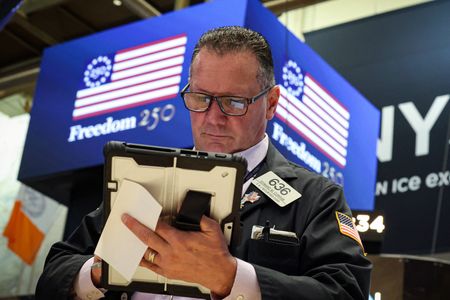
Monday’s trading session brought notable developments across various asset classes. Asian markets posted gains with major indices rising approximately 0.5 percent, while European markets moved in the opposite direction with key benchmarks falling roughly 1 percent. Wall Street’s three primary indices declined, ending the Nasdaq’s remarkable 13-day winning streak, though the Russell 2000 managed a 0.5 percent gain to reach a new record high.
Within the S&P 500, six sectors advanced while five retreated. Companies developing psychedelic medications saw their shares rally significantly. Apple’s stock dropped 1.5 percent in after-hours trading following news that Tim Cook would step down as chief executive, though the shares recovered most of their losses.
Currency markets saw the dollar weaken slightly, with the Canadian dollar and Norwegian krone leading gains among major developed market currencies. The Indian rupee and South African rand were among the biggest decliners in emerging markets.
Bond markets showed mixed activity as Japanese government bond yields fell, with 30-year rates hitting their lowest level in three weeks. British 10-year gilt yields increased by 7 basis points, while U.S. yields rose 2 basis points at the short end of the curve.
Energy markets experienced the most dramatic moves, with Brent crude surging 5.6 percent and West Texas Intermediate jumping 6.9 percent. Despite these gains, both oil benchmarks remained well below the $100 per barrel threshold. Precious metals declined approximately 1 percent.
The market’s resilience to ongoing Middle East conflicts continues to strengthen, defying expectations from when tensions first began escalating. Few would have predicted eight weeks ago that oil would remain under $100 per barrel while the S&P 500 and Nasdaq reached record highs, the VIX stayed below 20, and the 10-year Treasury yield held at 4.25 percent.
Kevin Warsh, former Federal Reserve governor and nominee to replace Jerome Powell as Fed Chair, faces Senate confirmation hearings Tuesday. Warsh is expected to tell lawmakers he remains “committed to ensuring that the conduct of monetary policy remains strictly independent.”
However, President Donald Trump, who selected Warsh for the position, has repeatedly expressed his preference for lower interest rates and shown less commitment to Fed independence. Senators are likely to press Warsh on how he would lead the central bank while resisting potential White House pressure.
This week’s earnings spotlight shifts to technology companies, with IBM, Intel, and Tesla scheduled to release quarterly results. While the tech-heavy Nasdaq ended its historic 13-day winning streak Monday, the pullback from Friday’s record high amounted to just 0.3 percent.
Concerns about capital expenditure returns, market concentration risks, rising energy costs, and Mythos security issues remain in the background for now. The upcoming earnings reports will provide early indicators of whether renewed artificial intelligence optimism is warranted.
Looking ahead to Tuesday, market participants will monitor Middle East developments, energy market movements, New Zealand’s first-quarter inflation data, Taiwan’s March export orders, UK February employment figures, Germany’s April ZEW investor sentiment index, and U.S. March retail sales data.