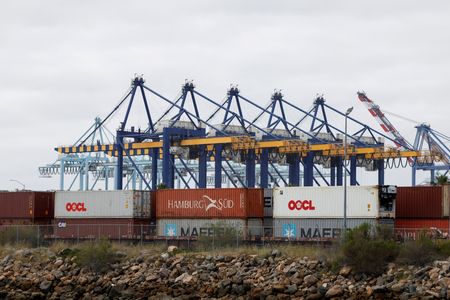

A federal refund portal designed to help businesses recover tariffs that were illegally collected by the government became operational Monday, prompting thousands of companies nationwide to immediately submit their claims.
Jay Foreman, who leads toymaker Basic Fun, described the early experience as positive despite some technical hiccups. His team assembled in what he called a “war room” at their Boca Raton, Florida office, preparing to begin submissions when the portal opened at 8 a.m. Eastern time.
“So far, so good,” Foreman noted, explaining that while the system experienced some glitches, it avoided the complete crashes many had anticipated given the volume of expected users. The company needed to upload more than 500 files to the system, which allows batch submissions but sometimes rejects uploads when overloaded.
“However, if you load too many or the system is too busy it will kick them back,” Foreman explained via email during the initial hours of operation. “We’ve got over 50% of our invoices loaded so far. We are hoping in the next few hours to have them all loaded. I’m very happy we got this process started early.”
Many businesses had expressed doubts about whether the new portal, developed by U.S. Customs and Border Protection following a court mandate, could handle the expected demand for refunds potentially totaling $166 billion.
Cassie Abel, who runs Idaho-based outdoor clothing company Wild Rye, expressed relief about the system’s performance. She hired a customs broker to handle her submission, paying $250 for the initial filing phase.
“I’m relieved that the portal seems to be functioning properly,” Abel stated.
The refund system stems from a February Supreme Court decision that invalidated tariffs implemented by former President Donald Trump under emergency authority legislation, delivering a significant legal setback to the Republican leader.
According to customs agency documents filed in court, approximately 56,497 importers had completed preliminary requirements for electronic refunds as of April 9, representing claims worth $127 billion—more than three-quarters of the total eligible amount. The tariffs in question were paid by over 330,000 importers across 53 million shipments of foreign goods.
While it remains uncertain whether early submission affects processing speed, many companies chose not to delay their filings.
A Customs and Border Protection representative said Friday that officials developed a system designed to “efficiently process refunds, pursuant to court order, for importers and brokers who paid” the disputed duties.
Rick Woldenberg, who heads educational toy company Learning Resources, reported hearing about temporary system crashes affecting some users, though he didn’t experience problems himself.
“I think it was sort of like everyone was lined up to get Taylor Swift tickets — they all hit the button at once,” Woldenberg observed.
Learning Resources participated in the original lawsuit that led to the tariff reversal and is pursuing approximately $10 million in refunds. The company submitted roughly 5,000 entries, with most being accepted by the system.
Woldenberg expressed frustration about needing to file for reimbursement at all, questioning: “They have a ruling from the Supreme Court that says they over-collected taxes, so why do I have to tell them to send it back?”
Despite his concerns, he praised the system’s smooth operation and the professionalism of customs officials.
“The policies set at the top have nothing to do with the professionals who work in CBP, and those folks have done a good and earnest job,” Woldenberg said.
Lynlee Brown, a global trade specialist at EY, reported that the firm’s clients generally found the system accepted most submissions without issues, though she noted the initial filings involved simpler, less complex cases.
Brown explained that accepted entries move to an automated mass-processing stage designed to issue refunds within 60 to 90 days.
“If an origin comes up that looks fishy,” she said, “that will probably go to a human for review.”
This development represents the newest chapter in an extended dispute over emergency tariffs collected during the past year as Trump attempted to reshape American trade relationships. The frequently changing tariffs disrupted international commerce, forcing companies to relocate supply chains and determine responsibility for the additional taxes.