
Professional football franchises are placing greater emphasis on tight end talent in this week’s NFL Draft as offensive coordinators increasingly deploy multiple tight ends simultaneously to combat nickel defensive packages.
Organizations including Seattle, the Los Angeles Rams, and Chicago Bears achieved notable success in 2025 utilizing multi-tight end formations to attack smaller defensive units, a strategy expected to spread throughout the league this season. This tactical evolution places heightened value on drafting large, adaptable athletes capable of both blocking in the running game and making catches in the passing attack.
“I think offenses have tried to counter that by getting them back into base defenses by going heavier,” Bears coach Ben Johnson explained regarding offensive responses to defenses featuring additional defensive backs. “Sometimes 12 personnel (one running back, two tight ends) will do the trick, other times 13 (one running back, three tight ends) will do the trick. I think having some versatility at the tight end position, that’s hard to find. … When you have that versatility, it really opens up Pandora’s box.”
Chicago executed 501 plays featuring multiple tight ends last season, ranking third league-wide, following their unexpected selection of Colston Loveland with the 10th overall pick to complement Cole Kmet.
However, the Bears represented just one example of this league-wide trend.
According to Sportradar data, tight ends accumulated 48,102 offensive snaps last season, establishing a 20-year record. The position also achieved new benchmarks for receptions (2,866) and receiving yards (29,072), with per-game yardage totals climbing 37% compared to two decades ago.
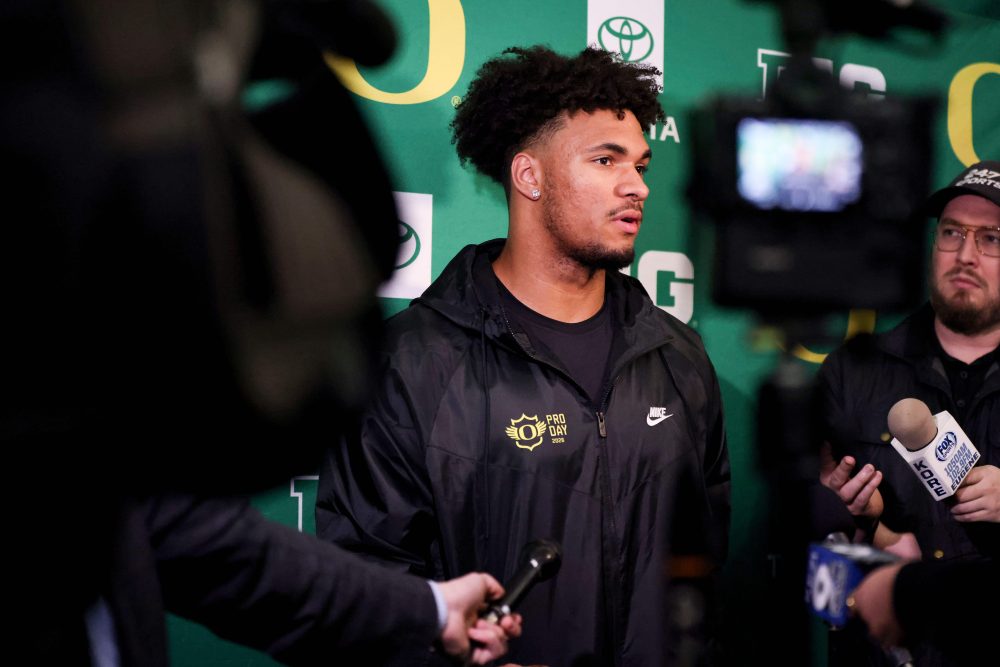
“I think it’s awesome,” commented Kenyon Sadiq, this draft’s premier tight end prospect. “More tight ends in the game, more snaps for everyone. I think you’re just able to do so much with different kinds of tight ends and different types of personnels in the game. Whether it’s explosive passes, run game, just creating mismatches in different places.”
Multi-tight end formations have surged 30% per game since 2018. Three-tight end packages experienced even more dramatic growth, with 1,897 plays last year setting a new record and representing a 33% jump from 2024.
Los Angeles executed 331 plays featuring three or more tight ends, shattering the previous two-decade record of 204 established by Cleveland in 2021.
The challenge facing franchises across the league involves locating additional players capable of filling these demanding roles.
Twenty-seven tight ends received scouting combine invitations — approximately 50% above typical numbers — as expanded tight end usage in both college football and professional ranks has elevated more position players into potential draft selections.
“You see so many teams running so much 12 personnel even 13 personnel, so you’re seeing more tight end usage,” ESPN draft analyst Matt Miller observed. “I think it also just trickled down to the college game. I remember when I was doing this seven or eight years ago, you talked to college coaches about tight ends who had 30 catches. It was like, well, we don’t really throw the ball to our tight ends a lot. Now we see a difference with that where tight ends are being featured in college games.”
Sportradar research indicates an average of 14.1 tight ends selected per draft since 2020, with 19 taken in 2022 representing the highest total in that timeframe. The most drafted since 2010 occurred in 2015 when 22 tight ends heard their names called.
“It’s such a unique position,” said Falcons general manager Ian Cunningham, who worked in Chicago’s front office last season. “The guy that can block, run routes (use them in) spacing. For the coordinator, using them in 12 personnel. Especially, when you get a guy like Colston (Loveland), when you get a guy like Kyle (Pitts), it gives you another weapon. It helps dictate the defense. Whether if they’re going to play base to that or whether they’re going to play nickel. So, it allows a lot of flexibility for an offense. I feel like that position is going to continue to grow moving forward.”
Organizations have pursued elite tight end talent more aggressively than ever, with Pitts selected fourth overall by Atlanta in 2021 and three others chosen within the top 15 over the past two drafts: Brock Bowers, Loveland and Tyler Warren.
Only two tight ends were selected in the top 18 during a 14-draft span from 2007-20, but Sadiq possesses an opportunity this year to join the tight ends chosen in the first round’s upper half.
Sadiq, who recorded 51 receptions for 560 yards playing for Oregon last season, captured widespread attention with an outstanding combine showing that included a record-setting 4.39-second 40-yard dash time for tight ends, plus a 43.5-inch vertical leap.
Vanderbilt’s Eli Stowers also impressed at the combine with a 45.5-inch vertical jump and projects as a Day 2 selection. Additional tight ends expected to be chosen in middle to late rounds based on team-specific needs include Ohio State’s Max Klare, Utah’s Dallen Bentley, Texas’ Jack Endries, Georgia’s Oscar Delp, Michigan’s Marlin Klein, Baylor’s Michael Trigg, NC State’s Justin Joly, and Stanford’s Sam Roush.
“I’ve got the speed and athleticism and hands to receive and catch balls and be a threat on offense in the pass game as well,” Roush explained. “You need guys that can do both. There’s kind a shortage of true Y tight ends that can do both and block. I think that’s where I’ll bring value is the ability to kind of do it all. It’ll be hard to take them off the field.”