
A powerful Cambodian gambling mogul’s business empire served as the landlord for a compound that became the base of a massive scamming and human trafficking operation, a Reuters investigation has revealed.
Documents reviewed by the news agency — including a rental agreement dated March 2024 — show that Lim Heng Group leased buildings on grounds it shares with one of its casinos on the border between Thailand and Cambodia, charging above-market rental rates.
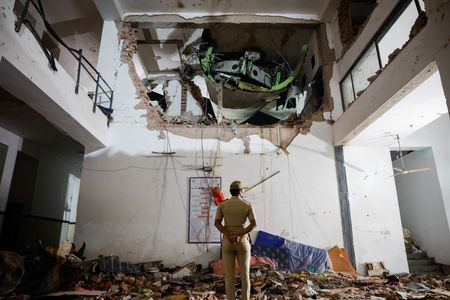
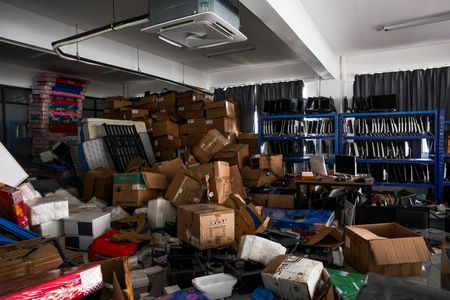
Inside those buildings, rooms had been converted to resemble police stations and bank offices from various countries, serving as the staging grounds for impersonation scams targeting victims around the world. That finding comes from interviews with the Thai military, individuals who worked inside the buildings, and two separate visits Reuters made to the property this year.
Reuters is the first news organization to reveal the commercial relationship between Lim Heng Group and the buildings where the scams took place — located just tens of meters from its Royal Hill casino.
The news agency found no direct evidence that Lim Heng Group participated in the trafficking or fraud activity at the location.
Royal Hill casino did not respond to phone calls or emails seeking comment on the cyberscam and trafficking activities. Questions sent to Lim Heng Group by registered post were delivered but never answered.
According to the independent Cambodian Human Rights Action Coalition and a Phnom Penh-based attorney specializing in business and human rights law, Piseth Duch, prosecutors can pursue charges against property landlords if it can be shown that they were aware criminal activity was taking place and allowed it to continue.
Lim Heng Group had been alerted to possible trafficking activity at Royal Hill as early as September 2024, when a company representative filed a legal complaint against two Cambodian publishers whose news outlets had reported that foreign nationals were being held against their will inside the casino compound.
Court summonses tied to those “incitement to discrimination” complaints — both dated September 16 and reviewed by Reuters — did not spell out which specific claims in the articles Lim Heng disputed.
One of the publishers, Penn Nuon, confirmed that a legal complaint had been filed in connection with his reporting on foreign nationals held at Royal Hill. He said his reporting was accurate but that he had taken down the article to resolve the matter after consulting with his attorney.
Reuters was unable to confirm whether the complaint was ultimately dropped. The Phnom Penh court where the complaints were filed did not respond to questions.
Gen. Thatchai Pitaneelaboot of the Royal Thai Police, which is heading the investigation into alleged cyberfraud at the compound, told visiting reporters that Chinese criminal groups had run scams at the Royal Hill location, though he did not provide specifics about their identities.
Thailand has confirmed Lim Heng’s ownership of the site, according to two Thai security agency reports on Cambodian cyberfraud prepared this year and reviewed by Reuters.
Southeast Asia has become home to numerous large-scale fraud operations, where mostly Chinese-led criminal organizations hold trafficked victims and force them to carry out romance scams and police-impersonation schemes. The U.S. government has estimated that Americans lost $10 billion to fraudsters operating in the region during 2024.
Jason Tower of the Global Initiative against Transnational Organized Crime nonprofit noted that many Chinese-affiliated scam syndicate operators also have ties to casinos, which give them a way to conceal illegal profits.
An Amnesty International investigation, drawing on gambling regulator records and witness accounts, found that casino owners in Cambodia were “in direct control” of at least a dozen scam centers. Reuters has not independently verified those figures.
Sophal Ear, a professor at Arizona State University who studies Cambodian politics, noted that casinos in the country are frequently controlled by individuals with political connections.
Lim Heng fits that description: he has been photographed alongside senior military generals at social events, holds a royal title equivalent to a duke, and donated $20,000 to Cambodia’s military last year, according to a business association that lists him as a member.
While the Cambodian government has pledged to shut down scam centers, it has consistently described Royal Hill as simply a hotel — even as images of fake police stations and bank offices found inside the compound were broadcast by media outlets across the globe this year.
As part of a broader crackdown, Cambodia has extradited casino owner and alleged scamming kingpin Chen Zhi to China and passed new laws directly targeting scam operations.
Chhay Sinarith, a senior Cambodian minister assigned to combat online fraud, responded to Reuters’ questions by saying the government is dedicated to working with international partners to address scam activity. He also said Cambodia is investigating alleged fraud in the area surrounding Royal Hill, but called on Thai security forces to return control of the locations they have seized in order to allow those investigations to proceed.
The Cambodian military did not respond to questions about its relationship with Lim Heng.
The Royal Hill casino itself is a weathered structure featuring neoclassical columns and gold-trimmed spires positioned just meters from the Thai border.
It sits next to two buildings where Reuters uncovered evidence of scam operations. Those structures were part of a cluster of buildings surrounded by a tall fence topped with razor wire. Thai security officials and a Thai woman named Pornpen Aimhun — who said she was trafficked to Royal Hill — indicated that at least four of the enclosed buildings were used for criminal purposes.
Reuters examined the rental agreement between Royal Hill and a Chinese national at an office inside one of the buildings, which the Thai military said appeared to have been used by scam organizers. The contract showed Royal Hill agreed to rent three buildings within its compound to the Chinese national for two years at a rate of $200,000 per month. It was signed by the tenant and by Seng Chanthy, who was at the time an employee of Royal Hill. Seng Chanthy did not respond to a request for comment on the contract.
Reuters is not publishing the name of the tenant because the news agency could not independently verify his identity or confirm his involvement in the scam activity.
That rental price was extraordinarily high for three buildings in a quiet border town. For comparison, a mixed-use building of similar size in an upscale Phnom Penh neighborhood was listed for $25,000 a month in May.
Reuters visited the casino compound in February and March at the invitation of the Thai military, which had bombed Royal Hill during a brief armed conflict with Cambodia in December. The military, which now controls the site, said it wanted to present evidence that Royal Hill had functioned as a scam facility. Thailand said it targeted Royal Hill because its troops had reported that buildings in the area had been taken over by Cambodian forces and used for drone and sniper attacks.
Cambodian information minister Neth Pheaktra told Reuters that those claims were false and that Thailand had struck civilian infrastructure.
The lease described the dimensions of two of the buildings and noted that the third contained 252 rooms, without providing additional identifying information.
Bangladesh-based architect Rizvi Hassan, who analyzed satellite imagery of the buildings on Google Earth at Reuters’ request, found that the dimensions of three of the enclosed structures matched the measurements listed in the contract. The Thai military also told Reuters that its initial survey of the site suggested two of the structures contained approximately 250 rooms.
The U.S. State Department’s 2024 human trafficking report stated that abuses within scam operations remained “widespread” in Cambodia because elites in the country owned properties used by scammers and profited financially from those crimes.
“Scam centers require physical infrastructure, access to land, and a degree of protection to operate at scale,” said Ear, the Arizona State professor.
The scam operations in the border region were among the largest in Southeast Asia: Thai security forces say the enclosed structures at Royal Hill held roughly 3,000 people and were part of a larger 200-acre scam complex.
Pornpen told Reuters she was drawn to Royal Hill in 2022 by a Facebook advertisement promising a web administrator position. She was instead forced to take part in a police-impersonation scheme before managing to escape. She described guards armed with truncheons monitoring workers, with those who fell short of quotas facing punishment.
A spokesperson for Meta, the parent company of Facebook, said the platform has built warning messages that appear when users search for keywords that may be linked to fraudulent job listings.
Reuters verified Pornpen’s account through another individual who said they were also trafficked to Royal Hill and encountered Pornpen there, as well as through the Thai police, who confirmed she is a witness in a court case related to fraud carried out at the compound.
That court has since convicted a Thai national of voluntarily working as a low-level scammer at Royal Hill, sentencing him to five years in prison, according to a police statement on the verdict, which did not name his employers or his attorney.