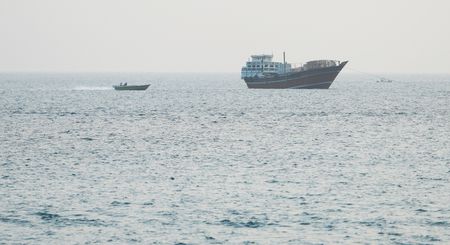

Iran’s Islamic Revolutionary Guard Corps is threatening to shut down “all other export corridors that benefit the U.S. and its allies,” according to Iranian state media, following the closure of the Strait of Hormuz and the reimposition of a U.S. naval blockade around Iranian ports.
“Regional energy exports are either shared by all, or denied to all,” the IRGC declared in a statement carried by Iran’s IRNA state news agency on Wednesday.
Analysts believe Iran may be signaling that it could use its Houthi allies in Yemen to close the Bab el-Mandeb strait — a narrow waterway connecting the Red Sea to the Gulf of Aden — potentially putting two of the globe’s most critical energy shipping routes at risk simultaneously. Saudi oil exports and a large portion of worldwide shipping pass through that gateway.
A senior Houthi official warned on Monday that the group was ready to seal off the Bab el-Mandeb strait, a move he said could drive oil prices to $200 per barrel, if Saudi Arabia continued military operations against Yemen. That warning came after Houthi forces launched missiles at Saudi Arabia, accusing the kingdom of bombing an airport under their control — a development that shattered a four-year ceasefire between the two sides.
The Houthis have demonstrated before that they can disrupt global trade through the Bab el-Mandeb. Following the outbreak of the Gaza conflict in October 2023, the Iran-backed group attacked commercial vessels in the Red Sea, claiming it was targeting ships connected to Israel in solidarity with Palestinians.
The current wave of threats follows U.S. military strikes launched to “continue degrading Iranian capabilities used to attack commercial shipping in the Strait of Hormuz,” according to a U.S. military statement. American officials say Iran attacked seven commercial ships over the past week, leaving nearly a dozen crew members dead, missing, or hurt.
Late Tuesday, the U.S. military reported it had hit dozens of military targets near the Strait of Hormuz and along Iran’s coastline. According to U.S. Central Command, that wave of strikes lasted seven hours.
The IRGC announced Wednesday that the Strait of Hormuz would stay closed until what it called “the end of America’s evils.” Prior to the conflict’s outbreak in February, roughly one-fifth of the world’s daily oil and gas shipments moved through Hormuz.
The Revolutionary Guards also said they struck what they described as command-and-control, logistics, fuel, and military equipment facilities belonging to the U.S. Fifth Fleet in Bahrain. They additionally claimed to have set fire to and destroyed a U.S. logistics facility in Kuwait’s Mina Abdullah, and said their air force targeted a U.S. base at Azraq in Jordan, striking aircraft hangars. The IRGC said some of the U.S. attacks had originated from bases on Jordanian soil.
Kuwait’s state news agency reported earlier Wednesday that a fire at a targeted site had been brought under control, though it was not immediately clear if this was the same location mentioned by the IRGC. Jordan’s air defense forces intercepted and shot down three ballistic missiles that crossed into the country’s airspace from Iranian territory early Wednesday.
The renewed hostilities between Iran and the U.S. flared up last week, unraveling a fragile truce that had been reached in June following months of fighting that has claimed thousands of lives.
President Trump on Tuesday threatened to strike Iranian power plants and bridges as early as next week if Tehran does not return to negotiations. “I’ll save the energy targets for last, but ultimately we’ll hit energy targets,” Trump said in a Fox News interview with Trey Yingst. He also said U.S. negotiators had contacted their Iranian counterparts to tell them “you better make a deal.”
As tensions continued to build, Trump on Monday floated the idea of imposing a 20% fee on ships passing through the strait — a proposal that drew strong criticism from the United Nations shipping agency and others. By Tuesday, he had abandoned that idea, saying instead that he would pursue investment agreements with Gulf states, though he offered no specifics.
Oil prices climbed further Wednesday after closing up 2% to a one-month high on Tuesday, as the ongoing conflict continues to disrupt supply through the Strait of Hormuz. Both Brent crude and West Texas Intermediate posted their highest closing prices since mid-June for the second consecutive session, with both contracts climbing again in early Wednesday trading.