
A blood test could one day tell apparently healthy older adults whether they are likely to develop Alzheimer’s disease within the next five to ten years, according to new research released Wednesday.
While that kind of information could bring either comfort or anxiety, scientists say the most immediate value of the test is in helping researchers identify and recruit high-risk individuals into clinical trials for potential Alzheimer’s treatments and prevention strategies.
Large-scale clinical trials are already underway to determine whether certain medications can prevent or delay the onset of Alzheimer’s — and if those efforts succeed, doctors will need a reliable, easy-to-use tool to determine who might benefit from treatment.
However, the researchers behind the new study are urging healthy individuals not to seek out the test just yet. The test — known as the p-tau217 test — is currently used to help determine whether people already experiencing memory or cognitive problems have Alzheimer’s or a different condition.
“Wait and get tested when you can potentially do something about it,” said Dr. Reisa Sperling of the Mass General Brigham Neuroscience Institute, the study’s senior author. “At this point it wouldn’t change what I would tell someone to do. I’d still tell them to eat well, sleep well, exercise a lot and stay engaged.”
The study found that symptom-free older adults with very high p-tau217 levels faced a 38% chance of developing cognitive impairment within five years. That figure climbed to 78% over a ten-year period. Those with very low levels of the protein had a correspondingly low risk over the same timeframes.
The research was published in the journal JAMA and presented at the Alzheimer’s Association International Conference in London.
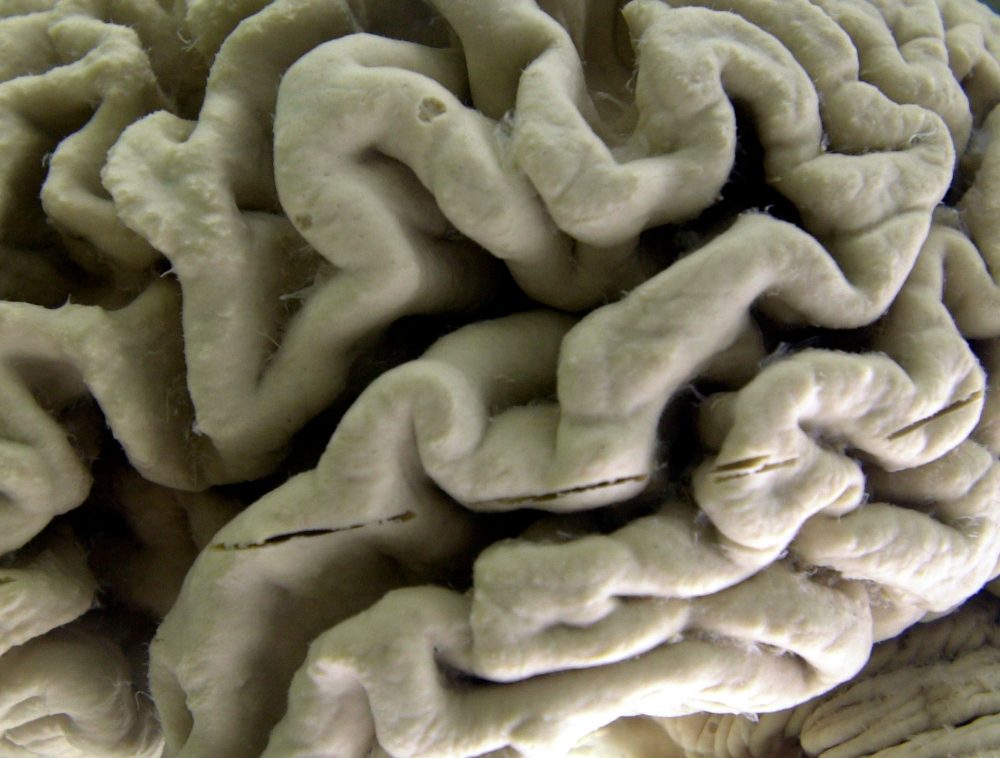
While the exact cause of Alzheimer’s remains unknown, the disease is characterized by amyloid plaques that clog the brain and tau tangles that destroy neurons. The p-tau217 test measures a specific form of tau that reflects how much plaque has accumulated and also provides clues about tau tangle formation, according to Sperling.
The Mass General Brigham research team examined data from 2,684 older adults who were cognitively healthy when they enrolled in several long-running Alzheimer’s studies. Participants received the p-tau217 blood test at the time of enrollment and underwent yearly cognitive evaluations. From the earliest enrollment in 2004 through last year, approximately 478 participants went on to develop cognitive impairment.
A well-known puzzle in Alzheimer’s research is that many people have high levels of amyloid plaques in their brains but never develop dementia. A leading theory holds that at a certain point, amyloid buildup triggers an abnormal form of tau to form tangles, which then leads to symptoms.
Sperling said the blood test data offers new insight into that process. While varying intermediate levels of p-tau217 indicated increasing risk, only the very highest levels appeared to correspond with other evidence pointing to that critical tipping point.
“This is a gradual process where amyloid and tau build up in the brain and this blood-based biomarker is telling you how far you are in that process,” she said.
Outside scientists praised the study while also urging some caution. They noted that only a small portion of participants had been followed for a full decade, meaning the ten-year risk estimate carries less certainty than the five-year figure.
Additionally, Drs. Suzanne Schindler of Washington University in St. Louis and David Wolk of the University of Pennsylvania wrote in a commentary published alongside the study in JAMA that predictions could be complicated by other factors — including the possibility that older adults may die from unrelated causes, or that heart-related conditions could lead to vascular dementia rather than Alzheimer’s.
The blood tests “are not yet precise enough to guide individualized prognosis,” Schindler and Wolk wrote, though they acknowledged the new research has “provided a crucial piece of the puzzle.”
Jessica Langbaum of the Banner Alzheimer’s Institute in Phoenix said her team is already fielding requests from people who want the test due to family histories of the disease — something she strongly discourages for now.
“These findings are quite strong,” Langbaum said, adding that a predictive blood test would be “really important” — but only once ongoing research identifies a drug that can help people before symptoms ever begin.