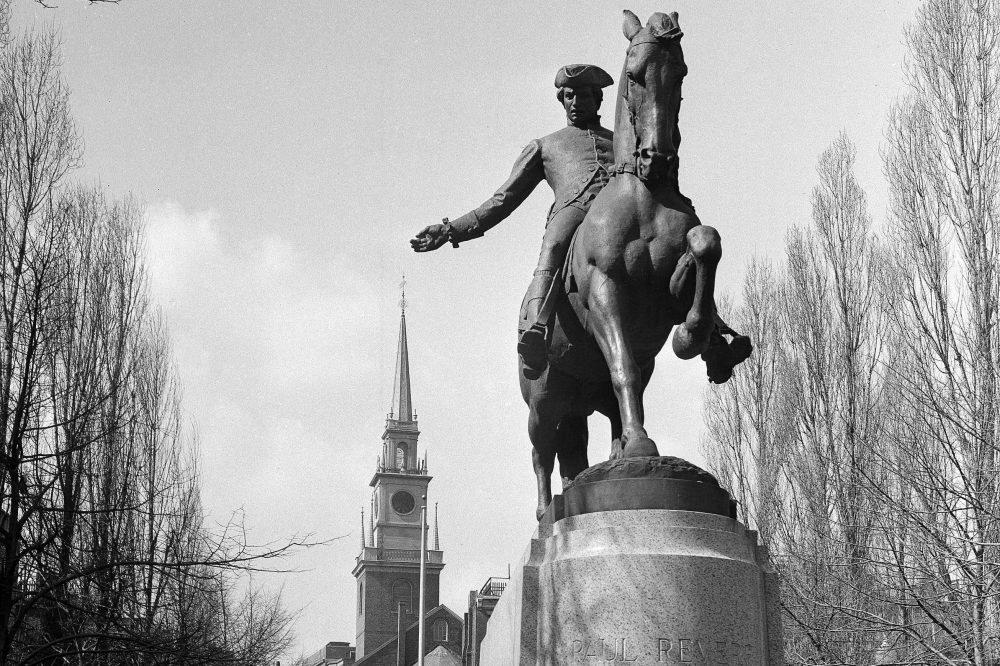

BOSTON — A commemorative recreation of Paul Revere’s legendary 1775 warning journey will take place Monday with some contemporary adjustments: the event will occur during daylight hours and feature law enforcement accompaniment for the mounted participants.
The original journey occurred on April 18, 1775, when the silversmith and messenger was sent to Lexington to alert Revolutionary War leaders Samuel Adams and John Hancock that British forces planned to arrest them. His mission then continued to Concord to warn residents about planned attacks on weapon storage sites.
Revere arrived in Lexington around midnight, while William Dawes, another messenger, reached the destination via an alternate path shortly afterward carrying identical warnings.
Their warning efforts led to armed colonial militiamen facing off against a significantly larger British military force advancing from Boston at Lexington Battle Green. The British troops were eventually forced to retreat to Boston, where colonial forces surrounded them for 11 months during what historians call the Siege of Boston.
“It’s important because you have to have someone to meet the British troops,” said Nina Zannieri, executive director of the Paul Revere Memorial Association, which owns and operates The Paul Revere House. “It becomes a turning point. If no patriots had turned out on the green and the British had just rolled into town, it would have been different. But they actually meet resistance.”
The costumed performer, accompanied by a second horseman, will approximately follow Revere’s path from 251 years ago. The journey begins in Boston’s North End and continues through Charlestown, Somerville, Medford and Arlington before concluding in Lexington — all locations where Revere warned local militias about British military movements.
Several elements from the historical evening will be omitted from Monday’s event, including Revere’s boat transportation to Charlestown before beginning his horseback journey.
The reenactment also won’t include Revere’s temporary capture by British soldiers while traveling to Concord after departing Lexington. Revere was eventually released without his horse after persuading the British that hundreds of patriots awaited them, and he walked back to Lexington to witness the battle’s conclusion.
“It’s basically important that he leaves Boston. He rides. He’s alerting people. Other people are out,” Zannieri said. “He starts a chain reaction, and he accomplishes his mission even though he gets stopped and held. He’s lucky he wasn’t killed.”
While Revere navigated around patrols and traveled on rough, muddy paths, today’s rider will enjoy easier conditions, riding on paved surfaces through areas filled with traffic signals, automobile dealerships and busy commercial districts that Revere couldn’t have envisioned. The 2026 Boston Marathon occurs simultaneously, though the events follow separate routes.
Michelle DiCarlo-Domey, who coordinates the annual event for the National Lancer, the state’s historical mounted cavalry organization, said thousands attend to witness history recreated and demonstrate their patriotic spirit. The National Lancer has organized the Revere and Dawes commemoration for more than 110 years.
“Whenever you can interact with the riders and the horses, it can help carry history on,” DiCarlo-Domey said. “Kids can relate to what they learn in school. And where else do you see two horses running down the street?”