
As Maryland marks the 250th anniversary of the United States, communities throughout the state are welcoming a unique form of living history into their midst.
During the years leading up to the American Revolution, Liberty Trees served as vital gathering spots across the thirteen colonies. Groups like the Sons of Liberty would meet beneath their branches to debate rights, self-governance, and the future of colonial America.
Maryland’s own Liberty Tree — a tulip poplar once located near what is now St. John’s College in Annapolis — became one of the state’s most cherished historic landmarks. During the turmoil surrounding the Stamp Act of 1765, citizens and community leaders gathered beneath its branches, cementing it as a symbol of civic engagement and Maryland’s place in the nation’s founding story.
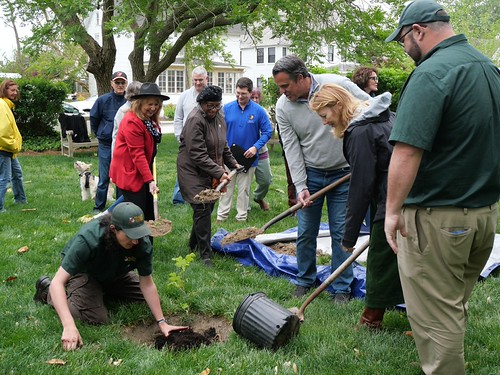
This year, the Maryland Liberty Tree Project is planting a genetically identical descendant of that original tree in each of the state’s 23 counties and in Baltimore City. With the majority of plantings now finished, residents across Maryland are encouraged to visit these trees and experience a living link to the state’s past.
For the Maryland Forest Service, the initiative represents a meaningful intersection of history, environmental care, and community investment.
“Foresters think in generations,” said Maryland State Forester Anne Hairston-Strang. “The trees we plant today will provide benefits for people and wildlife for decades to come. The Liberty Tree Project allows us to honor Maryland’s history while creating lasting community assets that future generations will enjoy and care for.”
Maryland’s original Liberty Tree stood for centuries, eventually reaching more than 120 feet in height and becoming one of the largest tulip poplars in the entire country — until it was toppled by Hurricane Floyd in 1999. Fortunately, a genetically identical cutting from the original tree had been preserved, keeping its legacy alive.
That legacy now stretches across the entire state, from the mountains of western Maryland to the Eastern Shore. Each newly planted tree honors the Old Line State’s role in the founding of the nation while also investing in the long-term health of Maryland’s communities. As they grow, these trees will offer shade, cleaner air, wildlife habitat, and gathering spaces for future generations.
The Liberty Tree Project is also part of the Maryland Forest Service’s larger mission to leave future generations with healthy, thriving forests. The agency is leading Maryland’s 5 Million Trees initiative, which aims to plant and maintain 5 million native trees by 2031. More than 1.5 million trees have already been planted, though reaching the full statewide goal will require continued public involvement and local partnerships.
There are several ways residents can participate. Marylanders can plant and register qualifying native trees on their own property, join local planting events, or take advantage of the Marylanders Plant Trees program, which offers discount coupons for native trees at participating nurseries. Community organizations, schools, municipalities, faith communities, and other groups interested in planting on public or community land can connect with the Maryland Forest Service through the Tree-Mendous Maryland program.
The Maryland Forest Service is also actively seeking additional public sites where native trees can be planted, with a particular focus on expanding tree coverage in urban underserved communities as part of a goal to plant 500,000 trees in those areas. Parks, school grounds, and other publicly accessible spaces are ideal candidates. Residents or organizations interested in suggesting a planting location are encouraged to reach out to their local tree planting specialist.