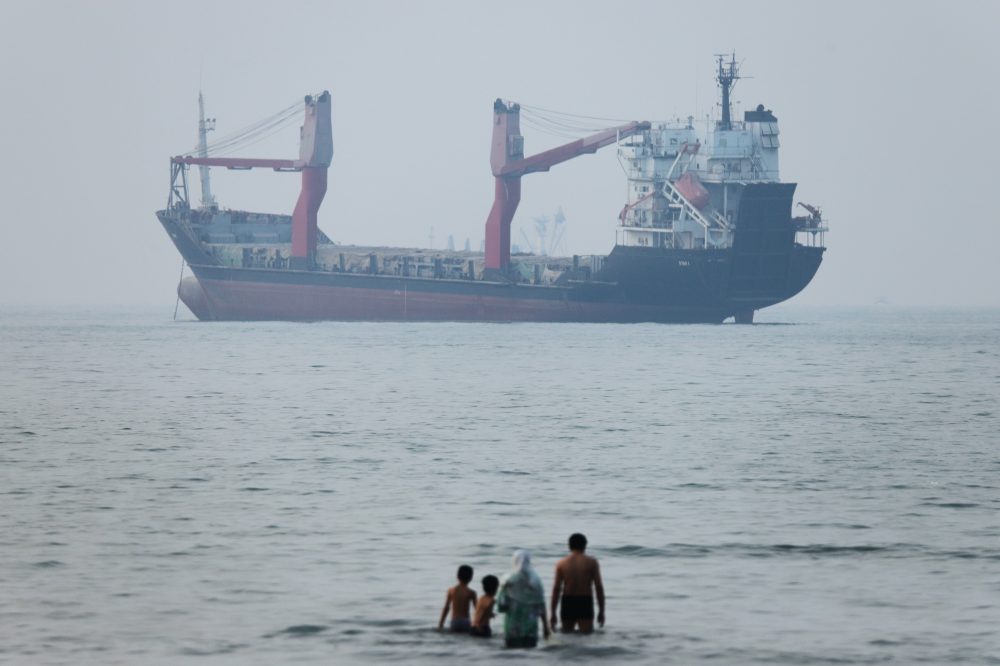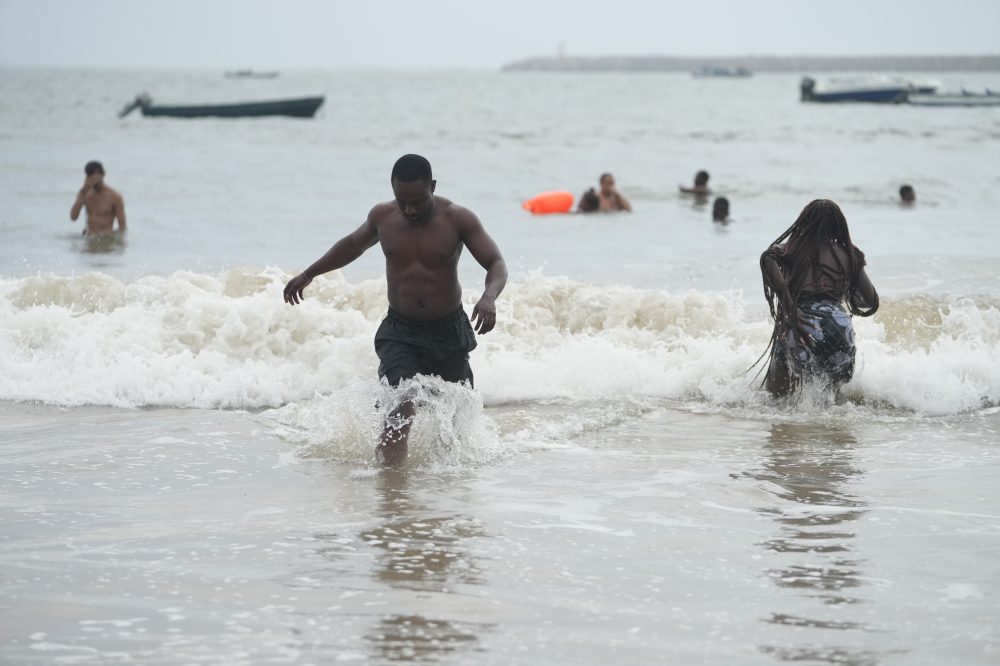

LAGOS, Nigeria — For 27-year-old writer Mukthar Oladunmade, trips to the beach have been a weekend ritual since childhood. In the non-stop, fast-moving city of Lagos, the Atlantic coastline that wraps around much of the city has long been his preferred spot to decompress.
But that simple pleasure is no longer simple — or affordable. A day at the beach in Nigeria’s main commercial center now requires budgeting for a growing list of charges: entrance fees, seating, meals, beverages, and activities. The reason? Local government has been handing over large sections of the shoreline to private operators.
“It costs a lot of money for the average Nigerian to come here,” Oladunmade said while visiting Takwa Bay, one of the few remaining islands that hasn’t been taken over by private ownership.
Oladunmade travels frequently across West Africa for work and enjoys winding down at the beach wherever he goes — whether in Accra, Cotonou, Dakar, or other regional cities. He says Lagos is the only place where that has become nearly out of reach.
“On average, I spend 25,000 naira ($18) whenever I think of coming to the beach,” he said.
For most Lagos residents, that figure is a significant burden. The majority of people in the city work in the informal economy, and Nigeria’s national minimum wage stands at just 77,000 naira — roughly $56 — per month.
The beach represents one of the few places in this city of more than 20 million people where residents can escape both the crowds and the relentless heat. Lagos sits near the equator, where humidity hovers around 80% throughout the year.
Yet most of the city’s 180-kilometer coastline is being transferred out of public hands — either privatized by the government or claimed by families with ancestral ties to the land. The Lagos state government has also reclaimed coastal land for upscale housing developments, a causeway, and a deep-sea port.
Beaches that were once free to enter are now almost entirely ticketed. Entry fees range from 2,000 naira (about $1.50) to as high as 60,000 naira ($44), as the state government has licensed these spaces to private individuals and businesses.
A thriving commercial scene has emerged around these beaches, but prices under private management are steep.
“They are only making money half of the year, having put a lot of money in it,” said Doyin Ogunye, who operates food and beverage businesses at several beaches. “So the entry to the beach, the food and drinks will be more expensive.”
The Lagos state government has spent years marketing the city as a “megacity” designed to draw international tourists and global investment — and the strategy is producing results. In 2025, Lagos state brought in 2.6 trillion naira ($1.9 billion) in internal revenues, a 16% jump from the previous year and more than any other state in Nigeria, according to the state’s commissioner of finance.
But that economic growth has increasingly squeezed lower- and middle-income residents, affecting everything from access to basic services to pressure on coastal communities to relocate.
“The approach of the Lagos state government for a long time has not been about the people, it is about the money. It is about how do we build this city in a way that is making money?” said Olamide Udoma-Ejorh, director of the Lagos Urban Development Initiative, a nonprofit organization that advocates for a more inclusive city.
The Lagos state government did not respond when contacted for comment. In prior statements, officials have argued that privatization has resulted in cleaner and safer beach environments.
Life in Lagos is notoriously demanding. Traffic gridlock is constant, the hum of generators fills the air, and the city’s well-known yellow buses — decorated with colorful stickers — run at all hours. Residents describe it as an exhausting place to live.
Esther Sorkpor, a final-year student at the University of Lagos, said she’s fed up with the restricted access to the waterfront.
“I should have access to nature for free. This is a reflection of how everything is monetized,” she said. “Nigeria is already a very high-tension country, and it is just very stressful to navigate.”
Experts are calling for a reassessment of how public spaces are managed. “The beach should be seen as a civic asset,” Udoma-Ejorh said.
As evening fell over Takwa Bay, visitors gathered their belongings and made their way home, boarding wooden motorboats that carried them past the coastline of Eko Atlantic — a private residential development catering to the ultra-wealthy that has long symbolized Lagos’ megacity ambitions.
And more developments like it are already in the works.