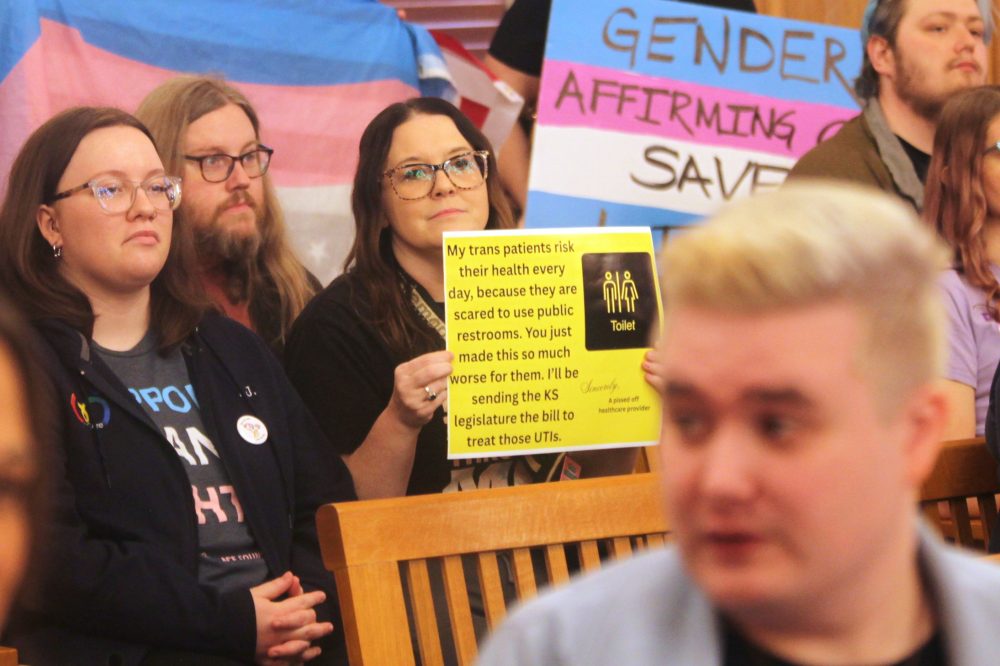

TOPEKA, Kan. — A groundbreaking law taking effect Thursday will make Kansas the first state in the nation to actively reverse gender identity changes on official government documents, affecting approximately 1,700 driver’s licenses and nearly 1,800 birth certificates held by transgender residents.
The legislation became law after Republican legislators used their supermajority to override a veto from Democratic Governor Laura Kelly last week. This action represents the most aggressive approach yet among GOP-led efforts nationwide to restrict transgender rights through official documentation policies.
While states including Florida, Tennessee, and Texas currently prohibit driver’s licenses from reflecting transgender individuals’ gender identities, and at least eight other states prevent changes to birth certificates, Kansas stands alone in mandating the reversal of modifications already completed for transgender residents.
“It tells me that Kansas Republicans are interested in being on the vanguard of the culture war and in a race to the bottom,” stated Democratic state Representative Abi Boatman, a transgender Air Force veteran who was appointed in January to represent a Wichita district.
The measure received overwhelming Republican backing and continues a pattern of annual legislative efforts to limit transgender rights in statehouses nationwide, supported by policies and messaging from President Donald Trump’s administration.
Republican officials, including Trump, characterize scientific findings about gender fluidity as extremist “gender ideology.” Kansas GOP legislators consistently refer to transgender girls and women using male pronouns while claiming their actions protect women.
Kansas Senate Majority Leader Chase Blasi echoed his Republican colleagues, arguing that Trump’s electoral victory and other 2024 GOP wins demonstrate public support for “returning to common sense” regarding gender issues.
“When I go home, people believe there are just two sexes, male and female,” Blasi explained. “It’s basic biology I learned in high school.”
Despite Governor Kelly’s support for transgender rights, Republican lawmakers have successfully overturned her vetoes in three of the last four years. Kansas has already prohibited gender-affirming medical care for minors and excluded transgender women and girls from participating on female athletic teams from elementary school through college.
The state also restricts transgender individuals from using public restrooms, locker rooms, and other single-gender facilities that align with their gender identity, though enforcement mechanisms were strengthened only with this year’s legislation.
Transgender advocates emphasize that carrying identification documents that don’t match their gender identity subjects them to invasive questioning, harassment, and potential violence when presenting IDs to law enforcement, businesses, and other entities.
In 2023, Republicans blocked gender identity changes on Kansas birth certificates and driver’s licenses through legislation that ended official state recognition of transgender residents’ gender identities. While that law didn’t explicitly reference either document, it legally established male and female classifications based on an individual’s “biological reproductive system” at birth.
A legal challenge resulted in state court rulings that allowed driver’s license modifications to resume last year.
According to bill-tracking software Plural, lawmakers in at least seven additional states are reviewing similar proposals to prevent transgender individuals from altering one or both types of documents. However, none of these measures would undo previously approved changes.
The decision by Kansas legislators to take this additional step sends a clear signal “that trans people aren’t welcome,” according to Anthony Alvarez, a transgender University of Kansas student who advocates for LGBTQ rights.
State officials plan to mail notices to transgender residents informing them their driver’s licenses are invalid and directing them to visit local licensing offices for replacement documents, explained Zachary Denney, a spokesperson for the issuing agency.
Since the Legislature didn’t allocate funding for implementation costs, affected individuals must pay the $26 fee for a standard license replacement.
Alvarez has already obtained four different IDs over four years due to name changes, gender marker updates, and reaching age 21. Despite his challenges, he had planned to remain in his home state of Kansas after completing his history degree this spring.
However, he noted, “They’re just making it harder and harder for me to live in the state that I love.”