
FUJIYOSHIDA, Japan (AP) — It all began with one stunning photograph.
A breathtaking image showing Japan’s iconic snow-covered Mount Fuji rising behind a crimson pagoda and delicate cherry blossoms quickly spread across social media platforms, capturing the essence of Japanese spring.
Before long, visitors seeking their own version of this picture flooded the quiet mountain town. Problems quickly followed: endless traffic backups, scattered trash, rude tourists knocking on residents’ doors asking to use bathrooms, and visitors using front yards as restrooms.
The situation became so overwhelming that Fujiyoshida officials decided in February to call off this year’s cherry blossom celebration — an event originally created ten years ago to attract visitors.
Residents now describe the situation as “tourism pollution,” highlighting a growing challenge across Japan: While government leaders seek tourism revenue to help the struggling economy, local communities lack preparation for managing waves of international visitors.
“This area is primarily an ordinary residential neighborhood, where balancing (tourism) with the safety of people’s living environment has become difficult,” Masatoshi Hada, manager of the Fujiyoshida Economics and Environment Department, told The Associated Press. “We decided not to promote a festival that would invite more visitors.”
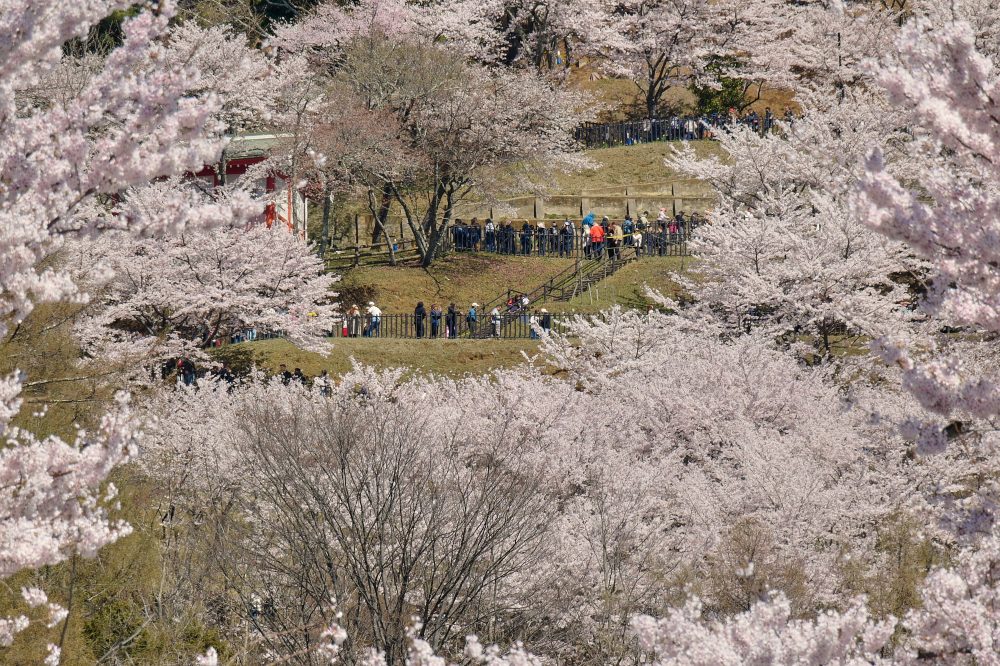
Despite canceling the festival, international tourists still flooded the area during early April when cherry blossoms peaked. Narrow roads leading to popular Arakurayama Sengen Park became packed with visitors waiting in line to capture the famous scenic views.
Daily foreign visitor numbers have topped 10,000 in recent years, which has “threatened residents’ daily lives,” according to a February city statement.
Similar overcrowding issues plague other Japanese destinations including Kyoto and Kamakura. Kyoto residents report tourists with oversized luggage jamming public buses.
This “tourism pollution” coincides with Japan welcoming growing numbers of foreign workers as the nation’s population shrinks and ages. These changes have sparked xenophobia, with Prime Minister Sanae Takaichi’s nationalist administration proposing stricter foreign visitor regulations.
While promising to tackle overtourism problems, the government aims to increase current tourist numbers from 40 million to 60 million annual visitors by 2030.
Starting April 1, coinciding with cherry blossom season, Fujiyoshida deployed additional security personnel and banned tour buses and private vehicles from the scenic area, forcing visitors to walk to the park.
During a recent visit, security officer Hiroaki Nagayama directed pedestrians away from congested zones. He reminded tourists to dispose of cigarettes properly and assisted lost visitors.
“I’m struggling. I cannot communicate with them in Japanese. Some people buy food at stalls and leave litter behind,” Nagayama says. “I think what’s happening here is a typical example of overtourism.”
Sitting outside his home nearby, 93-year-old resident Hitoshi Mori describes having numerous visitors as “good but annoying.”
“It’s too crowded outside so I can only get groceries once a week and stock up on food,” he says.
Visitors appear thrilled with the magnificent scenery, despite numerous signs demanding better behavior. Many endure hours-long waits to reach prime viewing locations.
“It’s pretty (well) organized. When they let you come in, you have like five minutes to take as many pictures as you can, and it was amazing,” said Lisa Goerdert from Paris.
Melbourne, Australia visitor Vicky Tran, traveling with family and friends, explained they couldn’t reach the pagoda viewpoint with Mount Fuji and cherry blossoms due to crowds. Nevertheless, she appreciated the scenery and neighborhood atmosphere.
The tourist surge has created tensions between residents wanting tranquility and those launching businesses by converting yards into paid parking or opening new stores and food stands.
A nearby shopping district that previously featured numerous closed family businesses has experienced renewed activity after another viral social media image showed Mount Fuji towering over the street.
Crowds of tourists gather in the roadway photographing Mount Fuji, frequently blocking traffic while frustrated drivers honk their horns.
The visitor influx represents a dramatic shift “for people like us who are used to a quiet suburban lifestyle,” says Masami Nakamura, who operates a long-established school uniform store with her spouse. “I only hope the tourists respect our rules and manners.”
Even those benefiting from increased business find the crowds challenging.
“I once almost hit a tourist who jumped into the street without looking,” said Kyoko Funakubo, a 60-year-old employee at a local hotel and a part-time vendor selling Fuji-themed souvenirs. “This place used to be almost abandoned, with many shuttered shops. But now, with many stores reopened or new shops that have opened, I feel good seeing this area come alive again.”