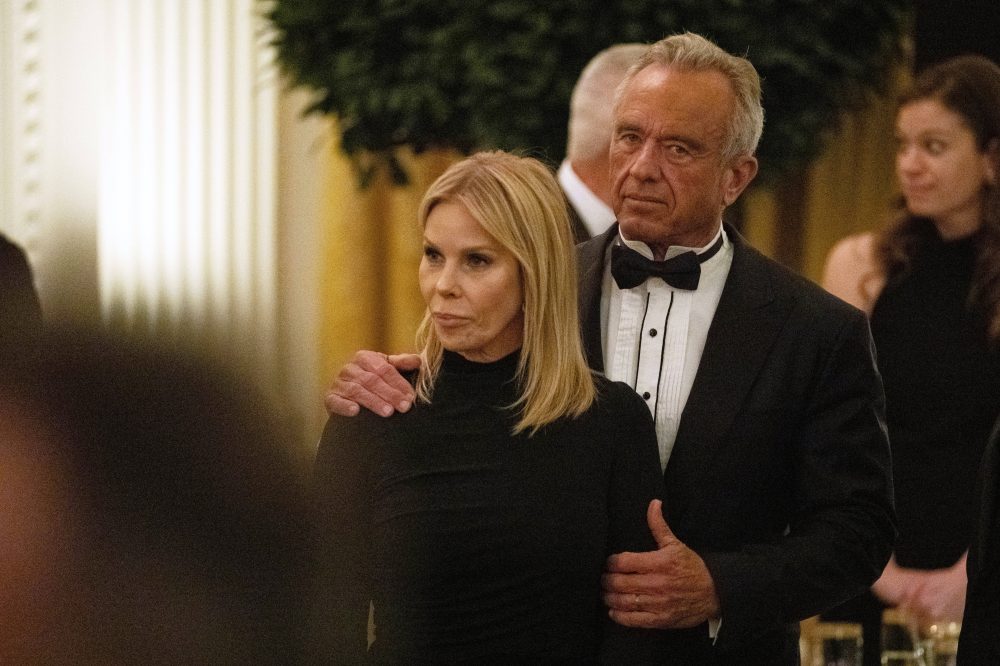

Robert F. Kennedy Jr. spent decades as an environmental attorney battling against glyphosate, a disputed herbicide component, and secured a major victory against chemical corporation Monsanto by demonstrating that its Roundup product played a role in causing his client’s cancer.
However, in his current role as the country’s leading health official, Kennedy has aligned himself with President Donald Trump following the issuance of an executive directive designed to increase glyphosate manufacturing. The directive would additionally provide restricted legal protection to producers who comply with federal guidelines.
On Sunday night, Kennedy published an extensive statement on social media describing pesticides as “toxic by design” while positioning Trump’s decision as essential for farming stability and national defense.
“President Trump did not build our current system — he inherited it,” Kennedy wrote. “I support President Trump’s Executive Order to bring agricultural chemical production back to the United States and end our near-total reliance on adversarial nations.”
This demonstration of allegiance to the president who facilitated Kennedy’s transformation of vaccination policies at federal levels has created a potentially damaging division within their political alliance before November’s midterm elections.
Supporters of Kennedy’s Make America Healthy Again movement are growing frustrated with a Republican administration that has mostly ignored their demands for pesticide regulation, and they’re voicing concerns about what they consider a betrayal.
“It’s been a year. Not a single thing has been done by the EPA to reduce our children’s and families exposure to pesticides,” Moms Across America founder Zen Honeycutt, a prominent MAHA activist, replied to Kennedy’s post. “We love you Bobby but this administration needs to keep their word.”
Opponents of the executive directive claim it represents a broader trend that benefits pesticide producers, who maintain their products undergo thorough regulatory review to confirm they pose no health risks when used correctly.
For instance, House Republicans have proposed legislation that would complicate lawsuits against pesticide corporations for inadequate danger warnings. The Justice Department also supported Monsanto parent company Bayer in a Supreme Court case last December that could reduce future Roundup liability.
“That is America Last, Anti-MAHA, and unforgivable,” prominent activist Kelly Ryerson wrote on social media.
Trump’s executive directive aims to safeguard domestic manufacturing of elemental phosphorus, utilized in military equipment and glyphosate-based herbicide production. It also seeks to protect glyphosate-based herbicide manufacturing, which officials consider vital to farming supply networks.
Kennedy has consistently maintained his belief that glyphosate triggers cancer, including statements made as recently as January.
Although multiple studies have supported Kennedy’s position, the Environmental Protection Agency has determined the chemical likely poses no cancer risk to humans when properly applied. Bayer stated in an email that it “stands behind the safety of our glyphosate-based products which have been tested extensively, approved by regulators and used around the globe for more than 50 years.”
In his social media statement, Kennedy indicated he is collaborating with the U.S. Department of Agriculture and EPA to accelerate progress toward a food system independent of dangerous chemicals. Supporting this goal, the Trump administration introduced a $700 million regenerative pilot program in December to help farmers implement practices that improve soil health, water quality and productivity.
Nevertheless, some experienced environmental advocates report seeing little evidence of meaningful transformation.
“If there is a big plan, a big MAHA-style plan to move in the direction of detoxifying agriculture from these chemicals, where is it?” said Ken Cook, head of the nonprofit Environmental Working Group, which has fought for raising environmental standards since the 1990s. “What I’m seeing here is a very aggressive effort to try and hang onto MAHA principles even as, at every turn, you betray them.”
Cook stated that many seasoned public health advocates never expected Kennedy would deliver the changes MAHA supporters anticipated. He noted that Kennedy’s statement language resembled arguments he has observed from pesticide manufacturers for years.
“He’s jumped onto their message square and is dancing on it,” he said of Kennedy.
The EPA has hinted at an upcoming MAHA agenda addressing issues including forever chemicals, plastic contamination, food quality, Superfund cleanups and lead pipes. On Friday, federal officials announced they would implement a strict 10-year timeline for lead pipe replacement to improve drinking water safety. EPA press secretary Brigit Hirsch stated the agenda is “in the final stages” and will reaffirm the agency’s dedication to science and transparency regarding pesticides.
Kennedy’s MAHA coalition, an enthusiastic and politically diverse group including anti-vaccine activists, environmental advocates and healthy food supporters, represents a politically significant constituency that Republicans need to maintain their slim Congressional majorities.
However, the movement doesn’t consistently support Republican policies, creating a “tough spot” for Kennedy, according to Matt Motta, a professor at Boston University School of Public Health.
“He does need to try to please his base of supporters who care a lot about this issue and presumably think that it can cause cancer – while also pleasing the president if he wants to be able to keep this job,” Motta said.
As Democrats observe the widening divide between MAHA supporters and the Trump administration, some recognize a political opportunity.
Sen. Cory Booker of New Jersey, who faces reelection this fall, described the executive order as “a slap in the face to the thousands of Americans who have gotten cancer from glyphosate.” He argued on social media the administration’s message is that “chemical company profits are more important than your health.”
Democratic strategist Anjan Mukherjee predicted more left-leaning midterm candidates will emphasize to MAHA supporters “how this administration has failed them.”
“What this administration has shown to them over and over again is that they’re only interested in enriching themselves and putting more money into the pockets of the wealthy,” Mukherjee said.
These efforts may not succeed in attracting MAHA supporters who have witnessed Kennedy advance many of their other objectives, including reforming childhood vaccination guidelines and changing the FDA’s stance on artificial food coloring.
Giving Democrats Congressional control could introduce oversight and budget constraints that would hinder that progress, said David Mansdoerfer, a Department of Health and Human Services official during Trump’s first presidency who currently advises several MAHA organizations.
“MAHA has a choice this election season,” he said. “Support the Trump administration and continue to have a voice in Washington or stay at home and watch their federal agenda come to a halt.”