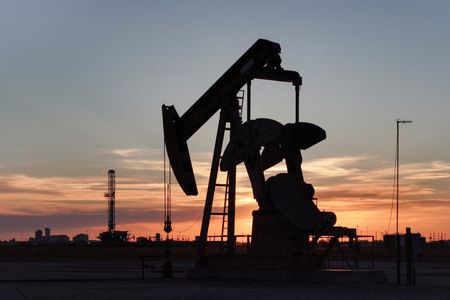

Crude oil prices declined Friday morning following the United States’ decision to grant a temporary 30-day permit allowing nations to purchase Russian petroleum and oil products currently stuck on vessels at sea, providing some relief to global supply worries.
Brent crude fell 71 cents, representing a 0.71% decrease to $99.75 per barrel by 0123 GMT, while U.S. West Texas Intermediate crude dropped 88 cents, or 0.92%, reaching $94.85.
Treasury Secretary Scott Bessent described the permit as a measure designed to bring stability to worldwide energy markets that have been disrupted by the Iranian conflict.
“Issuing the license has eased market concerns, but it won’t resolve the most fundamental issue. The most important thing is the restoration of navigation in the Strait of Hormuz,” stated Yang An, an analyst with Haitong Futures.
This Russian oil announcement followed Thursday’s news from the U.S. Energy Department about releasing 172 million barrels from the Strategic Petroleum Reserve to combat soaring oil costs resulting from the Iranian war.
The Strategic Petroleum Reserve release was coordinated with the International Energy Agency, which committed to releasing an unprecedented 400 million barrels from strategic reserves worldwide, including America’s contribution.
According to IG analyst Tony Sycamore, the temporary market relief from the IEA announcement was quickly overshadowed by renewed escalation of Middle Eastern tensions.
Both major oil benchmarks jumped over 9% Thursday, reaching their peak levels since August 2022.
Iran’s new supreme leader Mojtaba Khamenei declared that Iran would continue fighting and maintain the Strait of Hormuz closure as bargaining power against the United States and Israel.
Iraqi security officials reported Thursday that two fuel tankers in Iraqi waters were hit by Iranian boats carrying explosives. An Iraqi official informed state media that the nation’s oil ports have ceased all operations.
According to a Bloomberg News report Thursday, Oman moved all ships away from its primary oil export facility at Mina Al Fahal, located outside the Strait of Hormuz, as a safety precaution.
However, additional steps are being implemented to address the growing threats.
Treasury Secretary Scott Bessent informed Sky News during an interview that the U.S. Navy, potentially working with an international alliance, would provide escort protection for ships traveling through the Strait of Hormuz when militarily feasible.
Reports indicate Saudi Arabia is paying extra costs to redirect tankers toward the Red Sea, utilizing its East-West pipeline system to deliver oil to international markets.
According to IG’s Sycamore, Iran is permitting one to two tankers daily to pass through, primarily bound for China, maintaining Chinese support while ensuring continued revenue flow.