
WASHINGTON – Escalating fuel costs and unstable financial markets tied to the ongoing U.S.-Israeli conflict with Iran are creating mounting economic pressure for American families across all income brackets, threatening the consumer spending that economists had expected to fuel growth in 2024.
At the start of this year, financial experts believed both ends of America’s divided economy would maintain strong spending patterns. Wealthy households were expected to increase purchases based on rising investment portfolios, while working-class families would benefit from enhanced tax refunds due to new exemptions on overtime and tip earnings.
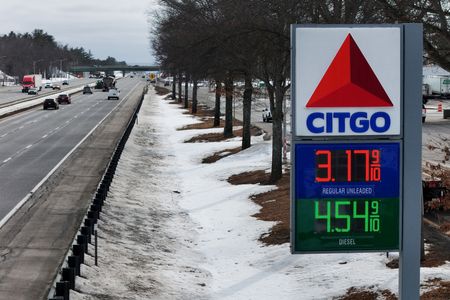
However, both groups now face distinct financial challenges. National fuel costs reached $3.50 per gallon by Tuesday morning, according to American Automobile Association figures – a 17% increase from approximately $3.00 before the conflict began. Every state except Kansas, where prices averaged $2.96, now sees gas above $3.00 per gallon. Market experts warn that continued shipping disruptions through the Strait of Hormuz could push prices to $4.00 if hostilities continue.
Financial markets have retreated from recent peaks, with uncertainty affecting household spending decisions based on portfolio values. This volatility was evident when President Donald Trump suggested Monday that the conflict might end quickly, boosting stock prices, only to moderate his comments overnight and leave open the possibility of prolonged fighting with its associated risks to global supply networks, commodity markets, and corporate profits.
Major American stock indexes showed little movement when Tuesday trading began.
For families with limited incomes, increased gasoline expenses could reduce spending in other areas, creating ripple effects across businesses that might then scale back hiring and investment plans amid growing uncertainty.
“The higher the price and the longer it goes the more you shift from higher prices benefitting some companies who boost oil production and get more revenue…to really pinching consumers and being a drag on the economy. There is some point of prices being at a certain level for a certain amount of time that it flips from being a plus to GDP to a drag on GDP and increasing the likelihood of a downturn,” explained Luke Tilley, chief economist at Wilmington Trust. He noted that oil prices in the $85 to $100 per barrel range sustained over several months would likely “materially increase the risk of recession because the labor market is already in such a challenging state.”
Benchmark Brent crude exceeded $116 per barrel Monday before dropping below $90, then climbing again Tuesday morning. Rather than de-escalation, U.S. Defense Secretary Pete Hegseth announced Tuesday would bring the most intensive strikes against Iran yet, while military leaders discussed targeting Iran’s mine-laying capabilities in the Strait of Hormuz – potentially clearing the way to restore oil shipments through the critical waterway where Middle Eastern petroleum transport has virtually ceased.
This rapid change in economic risks presents challenges for central bank officials, particularly in the United States, where policymakers had viewed the economy as fundamentally sound with balanced risks between inflation running about one percentage point above their 2% goal but expected to decline, and unemployment holding steady around 4.3% with no clear indication of imminent increases.
That assessment now faces pressure from multiple directions: with the economy unexpectedly losing jobs in February, there’s additional concern that conflict-related uncertainty could make businesses more cautious about hiring, while inflation could broaden if higher oil prices increase costs for shipping, home heating, and other sectors.
Although elevated fuel prices might only temporarily affect inflation, or could potentially reduce broader price pressures if consumers cut spending elsewhere and overall growth slows, the current situation presents additional risks.
Research conducted by Kansas City Federal Reserve economists following oil price spikes in 2022 after Russia’s Ukraine invasion found that increases in highly visible consumer prices like gasoline can disproportionately impact household inflation expectations when those expectations are already elevated by previous price shocks – a concern Fed policymakers continue monitoring and cite as justification for maintaining restrictive monetary policy to control expectations.
Investors still anticipate Fed interest rate cuts this year, but the timing has been pushed back following the start of U.S. military action, potentially creating tension among policymakers between inflation and growth concerns.
The Federal Reserve meets next week and is expected to maintain its current policy rate in the 3.5% to 3.75% range.
Vincent Reinhart, chief economist at BNY Investments and former senior Fed official, said it’s premature for the central bank to draw conclusions about likely economic consequences from the conflict. Even growth concerns must be balanced against the fact that America’s position as a net energy producer means while higher global prices increase pump costs for U.S. consumers, they also generate higher income and potentially more jobs and investment for domestic energy companies.
However, prolonged elevated prices increase risks, with per-barrel costs in the upper $90 range lasting a month or more representing the type of significant shock that could begin undermining consumption and growth.
“You have to have prices meaningfully higher than what people are used to,” for an oil shock to alter the U.S. economy’s trajectory, Reinhart said. “It’s got to be big enough. We’re not at the big enough stage.”