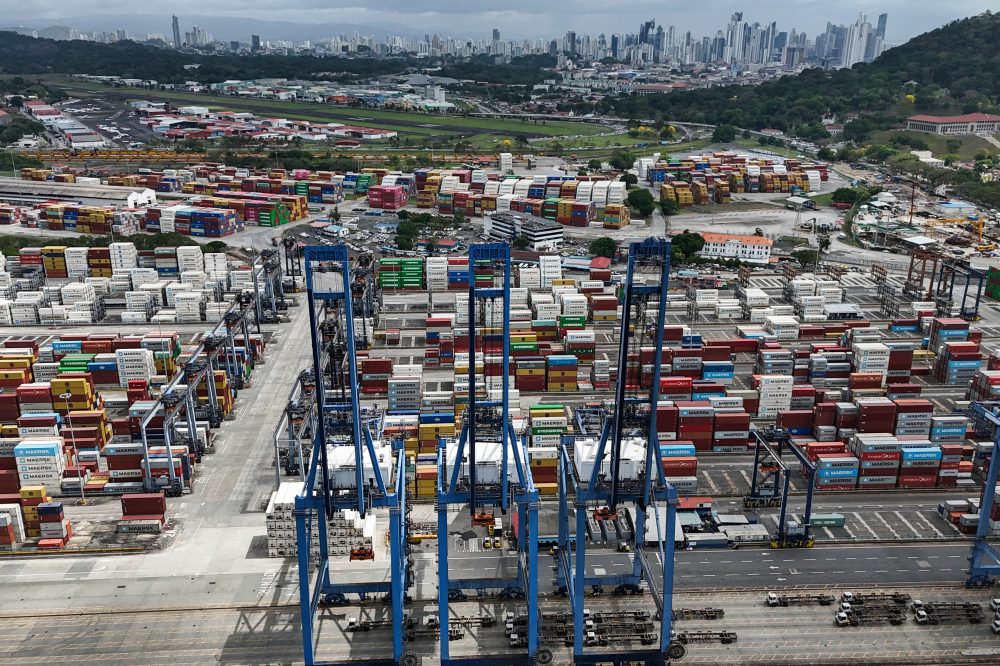

PANAMA CITY — A small Central American nation finds itself caught in the middle of escalating tensions between Washington and Beijing after taking control of two crucial shipping facilities that bookend the Panama Canal.
The controversy began when Panama’s highest court determined that agreements allowing a Hong Kong company’s local branch to manage the ports violated the nation’s constitution. Before President Trump even returned to the White House, he had accused China of controlling the vital waterway — claims Panama’s government firmly rejected.
Following the Supreme Court’s ruling in late January, Panamanian officials this week took over operations at both shipping terminals and brought in temporary operators while preparing for new bidding. On Thursday, authorities carried away boxes of records from Panama Ports Co. headquarters.
The response from Beijing was swift and stern, with China warning of serious repercussions for Panama. President José Raúl Mulino fired back on Thursday, cautioning China to “be careful” and declaring: “They need us more than we need them.”
The facilities at the heart of this international standoff serve as crucial links in global trade chains. While Panama’s 4 million residents don’t generate massive import or export volumes, the canal has transformed their country into a vital logistics center for worldwide shipping.
Enormous freight vessels arrive constantly from Asian ports, European harbors, and American coastlines. Most cargo isn’t destined for Panamanian consumers, but containers are transferred at Balboa, Cristobal, and other terminals before continuing to final destinations on smaller vessels.
The Balboa facility on the Pacific side and Cristobal terminal facing the Atlantic together process nearly two-fifths of Panama’s container operations. Approximately 7,000 workers depend on these ports for their livelihoods.
Panama Ports Company, the local arm of Hong Kong’s CK Hutchison conglomerate, has managed both terminals since 1997.
A government audit uncovered problems with how the operating agreement was extended, including allegations that Panama lost substantial revenue. Following the constitutional court’s decision, officials promised a smooth transition to prevent disruptions to port activities.
While situated at canal entrances, these terminals operate independently from the autonomous Panama Canal Authority that manages the waterway itself.
The Chinese company’s control of these strategic locations has long concerned American officials. Secretary of State Marco Rubio chose Panama for his inaugural foreign visit in his new role, delivering an unmistakable message about U.S. opposition. He warned that China could potentially block canal traffic if it chose to do so.
Because the waterway handles both commercial cargo and U.S. military vessels, Washington views the situation through a national security lens. Americans constructed the canal before transferring it to Panamanian control in 1999.
Panama Ports Company has initiated arbitration proceedings following the court ruling. The firm claims Panama’s government conducted a year-long “campaign” against its concession that severely damaged the business.
Company officials argue their investor protections have been violated and are seeking unspecified damages. Economy Minister Felipe Chapman stated the company wants $1.5 billion. The firm’s 25-year operating license was just extended in 2021.
Beijing’s Hong Kong oversight office condemned the court decision, claiming Panamanian leaders were surrendering to “hegemonic powers.”
“Panama’s authorities should recognize the situation and correct their course,” the statement read. “If they persist in their own way and refuse to see reason, they will pay a heavy price both politically and economically!”
This week’s government takeover triggered another wave of Chinese objections. Mulino defended the action as essential for maintaining operations and assessing the ports’ actual worth.
“The more than 7,000 jobs continue without changes,” he emphasized.
Mulino has maintained that the Supreme Court’s ruling is definitive and must be honored.
Despite the legal battle, port operations continue normally.
Chapman noted that arbitration proceedings could stretch on for years. During this period, the government plans to launch the process for selecting new port operators.