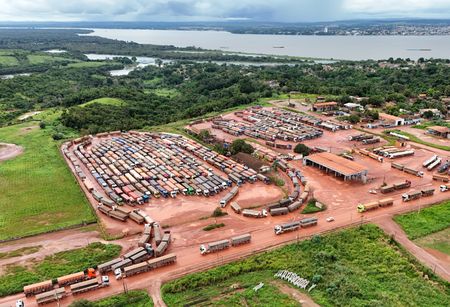

Massive traffic jams of soybean-laden trucks are creating significant delays at a major Brazilian port in the Amazon, as the country’s record-breaking harvest of around 180 million metric tons strains the agricultural export system.
The transportation bottleneck at the Miritituba port terminal demonstrates the persistent logistical challenges facing Brazil’s farm supply chain, with much of the crop headed to Chinese markets. Brazil serves as the world’s top soybean producer and exporter.
Truck driver Jeferson Borges da Silva described the situation after waiting two days in a 20-mile line of vehicles following his 1,200-kilometer journey from Mato Grosso state. “It’s a disgrace here in Miritituba,” da Silva told reporters. “We’ve been in line for two days already, this year was the worst yet.”
The Miritituba facility serves as a crucial transfer point, processing about 12 million metric tons of grain each year, including both soybeans and corn. Major agricultural companies like Cargill, Bunge, and Brazil’s Amaggi run river terminals at the location, where crops get transferred to barges for transport to larger ports equipped to load ocean vessels. Heavy traffic typically occurs during harvest season.
INDIGENOUS DEMONSTRATIONS ADD TO EXPORT DIFFICULTIES
The agricultural sector’s problems have been amplified by Indigenous protesters who occupied a Cargill transfer facility in Santarem earlier this month. The activists opposed government plans to dredge and expand shipping routes through the Amazon region.
These demonstrations led officials to cancel a decree on Monday that would have made such waterway improvements easier, creating additional uncertainty for farm exporters.
Driver Wellington Bressan suggested the Indigenous demonstrations may have worsened the Miritituba backup as truckers rushed to secure unloading positions. “Truckers live on commission, if they work, they make money. That’s why they did not want to wait before coming to Miritituba,” Bressan explained.
Cargill temporarily suspended operations at its Santarem terminal during the protests but announced Thursday it was working to restart activities. The company issued a statement thanking workers for their “resilience” and reaffirming its dedication to moving food “safely and reliably.”
INFRASTRUCTURE WORRIES GROW
The canceled government decree could delay efforts to improve transportation infrastructure along the northern export route, according to University of São Paulo logistics specialist Thiago Pera. He cautioned about potential medium and long-term effects on Brazil’s capacity to efficiently manage agricultural exports.
“The scenario is becoming increasingly challenging,” Pera noted, explaining that river dredging would enable larger ships to operate year-round, reducing trucking demands and transportation costs. Approximately 60% of Brazil’s farm exports depend on truck transportation.
Drivers like Sonia da Silva expressed anger about inadequate infrastructure at Miritituba’s terminals. “How are you going to fit 1,000 trucks in a yard that only holds 500, or 200?” she questioned.