
The space agency announced Friday it will insert an additional Artemis mission before crews attempt to touch down on the lunar surface, as officials work to address safety concerns and lengthy delays between flights.
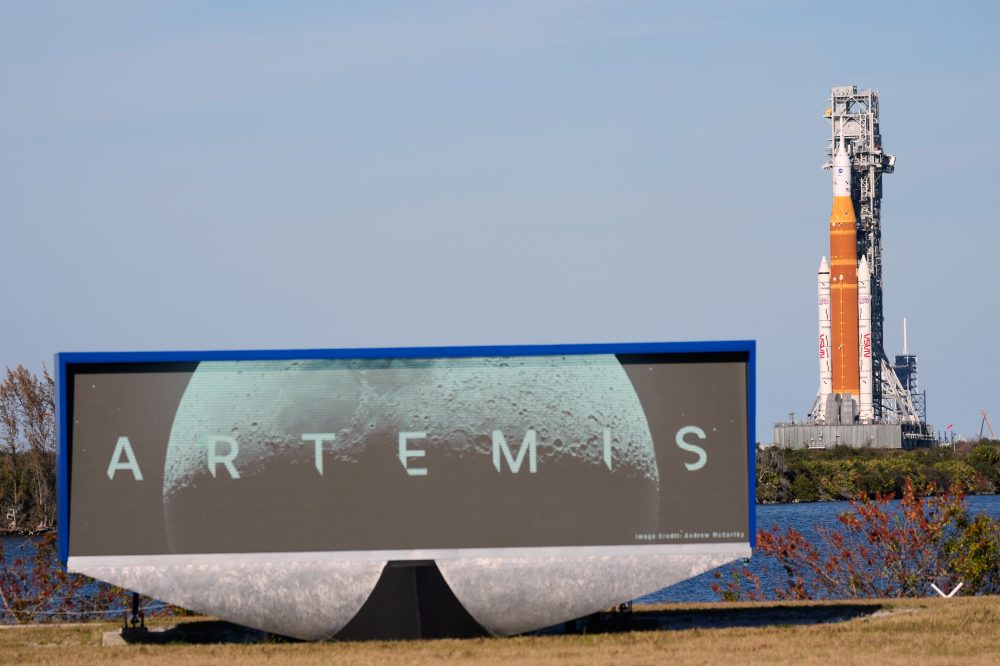
This restructuring of NASA’s mission sequence comes just 48 hours after the agency’s massive moon rocket was moved back into its hangar for additional fixes, while a safety advisory group urged the space agency to dial back its ambitious timeline for the first human lunar landing in over 50 years.
The Artemis II mission, which will send four crew members on a trip around the moon, has been delayed until at least April due to ongoing rocket issues.
Originally, the subsequent Artemis III mission was planned to land astronauts near the moon’s southern polar region within the following year or two. However, with extended periods between missions and mounting concerns about the readiness of landing vehicles and spacesuits, NASA Administrator Jared Isaacman revealed this mission will now concentrate on launching a lunar lander into Earth orbit for docking exercises with Orion spacecraft crews in 2027.
Under the updated timeline, actual moon landings by astronauts are scheduled for 2028, with the possibility of two such missions that year.
“This is going to be our pathway back to the moon,” Isaacman stated.
The initial Artemis test mission encountered hydrogen fuel leaks and helium flow issues before its uncrewed launch in 2022, identical problems that affected the Space Launch System rocket at Kennedy Space Center earlier this month.
Isaacman emphasized that “it should be incredibly obvious” that waiting three years between missions is unacceptable, expressing his goal to reduce that timeframe to one year or less.
He pointed to NASA’s historic Apollo program, noting that astronauts’ initial lunar voyage was followed by two additional missions before Neil Armstrong and Buzz Aldrin made their historic landing. Additionally, he highlighted how Apollo missions occurred in rapid sequence, similar to the quick flight schedules of the earlier Mercury and Gemini programs, which sometimes launched just months apart.
“No one here at NASA forgot their history books,” Isaacman remarked. “We shouldn’t be comfortable with the current cadence. We should be getting back to basics and doing what we know works.”
To accelerate the mission schedule and minimize risks, NASA will implement standardized Space Launch System rockets for future moon missions, according to Isaacman.
Earlier this week, the Aerospace Safety Advisory Panel urged NASA to modify its Artemis III objectives “given the demanding mission goals.” The panel emphasized the urgency of these revisions if the United States aims to safely return astronauts to the lunar surface. Isaacman confirmed that the updated Artemis mission plan responds to the panel’s recommendations and has backing from both industry partners and the Trump administration.