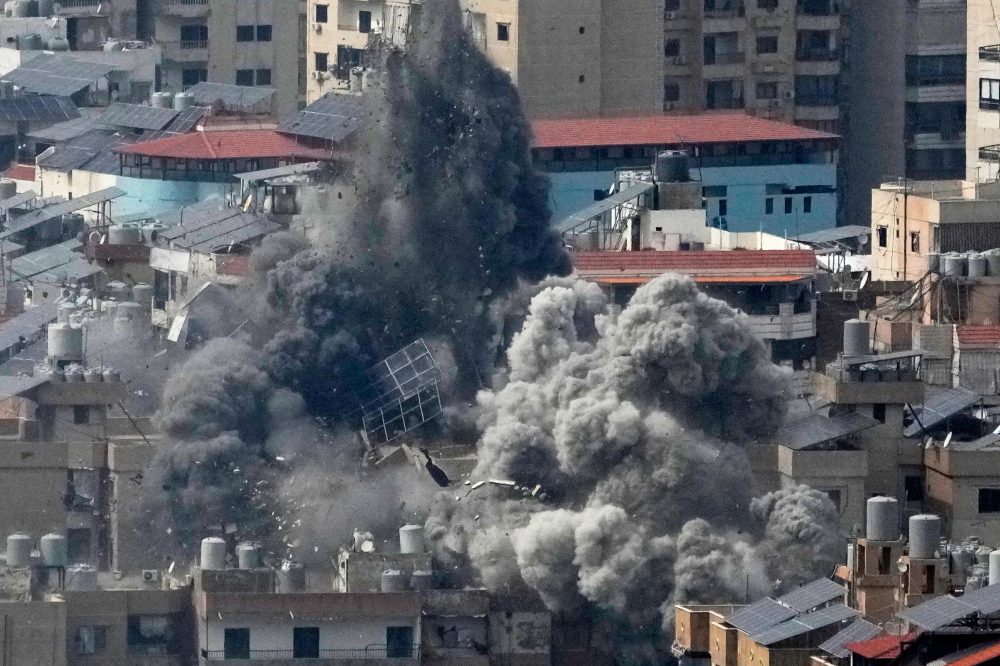

Regional tensions in the Middle East reached new heights Saturday as Iran unleashed fresh waves of ballistic missiles and drone attacks, with Gulf nations reporting successful interceptions of multiple projectiles.
Saudi Arabian forces neutralized four drones targeting the nation’s significant Shaybah oil facility early Saturday morning, marking the second assault on the location within just hours. Residents of Dubai reported hearing multiple explosions during morning hours, with United Arab Emirates officials confirming “a minor incident resulting from the fall of debris after an interception.”
Israeli fighter aircraft conducted extensive bombing campaigns against targets in both Beirut and Tehran as the conflict continued to escalate. Saturday’s casualty figures showed devastating losses, with officials reporting at least 1,230 fatalities in Iran, over 200 deaths in Lebanon, approximately a dozen killed in Israel, and six American service members confirmed dead.
Intelligence sources revealed Russia’s apparent entry into the conflict, with two U.S. intelligence officials confirming Moscow had shared information with Iran that could assist Tehran in targeting American naval vessels, aircraft, and military installations throughout the region.
The expanding warfare showed no signs of abating as President Trump’s administration greenlit a fresh $151 million weapons package for Israel. This decision followed Trump’s declaration that negotiations with Iran would only occur after its “unconditional surrender.”
The conflict’s economic ripple effects reached Pakistan, where officials announced a substantial fuel price increase of 55 rupees per liter (approximately $0.20) overnight. Petroleum Minister Ali Pervaiz Malik and Foreign Minister Ishaq Dar attributed the hike to surging global oil costs stemming from Middle Eastern hostilities, noting Pakistan’s heavy dependence on petroleum imports from Saudi Arabia and neighboring Gulf states.
Israeli defense forces identified Tehran’s Imam Hussein University as a primary target, stating the facility served as a training center for Revolutionary Guard personnel and housed “multiple military assets” utilized by the Guard. Military officials reported deploying more than 80 combat aircraft in Saturday’s latest assault wave, which struck an underground facility storing ballistic missiles and housing command operations where “senior officials of the Iranian regime” were stationed.
Additional targets encompassed launch facilities across Iran’s central and western regions, according to military statements.
Tehran’s morning hours were punctuated by explosions as fresh airstrikes pounded Iran’s capital city. The bombardment appeared concentrated on downtown Tehran and government facilities in the area.
Dubai International Airport, recognized as the globe’s busiest hub for international flights, experienced disruptions when travelers were evacuated into underground train tunnels following missile alert warnings. Mobile phone emergency notifications alerted Dubai residents Saturday morning about “potential missile threats,” with Emirati officials instructing citizens to find immediate shelter as air defense systems activated.
When questioned about the escalating situation during a White House meeting focused on student-athlete compensation in college athletics, President Trump sharply criticized the reporter’s inquiry. “I have a lot of respect for you, you’ve always been very nice to me,” Trump addressed Fox News correspondent Peter Doocy. “What a stupid question that is to be asking at this time. We’re talking about something else.”
Israeli citizens rushed to protective shelters throughout the country early Saturday after loud explosions signaled incoming Iranian missile attacks on additional targets. Emergency services reported no immediate casualty information was available.