
DUBAI, United Arab Emirates (AP) — Iranian forces launched heavy attacks against Gulf Arab nations in the early hours of Saturday, while Israel and the United States maintained their ongoing aerial bombardment of the Islamic Republic.
The conflict appears far from over. President Donald Trump’s administration greenlit a fresh $151 million weapons package for Israel following Trump’s declaration that he would refuse negotiations with Iran unless it agrees to “unconditional surrender.” American officials have cautioned that an upcoming bombing offensive will surpass anything seen during this week-long battle.
Iran’s representative to the United Nations declared the nation would “take all necessary measures” for its defense.
Video footage from the Associated Press captured explosions and billowing smoke across western Tehran as Israel announced it had launched a comprehensive strike operation. During the same early morning hours, loud explosions echoed through Jerusalem while Iranian missiles sent Israeli civilians rushing to protective shelters nationwide.
Israeli emergency response teams reported no immediate casualties.
Demonstrating how the conflict continues to spread, warning sirens blared throughout Bahrain as Iranian forces attacked the island nation. Meanwhile, Saudi Arabia reported successfully intercepting drones approaching its massive Shaybah oil facility and destroying a ballistic missile aimed at Prince Sultan Air Base, where American military personnel are stationed.
American and Israeli forces have pounded Iran with continuous strikes, focusing on military infrastructure, government leadership, and nuclear facilities. The conflict’s objectives and timeline have changed multiple times, with the United States occasionally indicating its goal is removing Iran’s current government or supporting new internal leadership.
In an interview with the Financial Times, Qatar’s energy minister Saad al-Kaabi cautioned that the war might “bring down the economies of the world,” forecasting a complete halt to Gulf energy shipments that could drive oil prices to $150 per barrel.
Benchmark U.S. crude oil prices climbed above $90 per barrel on Friday, marking the highest level in over two years.
Intelligence sources indicate Russia has shared information with Iran that could assist Tehran in targeting American naval vessels, aircraft, and other regional military assets, according to two officials with knowledge of U.S. intelligence findings.
These sources, speaking anonymously due to lack of authorization for public comment, emphasized that intelligence has not revealed Russian direction of Iran’s use of this information.
Nevertheless, this represents the first evidence of Moscow’s involvement in the conflict.
Trump posted on social media Friday: “There will be no deal with Iran except UNCONDITIONAL SURRENDER!” Following surrender “and the selection of a GREAT & ACCEPTABLE Leader(s),” he continued, America and its allies would assist in rebuilding Iran, making it “economically bigger, better, and stronger than ever before.”
These statements will likely generate additional questions regarding the war’s ultimate objectives. The fighting has claimed at least 1,230 Iranian lives, over 200 Lebanese deaths, and approximately twelve Israeli casualties, based on official counts from these nations. Six American service members have died.
Iranian President Masoud Pezeshkian posted on social media that “some countries” had initiated mediation attempts, without providing details.
Iranian state broadcasting reported Friday that a leadership council had begun deliberations on convening the nation’s Assembly of Experts, responsible for choosing the next supreme leader.
Treasury Secretary Scott Bessent stated in a Friday television appearance that the war’s “biggest bombing campaign” remains ahead.
Israeli officials report extensively bombing a vast underground bunker complex that Iranian leadership intended to occupy during the hostilities over the past week.
Fresh evidence has emerged indicating that a fatal February 28 explosion at a school in Minab, an Iranian city approximately 1,100 kilometers (680 miles) southeast of Tehran, likely resulted from American airstrikes. This evidence encompasses satellite imagery, expert evaluation, a U.S. official’s account, and public data from American and Israeli military sources.
Iranian state media reported that more than 165 people died in the explosion, with children comprising the majority of victims.
Iran has accused Israel and the United States of responsibility for the blast. Neither nation has acknowledged involvement, though Defense Secretary Pete Hegseth confirmed American investigation into the incident.
The Iranian-supported militant organization Hezbollah reported that its forces engaged with an Israeli unit that landed Friday night in Lebanon’s eastern mountains. Lebanon’s Health Ministry confirmed at least three fatalities.
Israel has not confirmed this engagement, and its military has not responded to requests for comment.
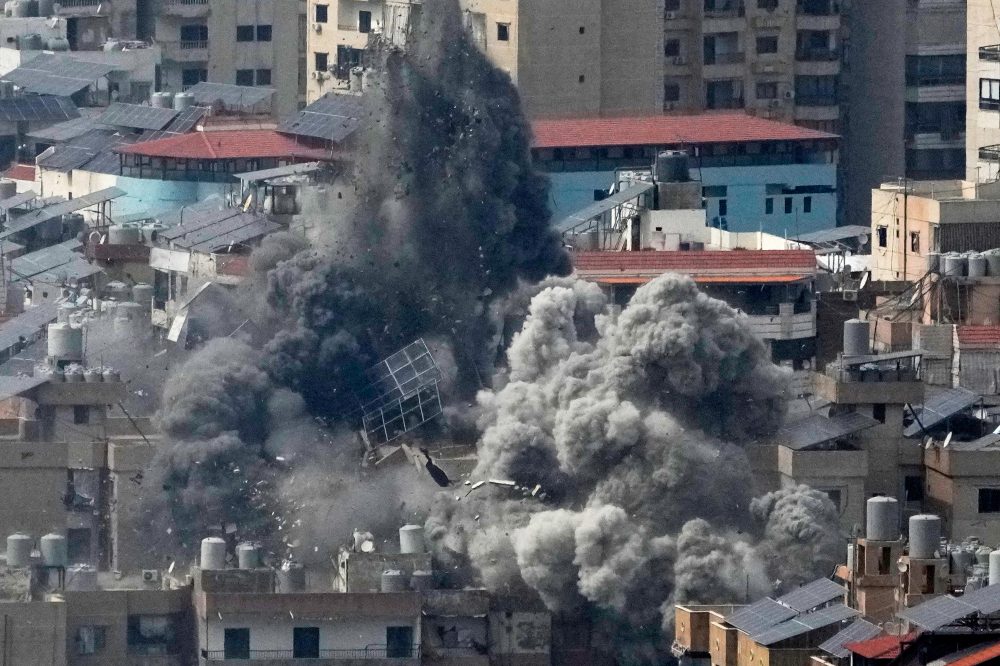
Israeli forces have conducted repeated airstrikes against Beirut’s southern suburbs, areas with significant Hezbollah presence that also house hundreds of thousands of civilians.
Lebanon’s Health Ministry reports at least 217 deaths from Israeli strikes since Monday, with 798 people wounded.
Evacuation traffic clogged roads throughout the Lebanese capital as smoke rose from the city’s southern neighborhoods. Two medical facilities evacuated their patients and personnel.
“What can we do? We prayed here under the tree. During the night, we slept in the car because there is no place to stay,” said Jihan Shehadeh, among tens of thousands of displaced residents.