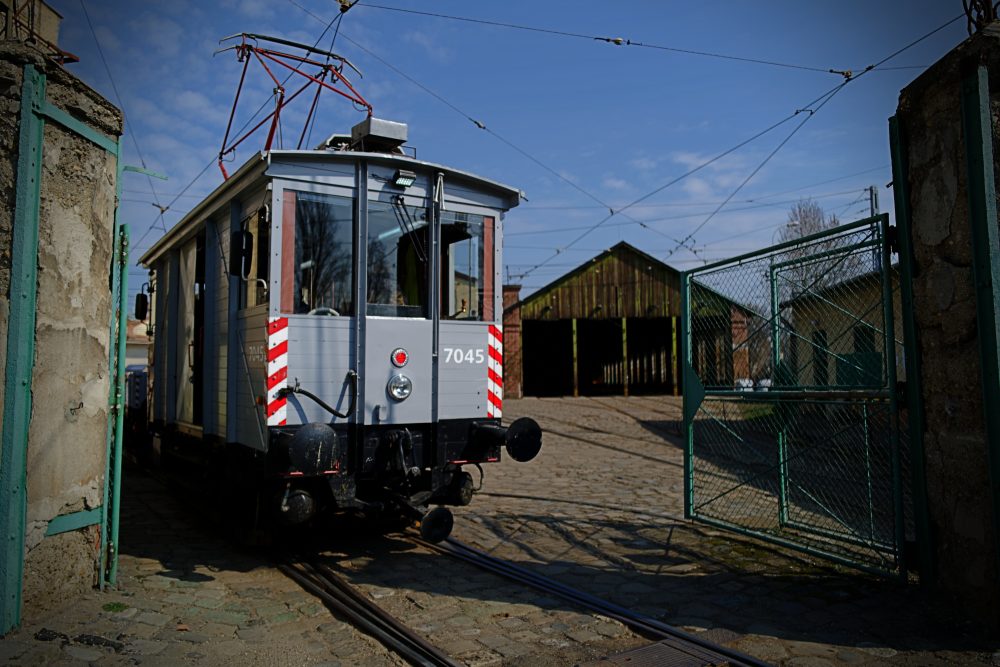

BUDAPEST, Hungary (AP) — Accompanied by horn blasts, bell chimes, and the whoosh of pneumatic brakes, a distinctive rail car emerges from a Budapest maintenance facility to continue its century-long service to Hungary’s capital transit network.
These specialized freight vehicles, called mukis, draw power from overhead electrical lines while navigating Budapest’s extensive tram system — among the world’s most active. However, unlike the hundreds of recognizable yellow passenger cars throughout the fleet, these workhorses don’t transport riders.
The city purchased these wooden-bodied vehicles in 1926 out of urgent need: They hauled cargo and materials to Budapest’s industrial sites after World War I had devastated much of the region’s freight transportation infrastructure.
“Transportation engineers of that era created an electric propulsion system primarily using components salvaged from war-damaged vehicles, along with parts taken from cars already marked for disposal,” explained Ádám Zadravecz, who oversees tram vehicle development and technology at BKV, Budapest’s public transportation authority.
“While freight hauling was their original mission, following World War II, these same vehicles helped clear away wartime debris,” Zadravecz noted.
As Hungary rebuilt, the mukis adapted to new roles. During the 1960s, several of the initial 40-vehicle fleet received snowplow attachments, allowing them to keep tram routes clear during winter months — a duty they continue performing today.
The vehicles also conduct overnight maintenance operations and tow disabled passenger trams back to repair facilities.
Through the decades, various components were swapped out, creating vehicles with mixed parts from different eras. By 2018, the mukis needed major renovation work.
“When originally constructed in the 1920s, these were remarkably basic, no-frills machines,” said Nándor Meixner, who heads vehicle maintenance at Budapest’s Ferencváros facility. “During our restoration project, we focused on improving working conditions for our staff. For instance, we installed an operator’s seat so drivers could finally sit while working.”
The renovation also included adding cabin heating systems.
Even after a full century of modifications, Zadravecz emphasized that the trams’ fundamental character hasn’t changed.
“Operating expenses are practically nothing because these vehicles are incredibly easy to service. Unlike today’s sophisticated electronic systems, there’s very little that can malfunction,” he explained. “Folks joke that you can fix them using just a hammer and file, and they’re absolutely right.”
Operating these vintage vehicles does require specialized instruction, plus what Meixner described as developing an intuitive connection with the machinery.
“Simply knowing how to drive and understanding signals isn’t sufficient — you must truly understand the vehicle’s personality. We always told operators they needed to feel the tram through their entire body,” he said.
From the original 40-vehicle mukis fleet, just six have survived Budapest’s century of changes, with three still actively working.
“These vehicles’ worth comes exactly from their straightforward design and the remarkable fact that they continue existing and serving our needs,” Zadravecz concluded.