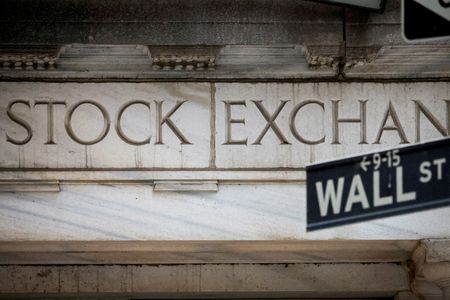

As the second half of 2026 gets underway, investors on Wall Street are watching closely for any indication of where interest rates are headed and what the upcoming earnings season might look like — all while heavyweight technology stocks continue to drag on major market indexes.
The opening days of the new half-year mirrored the final stretch of the first half, with volatile swings in big tech shares pulling the broader market along for the ride. Upcoming minutes from last month’s Federal Reserve meeting, along with early earnings reports from Delta Air Lines and PepsiCo, are expected to offer fresh direction for a market whose tech-powered surge has lost some momentum in recent weeks.
Technology stocks — semiconductors in particular — were the driving force behind the market’s strong run in recent months. The S&P 500 climbed 14.9% during the second quarter that wrapped up Tuesday, marking its best quarterly performance since 2020.
More recently, however, those same tech stocks have swung wildly, including sharp drops at the end of this past week. Meanwhile, other parts of the market — including healthcare, industrial, and financial stocks — have held up well over the past month, giving some investors hope that market gains could spread more broadly across sectors.
“That’s something I’ll be keeping my eye on over the next couple of weeks is to see whether or not that broadening continues,” said Joe Mazzola, head trading and derivatives strategist at Charles Schwab. “Or if you do start to see a protracted pullback in some of the technology winners, does that portend the market pulling back overall?”
At the start of this year, many investors expected the Federal Reserve to cut interest rates — a move generally welcomed by stock markets. Those expectations have since shifted toward the possibility of rate hikes in the months ahead. That outlook softened slightly on Thursday after a jobs report came in cooler than anticipated.
Bets on more aggressive Fed action had been building following last month’s central bank meeting — the first chaired by new Fed leader Kevin Warsh, who made clear the institution’s priority is bringing inflation under control. Inflation currently sits above the Fed’s 2% annual target. The minutes from that meeting are set to be released on Wednesday.
Warsh also signaled that the Fed would no longer offer the kind of forward guidance markets have grown accustomed to, meaning future meeting minutes could carry even more weight for investors trying to read the central bank’s intentions.
“I think it’s going to be interesting to see how the discussion went around the table, how incrementally hawkish are they leaning,” said Matthew Miskin, co-chief investment strategist at Manulife John Hancock Investments. “That’s what investors and markets are going to be wondering: What is this new Fed chairman and updated (Fed policymaking body) looking for to decide the path of rates from here?”
Investors said they’ll also be paying attention to how Fed officials discussed the inflationary effects of energy prices, which had been pulling back from spikes tied to the Iran conflict heading into the meeting. The level of disagreement among Fed policymakers is another point of interest.
Rising interest rates can weigh on stocks by making borrowing more expensive for households and businesses, and by pushing bond yields higher — potentially making bonds a more appealing option compared to equities.
According to LSEG data, Fed fund futures late Thursday pointed to roughly even odds that the central bank would raise rates by its September meeting. A Labor Department report released Thursday showed U.S. job growth slowed considerably in June, easing some concerns about an imminent rate increase.
“If the Fed does become more restrictive and starts into a tightening cycle, that is a risk to the market and the valuations,” said James Ragan, co-CIO and director of investment management research at D.A. Davidson. “The more information we can get about how the Fed is thinking about things, I think that’s very important.”
On the earnings front, the week ahead is relatively quiet for economic data, though reports on services and manufacturing activity could shed light on inflation trends.
Stocks bounced back in recent months after pulling back due to the U.S.-Israeli conflict with Iran. The S&P 500 is up more than 9% so far in 2026, while the tech-focused Nasdaq Composite has gained 11%.
Stronger-than-expected corporate profits in the first quarter helped fuel the market’s climb and raised expectations for the second quarter, with full earnings season ramping up later this month. Delta and PepsiCo will be among the first to report next week, offering a window into how consumers are spending.
Across the S&P 500, companies are projected to grow second-quarter earnings by more than 24%, according to LSEG IBES data.
“If the north star of this bull market is earnings, I think the main thing for the earnings season is just to validate the earnings trajectory for this year and that the upward momentum continues into next year,” said Keith Lerner, chief investment officer at Truist Advisory Services.