
SAO PAULO (AP) — Brazil’s Foreign Ministry announced Saturday that it has refused visas to two officials from the U.S. State Department who had planned to visit the South American country next week, marking the latest flashpoint in an increasingly tense relationship between the two nations.
The story came to light after The Washington Post reported that Brazil’s government accused the two officials — Riley M. Barnes, an assistant secretary, and Samuel Samson, a deputy assistant — of attempting to raise doubts about Brazil’s upcoming October elections.
A spokesperson for Brazil’s foreign office confirmed that Barnes and Samson submitted their visa requests on July 20, and those requests were turned down on Friday. The spokesperson did not explain the reasoning behind the decision.
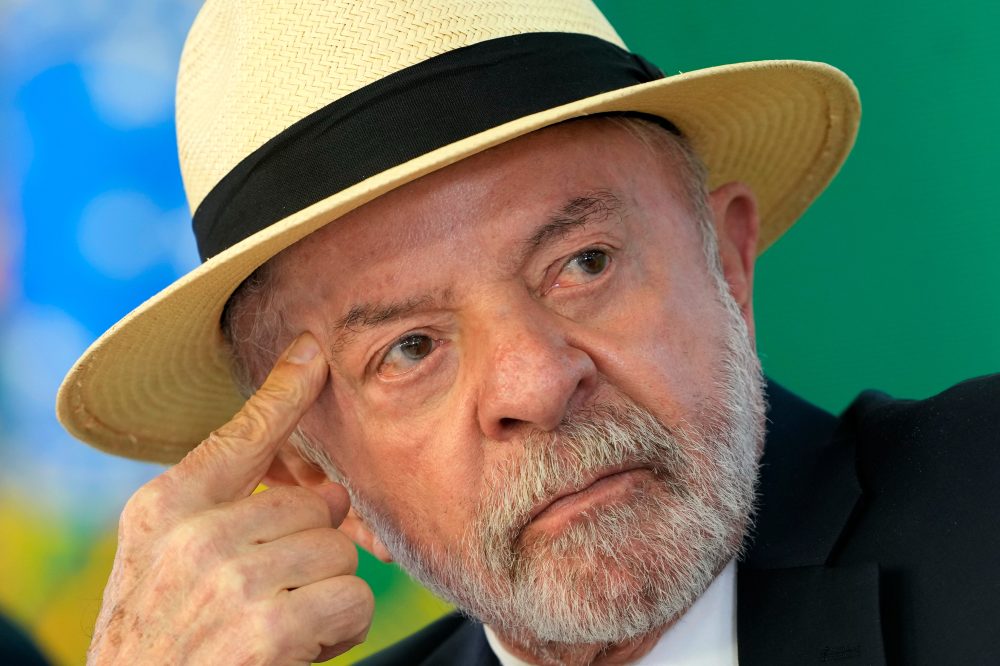
Brazilian President Luiz Inácio Lula da Silva is running for reelection and will face Sen. Flávio Bolsonaro, whose family has deep connections to the Trump administration.
Sen. Bolsonaro and his brother Eduardo traveled to Washington in late May and met with U.S. officials, including President Donald Trump. Shortly after that visit, the Trump administration designated Brazil’s two largest drug-trafficking organizations — First Command Capital and Red Command — as foreign terrorist groups, a classification that President Lula has pushed back against.
The Trump administration has also levied tariffs of up to 37.5% on thousands of goods exported from Brazil, a measure that took effect Friday. The U.S. government contends that Brazil engages in unfair trade practices and fails to address forced labor — allegations that the Lula administration has flatly rejected, calling them a political attempt to tilt the election in Sen. Bolsonaro’s favor.
For its part, the U.S. State Department said Barnes and Samson had planned to be in Brasilia from July 27 through July 30 to hold meetings with government officials, religious leaders, and others on topics including election integrity, religious freedom, and freedom of expression. Responding to an inquiry from The Associated Press, the department described the planned trip as routine and stated that “any insinuation of a ‘ploy’ to undermine a democratic nation’s election is a baseless lie.”
Concerns about Brazil’s electronic voting system have long been stoked by former President Jair Bolsonaro, who spent years claiming — without any supporting evidence — that the machines were susceptible to fraud. Those voting machines have been in use for 25 years. Jair Bolsonaro is currently serving a 27-year sentence under house arrest after being convicted for an attempted coup.
His son, Sen. Bolsonaro, has echoed some of those same claims in recent weeks, though he avoided the topic on Saturday when his Liberal Party officially named him its presidential candidate at an event in Sao Paulo.