
LONDON (AP) — Andy Burnham has wasted no time since taking the reins as Britain’s prime minister.
In just his first week after entering 10 Downing Street on Monday, Burnham has crisscrossed the country — visiting the southeast, southwest, and northwest of England, as well as Scotland — while speaking with more than a dozen world leaders. He also rolled out a series of modest but meaningful economic moves, including a reduction in household electricity taxes, a 2 pound ($2.70) ceiling on bus fares, and a tax relief measure for pubs.
Newly appointed Housing Secretary Angela Rayner captured the administration’s sense of urgency in an interview with the BBC on Friday. “We are on borrowed time if we don’t get a move on,” she said. “This is a down payment within the first week that says, ‘We get it.’”
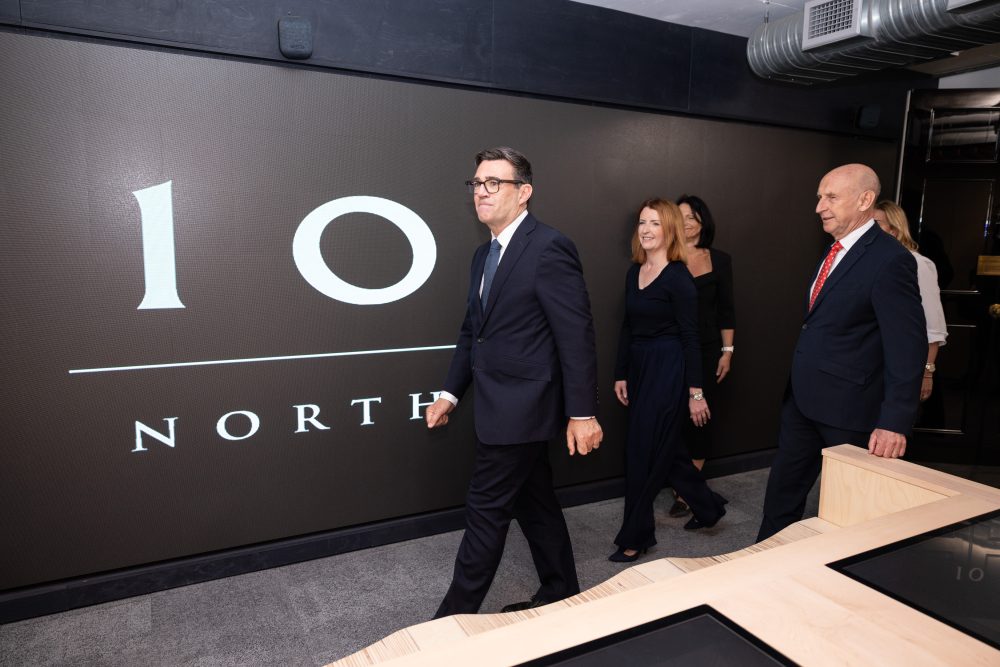
Friday also marked the opening of what Burnham is calling “No. 10 North” — a satellite prime ministerial office located in Manchester, roughly 165 miles (265 kilometers) northwest of London. Cabinet ministers, top civil servants, and regional mayors were all on hand for the occasion.
Burnham has committed to spending at least one day per week working from the Manchester location, which he envisions as the command center for his mission to distribute economic opportunity to “every post code” across the country.
Spreading prosperity beyond London to post-industrial cities and struggling coastal communities is a cornerstone of Burnham’s agenda. When he arrived at No. 10 North on Friday, he told staff: “This might be the best day of my life.”
Critics in the opposition have dismissed the northern office — currently housed in a building shared with a branch of the cyberintelligence agency GCHQ — as little more than a publicity stunt. Burnham pushed back, describing it as “the nerve center for a rewired Britain.”
In a piece he wrote for The Guardian, Burnham argued that for too long “decision-making power has remained in London,” leaving struggling parts of the country unable to turn their fortunes around because they lack the authority to do so. He said No. 10 North “is about taking power down and placing it in the hands of people who can use it best.”
Burnham ascended to the prime ministership and the leadership of the Labour Party after his predecessor, Keir Starmer, was pushed out following two years marked by missteps, scandals, and a sharp drop in public support. Starmer’s tenure was largely undone by his failure to deliver on the economic growth he had promised during the 2024 election campaign.
Burnham says his approach will be different, but he faces many of the same hurdles — chief among them how to breathe new life into an economy that has averaged less than 1.5% annual growth since 2009, while also finding money to repair deteriorating public services.
On the international stage, Burnham — who has limited foreign policy experience — has largely signaled continuity with the Starmer era. He assured Ukrainian President Volodymyr Zelenskyy that British support for Ukraine remains “resolute,” and he told Danish Prime Minister Mette Frederiksen that Greenland’s future “should only be determined by the people of Greenland and Denmark” — a pointed reference to U.S. President Donald Trump’s stated ambition to take control of the Arctic territory.
Burnham is also navigating a sharp escalation in tensions with Iran. Tehran has accused the U.K. of being complicit in American military actions by allowing U.S. forces to use British bases for airstrikes on Iran, warning of potential “consequences and repercussions.”
Burnham has kept in place the policy established under Starmer that permits American forces to operate from British bases in strikes against targets linked to attacks on shipping in the Strait of Hormuz. The Iranian threat followed Britain’s decision to ban the powerful Revolutionary Guard and blame it for a series of arson attacks targeting the Jewish community and Persian-language media in the U.K.
Britain’s Ministry of Defense responded firmly, stating that “the U.K. stands ready 24/7 to defend itself.” In an official statement, the ministry added: “The U.K.’s approach to the conflict remains the same – we are committed to defending our people, our interests and our allies, acting in accordance with international law and not getting drawn into the wider conflict.”