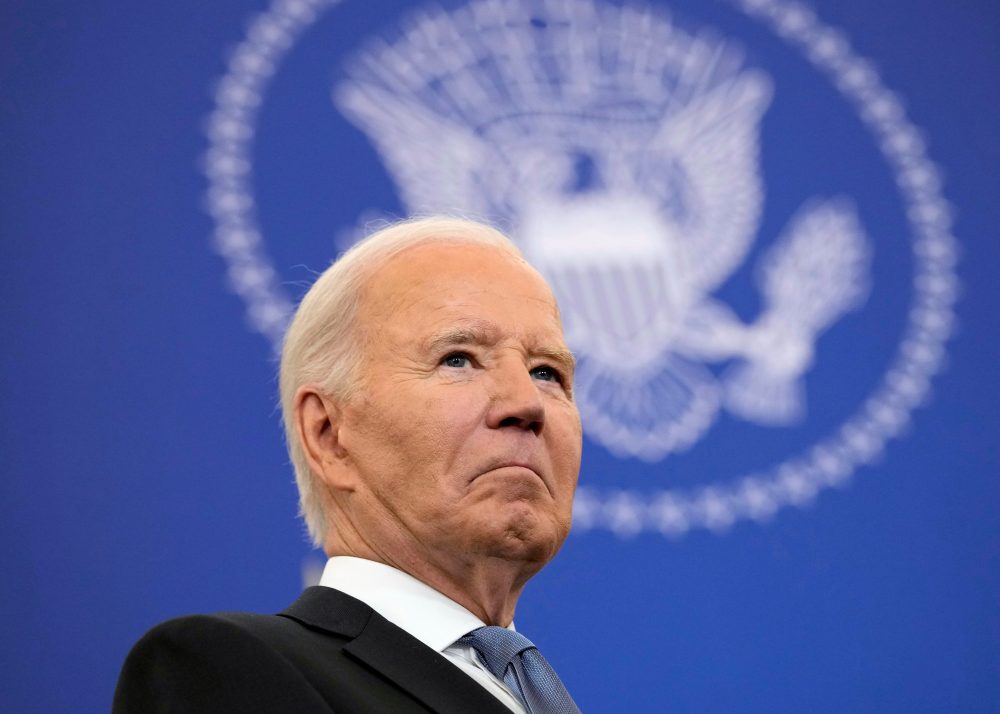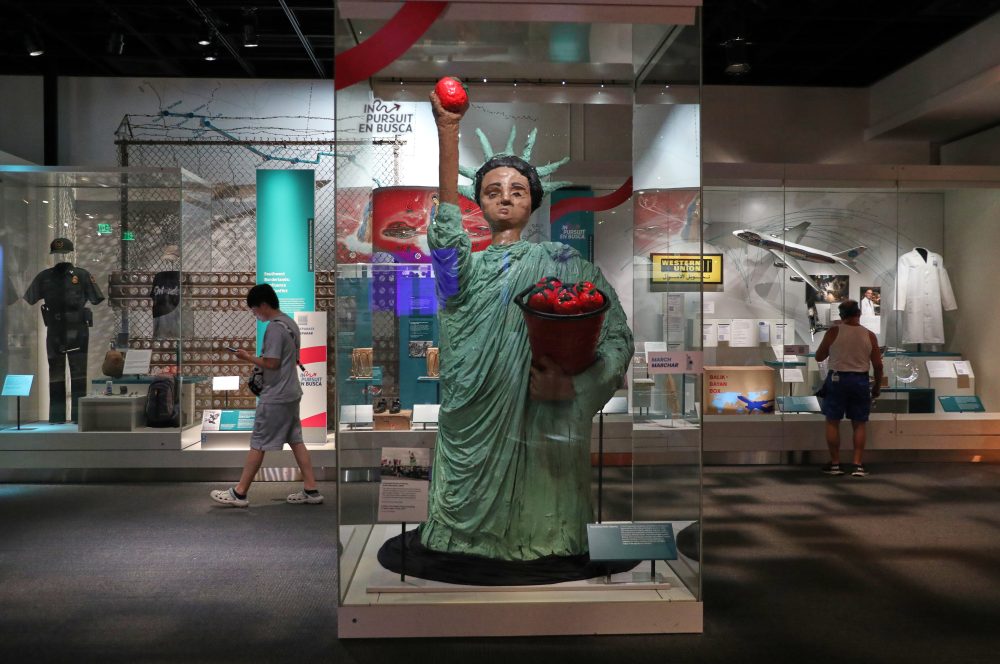

President Donald Trump signed an executive order Friday directing his administration to post signs outside the Smithsonian Institution’s U.S. history museum, warning visitors that some of the displays inside contain inaccurate information. The action represents his latest effort to influence how American history is presented to the public.
The order comes on the heels of a report released on July 4 by Trump’s Domestic Policy Council, which concluded that the Smithsonian and its National Museum of American History fail to present history “in a way that is inspiring, unifying, and worthy of our great republic.”
Because Trump does not have the legal authority to quickly remove Smithsonian leadership or demand changes to the museum’s exhibits, his executive order instead focuses on the sidewalks in front of the building, which fall under the jurisdiction of the National Park Service. The order calls for signs that reference the White House report and point visitors toward what Trump describes as “accurate information regarding America’s history.” A temporary exhibit correcting information he considers inaccurate is also called for under the order.
Smithsonian officials did not respond to requests for comment on the president’s action.
Anthea M. Hartig, who serves as director of the American history museum, challenged the White House report during congressional hearings held this week.
“As we continue to fact check the report, we unwaveringly attest that it does not fairly or accurately characterize the full body of work at the museum,” she told members of Congress. “There is always room for improvement. But I also know the beauty and the inspiration and the expertise that lies in our collections, our exhibits, and our programming.”
The Smithsonian functions independently from the executive branch of the federal government. Its museum directors answer to Secretary Lonnie Bunch, who is himself overseen by a Board of Regents.
Trump’s growing pressure campaign against the Smithsonian is part of a broader pattern in which the Republican president has sought to reshape cultural institutions — including universities and the arts — that he views as out of alignment with conservative values. He previously had himself installed as chairman of the John F. Kennedy Center for the Performing Arts with the goal of overhauling its programming, and his appointed board voted to add his name to the building, though a federal judge later ordered those signs removed.
Beyond Washington, Trump’s administration has also intervened at other historical locations. In Philadelphia, the administration secured a court ruling last week allowing it to reinstall interpretive panels at the site of President George Washington’s home. Critics contend those panels downplay the history of slavery at the location. Historians, advocates, and officials have raised concerns for months that the version approved under Trump’s directive could present a version of history that minimizes past suffering in favor of a more celebratory narrative.
Trump first signaled his intentions regarding the Smithsonian back in March, when he signed an executive order targeting funding for programs he said promoted “divisive narratives” and “improper ideology.”