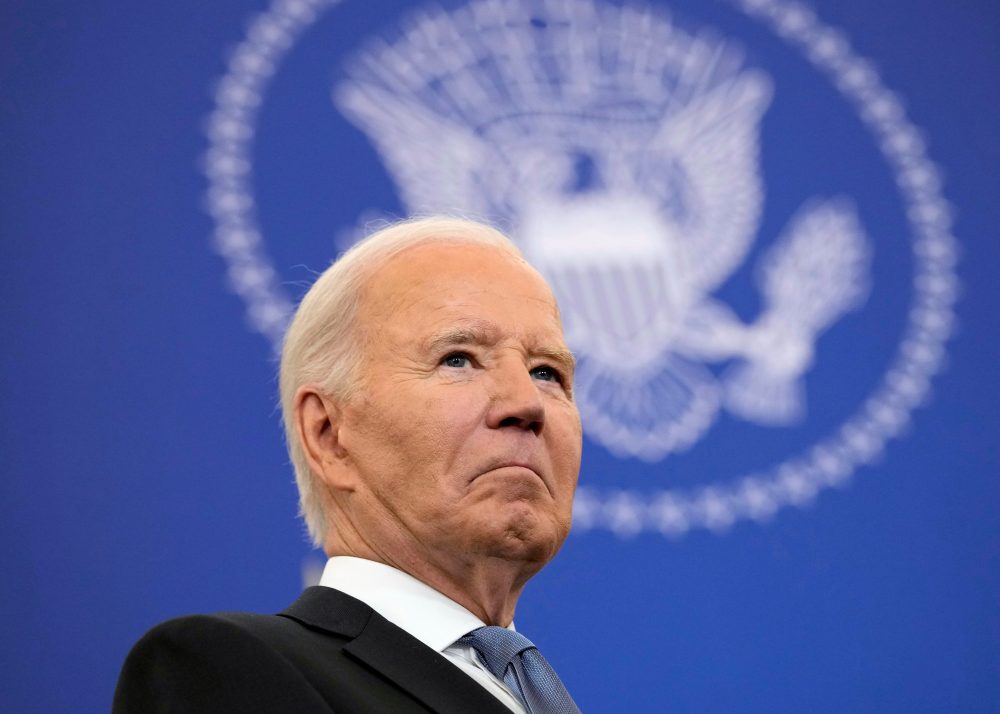

WASHINGTON — Former President Joe Biden walked away Friday from his legal effort to prevent audio recordings and transcripts of his private interviews with a memoir ghostwriter from being turned over to a Republican-led congressional committee.
Biden’s legal team filed a notice of voluntary dismissal just days after a divided federal appeals court panel rejected his attempt to suppress the material. He had the option of taking the case to the Supreme Court or requesting a full review by the U.S. Court of Appeals for the District of Columbia Circuit, but chose neither path.
Earlier in the week, a three-judge panel from that circuit court ruled 2-1 that there was a “substantial” public interest in making the recordings available. The panel had put a pause on its decision until August 3 to give Biden time to weigh his legal options.
Circuit Judge Florence Pan wrote a dissenting opinion, arguing that Biden had demonstrated a “substantial privacy interest” in keeping the material private. The case was also heard by D.C. Circuit Chief Judge Sri Srinivasan and Judge Gregory Katsas. Pan was nominated to the court by Biden, Srinivasan was nominated by President Barack Obama, and Katsas was nominated by President Donald Trump.
The recordings stem from interviews Biden gave to Mark Zwonitzer, who collaborated with him on two memoirs — 2007’s “Promises to Keep” and 2017’s “Promise Me, Dad.” Those conversations took place at Biden’s home in 2016 and 2017. Biden’s attorneys have maintained that the discussions were personal, candid, and never meant to be made public.
Special counsel Robert Hur obtained the recordings during his investigation into Biden’s handling of classified documents from his years as a senator from Delaware and as vice president under Obama. After Hur declined to bring charges against the then-president, Republican lawmakers pushed to obtain the material.
Biden had sued to stop the Justice Department under Trump from handing the recordings over to Congress and the conservative Heritage Foundation. The department had previously argued that the recordings did not qualify for protection under public records law.
The lawsuit came after U.S. District Judge Dabney Friedrich, a Trump appointee, ruled in June that the public’s interest in the recordings outweighed any privacy rights Biden could claim.