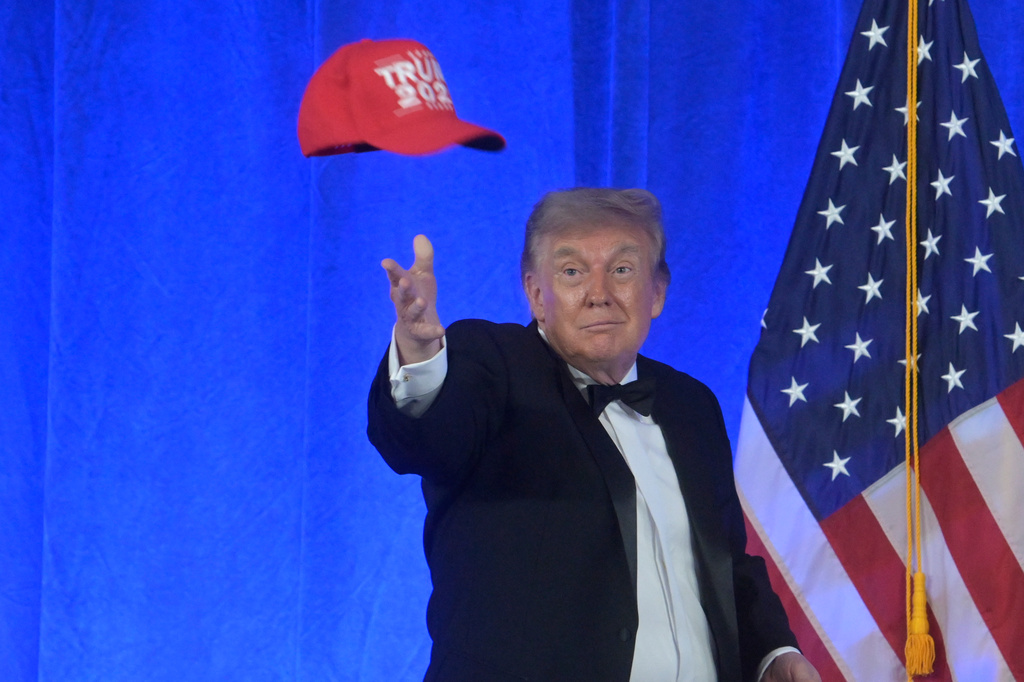

President Donald Trump is making another trip to Michigan, this time to promote what he calls a commitment to putting American manufacturing and workers first.
The president is scheduled to visit General Motors’ Milford Proving Ground in suburban Detroit, where the White House says he will highlight what it describes as growing investments in American industry and renewed efforts to bring jobs back from overseas.
The trip comes just ahead of Michigan’s August 4 primary election, with Republicans eager to build on their momentum in a battleground state that Trump won back for the GOP in 2024.
A major focus of the president’s remarks is expected to be his tariff strategy, which includes new trade duties targeting foreign competitors, including Canada. Opponents of the tariffs argue they have driven up costs for some businesses, while supporters contend they are a needed correction after years of trade policies that pushed manufacturing jobs out of the country.
White House officials say Trump is making good on his pledge to prioritize American workers by pushing for domestic production and drawing foreign investment into U.S. factories. The administration’s position is that rebuilding industrial strength means confronting nations that have taken advantage of unfair trade arrangements at America’s expense.
Michigan serves as a natural setting for this message. The state’s economy has historically been anchored by manufacturing, and particularly the auto industry. Many workers in the region have witnessed factory closures and production shifts to other countries over the years. Trump has consistently argued that tougher trade enforcement and targeted tariffs are key to rebuilding the country’s industrial foundation.
The visit also comes as Republicans gear up for important races ahead. Former Congressman Mike Rogers is already the Republican nominee for U.S. Senate, while a competitive GOP gubernatorial primary pits Trump-backed Congressman John James against businessman Perry Johnson.
James, a longtime Trump supporter and former Senate candidate, has centered his campaign on economic growth, job creation, and public safety. Johnson, meanwhile, is trying to appeal to the same conservative base by presenting himself as a political outsider in the tradition of the president.
Democrats have continued to challenge the administration’s economic record, pointing to inflation concerns and warning that tariffs risk damaging trade relationships. Republicans push back by arguing that inflationary pressures trace back to earlier policies and that rebuilding American production is the most effective long-term path to lower costs and greater economic security.
The tariff debate has been especially heated when it comes to Canada, the United States’ largest trading partner and a significant force in the North American auto industry. The administration maintains that stronger trade measures are essential to protecting U.S. manufacturers and workers, particularly when foreign governments adopt policies that put American exports at a disadvantage.
This marks Trump’s third visit to Michigan during his second term, following earlier stops at Ford facilities and other events centered on manufacturing and trade. Republicans say the president’s repeated appearances in the state underscore his commitment to the region’s economic future.
The central theme of Trump’s message remains consistent: the United States cannot afford to rely on foreign supply chains for critical industries. By encouraging companies to build, invest, and hire domestically, the president argues the country can restore economic strength, create better-paying jobs, and secure a future for the next generation of American manufacturing workers.