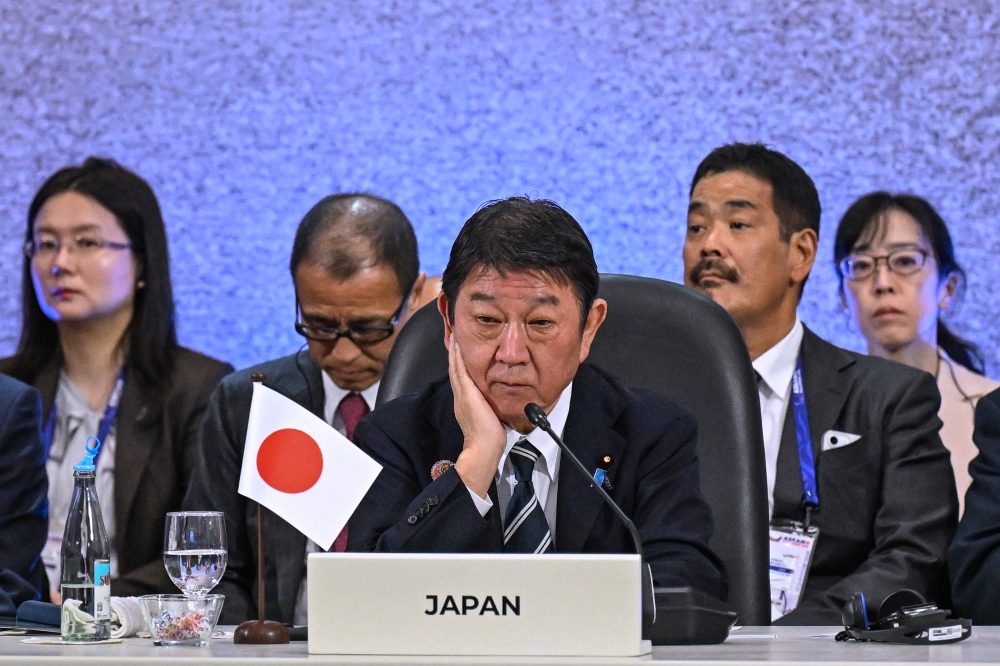

BEIJING — A diplomatic dispute has emerged between China and Japan over something that may or may not have happened: did their foreign ministers actually speak to each other at last week’s regional summit in the Philippines?
Japan’s foreign minister, Toshimitsu Motegi, told reporters after the ASEAN meeting that he had a brief conversation with his Chinese counterpart, Wang Yi, when the two crossed paths during the event. Motegi described it as a short exchange about the state of relations between the two nations.
However, China’s Foreign Ministry pushed back firmly on Monday. Spokesperson Lin Jian stated at the ministry’s daily press briefing: “Let me make it clear once again that during his visit to Manila, Foreign Minister Wang Yi did not have a meeting with the Japanese side on his schedule, nor did any brief exchanges take place on the site.”
The fact that the two governments can’t even agree on whether a conversation happened underscores just how strained their relationship has become. The friction traces back to November, when remarks about Taiwan made by Japan’s Prime Minister Sanae Takaichi drew a sharp reaction from Beijing.
Japan has been seeking ways to mend the relationship, but China has largely kept its neighbor at arm’s length. The fallout has extended beyond diplomacy — Chinese tourists have been visiting Japan in smaller numbers, and both governments are increasingly wary of the other’s military buildup.
Motegi emphasized Japan’s desire to keep communication open, saying last week: “As we have repeatedly noted, Japan is open to dialogue at all levels, and that I believe it is extremely important that we continue our dialogue as both Japan and China hold a major responsibility for regional peace.”
Even if some form of encounter did occur, Japanese media reported it amounted to little more than pleasantries and greetings rather than any substantive discussion.
Prime Minister Takaichi addressed the situation at a Monday news conference, saying dialogue between the two countries is continuing at multiple levels, pointing to Motegi’s interaction with Wang as one example.
The controversy stems from comments Takaichi made shortly after taking office. During a parliamentary session in November, she was asked whether a Chinese military blockade of Taiwan could trigger Japan’s collective self-defense policy — a framework that allows Japan’s military to assist an ally, most likely the United States, when certain conditions are met, including threats to Japan’s own survival.
Takaichi said such a scenario could indeed qualify: “If it involves the use of warships and military actions, it could by all means become a survival-threatening situation.”
That answer crossed what Beijing views as a firm boundary in its foreign relationships. China, which claims Taiwan as its own territory despite the island governing itself independently, strongly opposes any foreign statements or actions it believes support Taiwanese independence — including U.S. arms sales to the island.
Takaichi has not walked back her original remarks, though she later told the same parliamentary committee that she would refrain from discussing specific self-defense scenarios going forward.