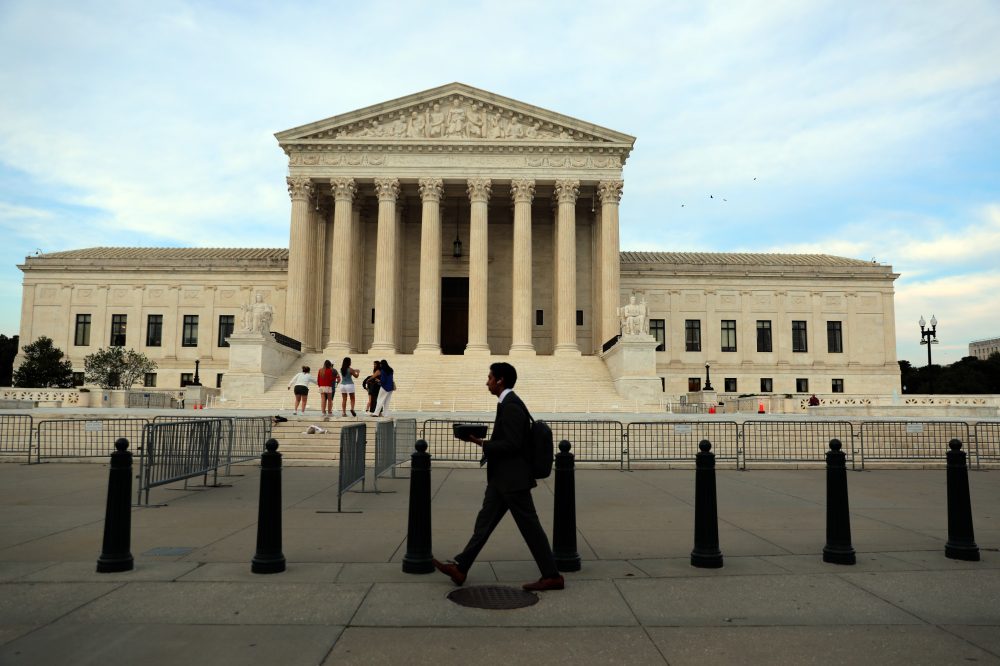

WASHINGTON — The nation’s highest court is entering the final stretch of its current term, with several landmark decisions still to come involving President Donald Trump’s broad assertions of executive power.
Starting Monday, the justices are expected to hand down rulings in as many as eight remaining cases. Among the most closely watched are disputes over Trump’s attempt to restrict birthright citizenship, his claimed authority to dismiss the leaders of most independent agencies without cause, and his effort to remove a sitting Federal Reserve governor.
The court is also considering cases out of West Virginia and Idaho that could determine whether laws in roughly half of all states — laws that bar transgender girls and women from competing on public school and college sports teams — are constitutional.
Two cases tied to election procedures are still unresolved as well. One involves state laws that allow mailed ballots to be counted if they are postmarked by Election Day but arrive a short time afterward. The other concerns limits on how much money political parties can spend in support of candidates running for Congress or president.
Additionally, the court has yet to rule on a case involving so-called geofence warrants, which allow law enforcement to collect location data from cellphones in order to identify people who may have been near a crime scene. Opponents of the practice argue it amounts to a broad dragnet that infringes on civil liberties.
So far this term, the court’s conservative majority has largely sided with the Trump administration on immigration matters. Last week, the justices allowed the administration to end temporary legal protections for individuals who came to the United States fleeing war or natural disasters in their home countries. A separate ruling could make it more difficult for people fleeing persecution to apply for asylum here.
However, during oral arguments in April, the justices appeared more skeptical of Trump’s executive order that would end the long-established practice of granting citizenship to children born on U.S. soil to parents who are in the country illegally or on a temporary basis.
The court has also previously rejected Trump’s claim that he has the authority to impose sweeping tariffs on his own under an emergency powers statute.
That February ruling drew a sharp response from Trump, who issued an unusually pointed personal attack on two of his own court appointees — Justices Neil Gorsuch and Amy Coney Barrett — after they voted against his position.
The question of how broadly a president can fire members of independent federal agencies is the longest-pending unresolved case, having been argued back in December. The justices appear poised to either overturn or significantly scale back a 91-year-old precedent that required presidents to have a specific cause — such as neglect of duty — before removing Senate-confirmed officials from those positions.
The outcome is widely expected to favor expanded presidential removal power, as the court’s conservative justices have already allowed the firings to proceed while the legal challenge continues — even after lower courts ruled the dismissals were unlawful.
The court appeared more hesitant, however, when it came to Trump’s push to immediately remove Federal Reserve governor Lisa Cook, who faces allegations of mortgage fraud that she has denied. No president has ever fired a Fed governor in the agency’s 112-year existence.
The Supreme Court traditionally concludes its term before July 4. After this week’s anticipated rulings, the justices will not meet publicly again until the first Monday in October.