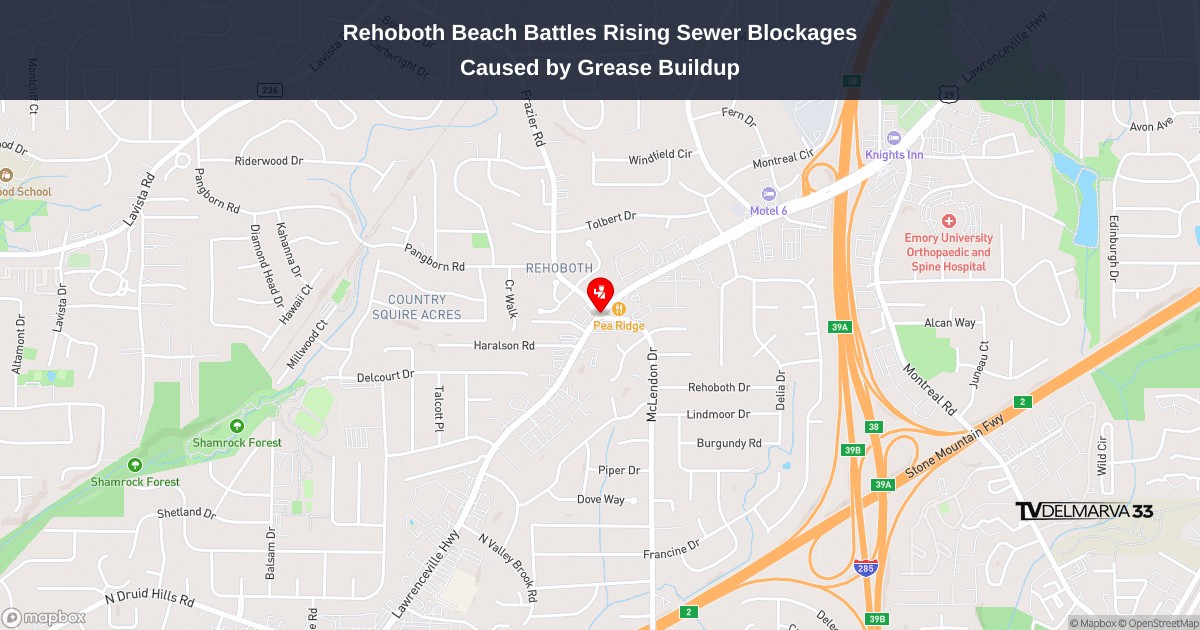

Municipal wastewater workers in Rehoboth Beach report a growing problem with grease-related sewer line obstructions throughout the community. These clogs prevent sewage from flowing properly through the municipal system, potentially causing backflow issues, reducing system capacity, and sometimes resulting in overflows into low-lying areas, manholes, or adjacent properties. The blockages also damage infrastructure and force costly emergency response calls for city maintenance teams. Officials emphasize that these obstructions can be completely avoided through appropriate grease handling practices.
Guidelines for Restaurants and Food Service Businesses:
• Maintain grease interceptors on a consistent maintenance schedule
• Clean grease traps before grease and debris reach 75% capacity
• Maintain detailed records of grease trap cleaning and maintenance as mandated
• Use appropriate, leak-resistant containers for grease storage with secondary containment when necessary
• Prevent grease from entering floor drains and storm drains when washing hood filters, mats, or cooking equipment
• Avoid washing kitchen equipment or mats in public streets
• Never dispose of mop water or grease waste into storm drainage systems or roadways
Guidelines for Homeowners:
• Remember that even small quantities accumulate over time and contribute to blockages
• Never dispose of grease, cooking oils, or fats down kitchen drains; allow them to solidify and dispose of them in sealed containers with regular trash
Upcoming Inspections
The city’s annual restaurant inspection program for 2026 is scheduled from April 1 through May 15. Code Enforcement personnel will conduct compliance permit inspections for establishments with alcohol licenses, while Wastewater department staff will examine grease management practices. Inspectors will review maintenance procedures and pump-out documentation to ensure proper compliance. Each inspection is expected to be completed quickly.