
American Jewish communities across the nation are navigating a challenging period marked by escalating security concerns and internal disagreements about Israeli government actions in the Middle East.
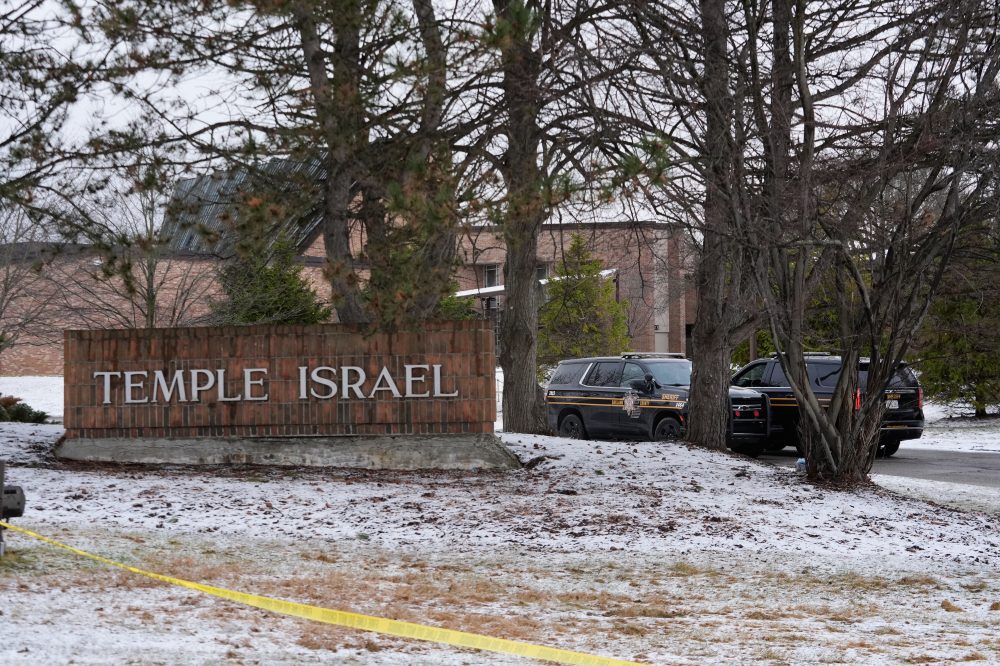
The tensions became starkly apparent following a recent incident in the Detroit area, where an individual drove a pickup truck into a synagogue hosting over 100 preschool children. The attacker, who had lost relatives in an Israeli airstrike in Lebanon, engaged in gunfire with security personnel before taking his own life, FBI officials reported.
Union for Reform Judaism President Rabbi Rick Jacobs condemned the attack, emphasizing the problematic nature of targeting American Jews for foreign government actions. “To hold American Jews — let alone children in a preschool — accountable for the actions of a foreign government is a dangerous double standard that we don’t apply today to any other group,” Jacobs stated. “One can be deeply critical of the policies of the State of Israel and still recognize that targeting synagogues or any Jewish institutions with violence is not political protest; it is antisemitism, plain and simple.”
Author and political commentator Peter Beinart echoed similar sentiments while maintaining his criticism of Israeli policies in Gaza and the West Bank. “No matter what Israel does, no matter how immoral or brutal or horrifying, it doesn’t justify attacking a synagogue or justifying attacking American Jews in any way,” Beinart said during his recent podcast. “Americans are not responsible for the actions of foreign governments or foreign organizations, just because they share a religion, an ethnic national ancestry, a race.”
However, Beinart suggested that synagogues displaying pro-Israel messaging should remove such signs “because those signs make the congregants less safe and because they’re immoral.”
Jewish Council for Public Affairs CEO Amy Spitalnick, despite her own disagreements with Israeli government policies, opposed the idea of removing supportive signage. “We live in a country where people are entitled to their beliefs,” she explained. “No one should have to risk violence because they’re expressing them.”
Spitalnick emphasized the complexity of these interconnected issues, saying, “I believe deeply in the need for a Jewish homeland. And I have fundamental disagreements with this government, the humanitarian crisis it created in Gaza.”
Journalist Beth Kissileff, whose husband survived the devastating 2018 Pittsburgh synagogue shooting that killed 11 people, acknowledged the nuanced nature of these challenges. “On the one hand, I do feel the fates of Jews the world over are linked,” she said. “On the other hand, I don’t feel it’s fair for Jews the world over to be the proxies for the actions of the government of Israel.”
Kissileff expressed strong disagreements with certain Israeli government actions, including insufficient action against settlers attacking West Bank Palestinians and policies that favor Orthodox over non-Orthodox Jewish practices. Nevertheless, she firmly rejected using Jews as scapegoats for Israeli policies.
Her husband, Rabbi Jonathan Perlman of New Light Congregation, was among the clergy whose congregation lost members in the Pittsburgh attack, which remains the deadliest antisemitic massacre in American history. The perpetrator, currently on federal death row, claimed motivation from anger over Jewish support for refugee assistance programs.
At Los Angeles’ Sinai Temple, Senior Rabbi Nicole Guzik, who serves alongside her husband Rabbi Erez Sherman, described the financial burden of security measures. Their Conservative synagogue spends over $1 million annually on protection, a cost that has risen following increased tensions after Hamas’ October 7, 2023 attack and the subsequent Gaza conflict.
“But we are going to live as Jews as proudly as possible,” Guzik declared. “There’s no reason Jews should not be able to express their love for their homeland. … A love for Israel is intrinsic to Jewish belief.”
Motti Seligson, who handles public relations for the Orthodox Chabad-Lubavitch movement, noted both the unfortunate necessity of enhanced security and a positive trend of increased Jewish engagement. “This is something that we’ve been seeing from Oct. 7, just a tremendous amount of people who want to connect with their faith and connect with their people,” Seligson observed.
Rabbi Elliot Cosgrove from Park Avenue Synagogue, a prominent Conservative congregation in New York, said Jewish communities have “grown uncomfortably accustomed to this new reality,” referencing recent incidents in Michigan and Australia. He pointed to “the blurred line between anti-Zionism and antisemitism, the frightening manner by which violent rhetoric becomes violent action, and the enabling that occurs when people in authority refuse to draw clear moral lines.”
Cosgrove, author of “For Such a Time as This: On Being Jewish Today,” distinguished between supporting Israel and supporting its government. “As a proud Zionist, an expression of that love of Israel can come and oftentimes does come in the form of dissent with the Israeli government,” he explained. “Love of Israel … is different from love of the Israeli government. And the problem of this moment is that it’s all being conflated into one.”
He praised New York Governor Kathy Hochul’s recent synagogue visit, where she promoted proposed legislation creating buffer zones around religious buildings to prevent demonstrations. The proposal followed anti-Israel protests outside New York synagogues. “I urged my community that, shocked as we were, we need to be mobilized, not paralyzed,” Cosgrove said.
Columbia University history professor Mark Mazower, who published “On Antisemitism: A Word in History” last year, traced how the term’s definition has expanded since Israel’s 1948 establishment as a Jewish homeland following the Holocaust. He noted that antisemitism increasingly became associated with hostility toward Israel, while American Jewish organizations simultaneously strengthened their ties to the Jewish state.
“It’s obviously wrong to blame all Jews everywhere for what Israel does,” Mazower said. “Yet large American Jewish organizations have wrapped themselves in the Israeli flag and said it’s the duty of American Jews to stand with Israel.”
The Anti-Defamation League reported that Israel-related incidents comprised more than half of antisemitic incidents in their annual count for the first time last year. ADL CEO Jonathan Greenblatt addressed the organization’s national conference this week, stating, “We will not apologize for our love and support for the Jewish state of Israel. Not now, not ever.”