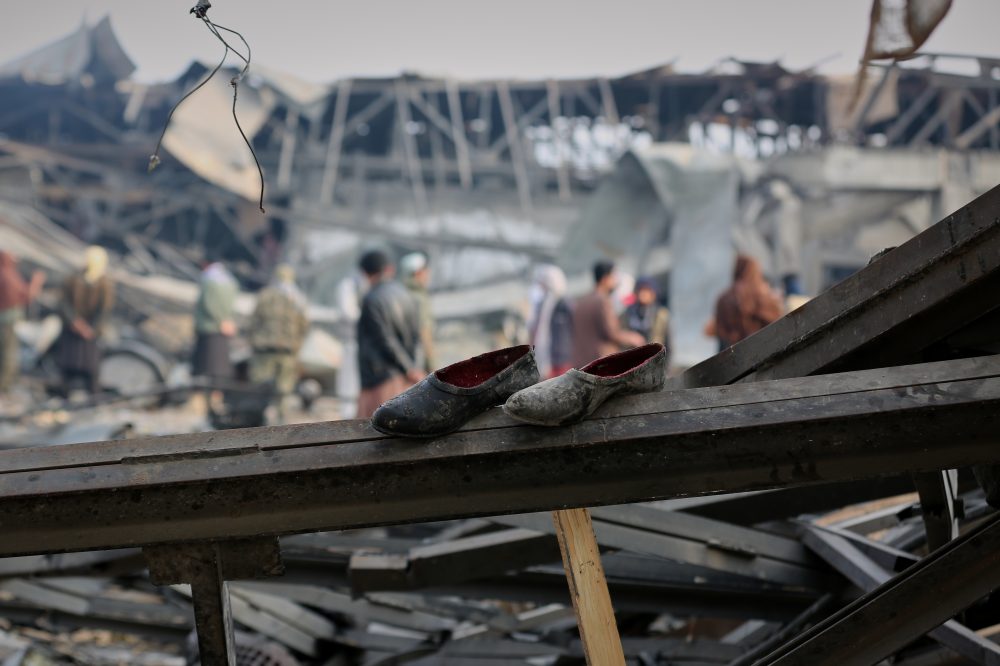

Pakistan has firmly pushed back against Amnesty International’s demand for a war crimes investigation into a March airstrike targeting a drug rehabilitation facility in the Afghan capital, calling the allegations groundless and defending the military action as a justified response to ongoing terrorist threats.
During a news briefing in Islamabad, Foreign Ministry spokesperson Tahir Andrabi stated that Pakistan “completely rejects the allegations” put forward by Amnesty International, describing it as “unfortunate” that such serious accusations were leveled “without any credible evidence.”
His statement came one day after Amnesty International announced it had uncovered no evidence supporting Pakistan’s assertion that Kabul’s Omid drug rehabilitation center was being used for military purposes or as a weapons storage site at the time of the March 16 strike.
Afghanistan has reported that the airstrike resulted in approximately 400 civilian deaths. Pakistani officials dispute that figure and insist the strike was directed at a legitimate military target.
Amnesty International said its investigation included analysis of more than 60 photos and videos — among them footage released by Pakistan’s own military — along with a review of more than 30 satellite images and interviews with witnesses and other sources. The organization noted it had asked Pakistan’s Foreign Ministry on July 9 whether an investigation was underway and requested evidence backing Pakistan’s justification for the strike, but received no reply before its report was published.
The strike occurred against a backdrop of months of rising tensions and cross-border hostilities between Pakistan and Afghanistan.
Pakistan accuses Afghanistan’s Taliban government of sheltering militant groups, particularly the Pakistani Taliban — formally known as Tehrik-e-Taliban Pakistan, or TTP — which it blames for deadly attacks carried out inside Pakistan. While the TTP is a separate organization, it maintains close ties with Afghanistan’s Taliban leadership. Afghanistan has denied providing any such support.
In May, the United Nations mission in Afghanistan, known as UNAMA, said it had independently confirmed at least 269 civilian deaths and 122 injuries resulting from the strike, cautioning that the true death toll could be considerably higher. Afghan authorities subsequently held mass funerals for those killed.
Responding to Amnesty’s findings, spokesperson Andrabi argued that Afghanistan’s Taliban authorities continue to allow a permissive environment for militant organizations, including the TTP and the banned Baloch Liberation Army — allegations that Kabul has previously denied.
Andrabi said thousands of Pakistanis have been killed or wounded in attacks planned from Afghan soil.
“Any military strikes by Pakistan were undertaken in the exercise of its right to self-defense under the principles of necessity and as a measure of last resort and were directed only and exclusively against terrorists and their logistical support bases in Afghanistan,” Andrabi said, adding that Pakistan rejects Amnesty’s conclusions.
Andrabi also urged the global community to hold Afghanistan’s Taliban leadership accountable for preventing Afghan territory from being used as a launching pad for attacks against Pakistan, stating that Islamabad reserves the right to take all steps necessary to protect its sovereignty, territorial integrity, and the safety of its citizens.