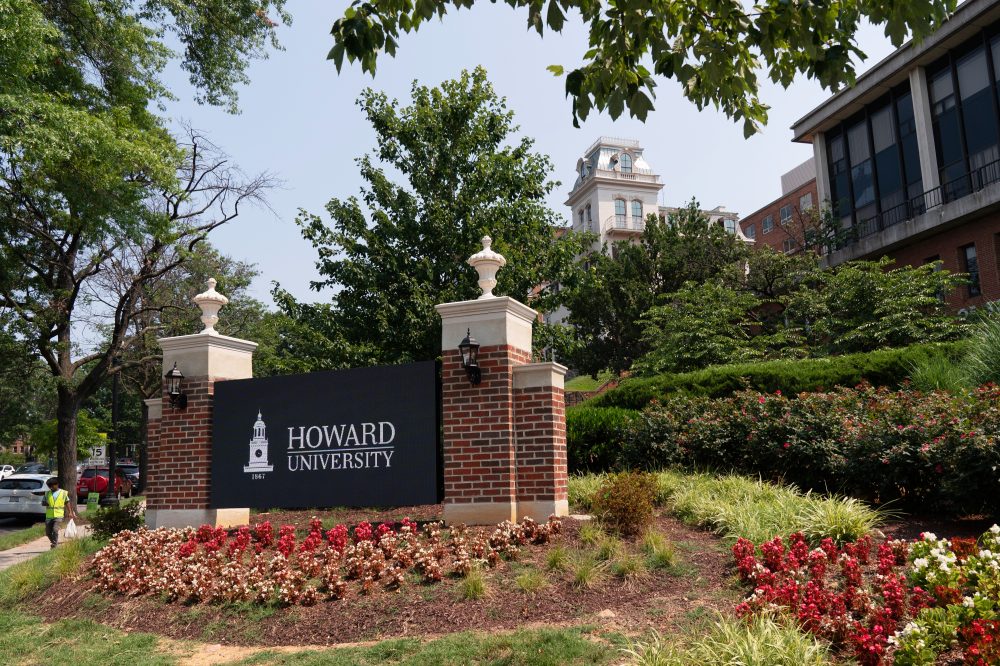

For 17-year-old A’Zariah Miles of Knoxville, Tennessee, attending Howard University had been a lifelong goal — one that seemed just weeks away from becoming reality. Then, without warning, it slipped away.
Miles is among more than 500 incoming first-year students who received word this week that they had been removed from Howard University’s fall enrollment. The prestigious, historically Black university in Washington, D.C. begins its fall semester on August 17.
The news sent shockwaves through social media, where affected students — some visibly in tears — began posting their stories. Several of those posts have since gone viral.
After learning her daughter had lost her spot, Kendra Miles said the university’s automated system wouldn’t allow them to set up a payment plan because the amount owed disqualified them from that option.
“I’ve reached out since we got the email (Wednesday). I’ve emailed, literally, everybody,” Kendra Miles said. “I emailed her adviser. He responded and said it wasn’t a mistake and there was nothing they could do.”
On Friday, Howard University confirmed via email that the school had sent notices to “502 first-time-in-college students whose accounts did not reflect the required enrollment and financial obligations by the previously communicated deadlines.”
According to the university, communications about enrollment requirements, payment expectations, and deadlines had been sent to students beginning in March, through both email and orientation sessions.
“The university recognizes that timing differences may have occurred between when financial aid was reflected and when charges were finalized,” Howard stated in its email. “Students who believe their account did not accurately reflect their financial standing at the deadline should contact the Bursar’s Office. Each case will be reviewed individually to determine whether adjustments or reinstatement are appropriate.”
Howard is one of roughly 100 historically Black colleges and universities across the United States. The school had an undergraduate enrollment of approximately 11,000 students last fall. Annual tuition for undergraduates living on campus runs about $38,000, with housing costs adding roughly $13,600 more.
Robert Kelchen, a higher education professor at the University of Tennessee, Knoxville, said colleges routinely try to balance ensuring students can enroll while also collecting tuition payments.
Howard “either had students who owed a lot of money and they didn’t think a lot of students would pay, or potentially, they have a really big incoming class and they can replace those students,” Kelchen said.
Laverne Mickens, who coaches students and families on applying for college scholarships through her business The Scholarship College Mama LLC — which has no affiliation with Howard — said she personally responded to more than 400 emails on Wednesday and Thursday from people affected by the situation. She described those reaching out as “frantic and crying.”
“People are devastated,” Mickens said. “Parents are saying: ‘Can you help us? Howard unenrolled us.’”
A’Zariah Miles, who had planned to study biology, chose Howard over other schools that had also accepted her. She now fears it may be too late to enroll elsewhere for the fall.
“Everybody’s housing is booked, or I can’t enroll because it’s too late or I missed orientation,” she said. “I’ve been trying to continue to have hope with Howard, but I don’t really have that much time before school starts and I don’t really want to have a gap year.”
Another affected student, 17-year-old Saniah Collins of Atlanta, also received an unenrollment notice on Wednesday. She said she found out through a parent group chat that many students were in the same situation.
Collins received an email from the school that afternoon stating a July 10 deadline to pay her tuition balance or arrange a payment plan had passed, and the university could no longer hold her place. However, Collins said an adviser had told her that most of her fall semester balance had already been paid.
“I worked like crazy to get into this school,” Collins said. “Howard has been my everything. My whole senior year, my whole summer I worked consistently on scholarships. We tried to make ourselves 10 steps ahead to make sure we were on the right page.”
Marybeth Gasman, a higher education expert at Rutgers University, said the mass removal of students is damaging to Howard’s reputation, especially given that historically Black colleges and universities are widely regarded as supportive, nurturing environments for Black students.
“If it were me and it was over 500 students, I wouldn’t have done it in one day,” Gasman said. “I would have also done the due diligence of going through each one. Now, they are going to have to go back and do that.”