
DUBAI, United Arab Emirates — President Donald Trump has issued a direct threat to Iran, warning that the United States will demolish one bridge or power plant each time Iran targets a vessel in the Strait of Hormuz.
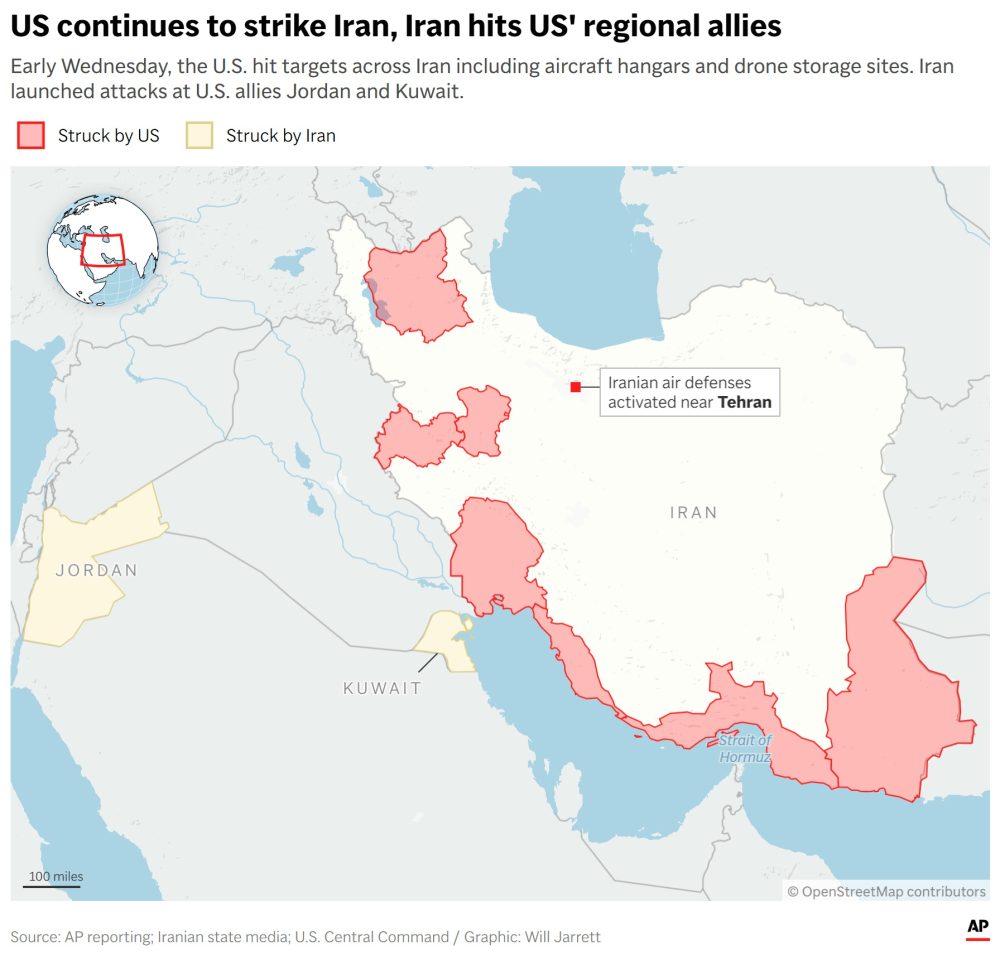
The warning followed another round of American airstrikes on Iran, during which Iranian air defenses opened fire above the capital city of Tehran. Separately, Iran launched a missile attack on a Jordanian city bordering Israel, and alerts were activated in both Bahrain and Saudi Arabia.
Taking to social media, the president doubled down on previous threats to strike civilian infrastructure in response to Iranian aggression.
“From this point forward, any time the Islamic Republic of Iran shoots at a ship in the Strait of Hormuz, whether it be by Missile, Rocket, Drone, or any other device or weapon, the United States will bomb and destroy ONE BRIDGE OR POWER PLANT,” Trump posted online.
The American military confirmed it had completed an 11th consecutive night of strikes against Iranian targets, hitting locations including aircraft hangars and drone storage facilities. Meanwhile, efforts to reach a diplomatic resolution have produced little visible progress, with both sides remaining firm in their standoff over the strategically vital waterway.
Iran has refrained from striking Israel since hostilities resumed last month, apparently in an effort to prevent Israel from re-entering the conflict. However, the missile and drone strike on Jordan’s city of Aqaba — visible from Israel’s city of Eilat — heightened fears that the war could spread further, particularly after a ceasefire agreement fell apart.
The Strait of Hormuz, through which roughly one-fifth of the world’s oil and gas flowed during peacetime, has been largely shut down due to Iranian attacks, sending shockwaves through the global economy. Adding to the concern, Iran-backed Houthi rebels in Yemen have threatened to target Saudi vessels in the Red Sea, putting yet another critical shipping route at risk.
Benchmark Brent crude oil climbed to approximately $94 per barrel, and gasoline prices are rising again ahead of U.S. midterm elections this fall.
Jordan’s military reported intercepting four Iranian missiles over Aqaba, with two others landing in unpopulated areas. Videos captured by residents in the nearby Israeli city of Eilat showed plumes of smoke rising overhead. Jordan also said it shot down four Iranian drones.
A missile alert was also triggered in Bahrain, and Saudi Arabia urged residents of the Persian Gulf city of Dammam to take shelter. Saudi authorities later announced the threat had passed, providing no further details.
Iran’s state news agency IRNA reported explosions in multiple provinces across the country. Iran’s Health Ministry stated that U.S. strikes over the past 11 days have resulted in 53 deaths — including six women and three children — and left nearly 600 people wounded.
Iran’s paramilitary Revolutionary Guard declared it would press forward with retaliatory strikes.
Before the latest round of U.S. airstrikes, Iran’s Interior Minister Eskandar Momeni traveled to Pakistan — a key mediator in the conflict — in an attempt to revive diplomatic talks. However, it remained unclear what kind of agreement could bring the fighting to an end, as the conflict has increasingly centered on control of the Strait of Hormuz.
Iran’s Interior Ministry spokesman Ali Zeinivand indicated that communication was still ongoing, stating that “diplomacy isn’t called off” and that messages continued to be exchanged, according to IRNA. He offered no additional details.
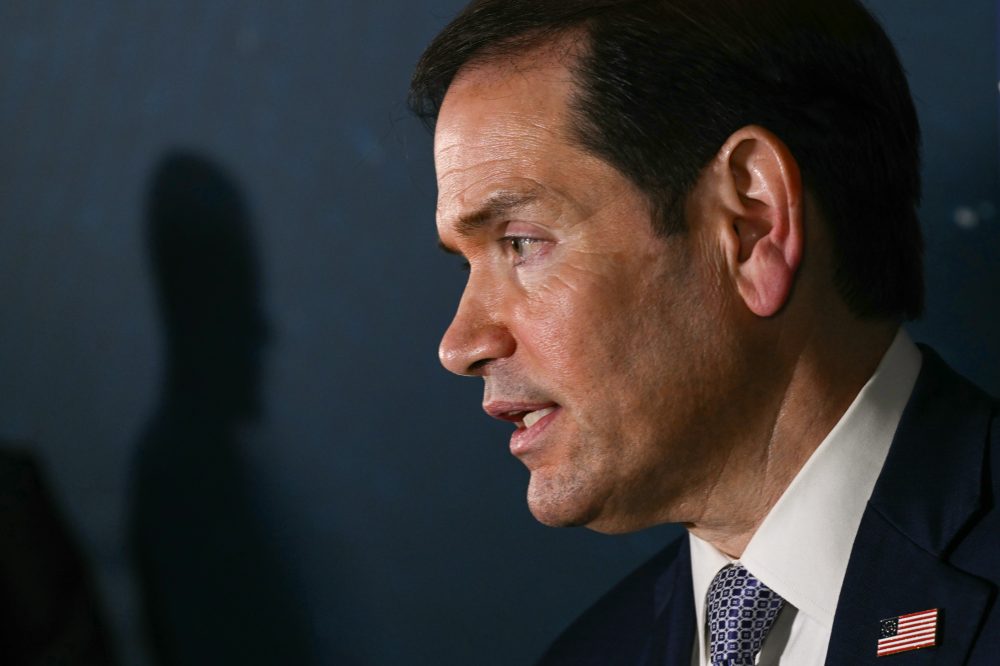
At a regional summit held in the Philippines, U.S. Secretary of State Marco Rubio condemned Iran’s conduct in the strait.
“If we create a precedent in the Middle East where a nation state can decide that they are going to control an international waterway, charge a toll and if you don’t pay them, blow up your ships, we have created a very dangerous precedent which will repeat itself in other parts of the world, including in this region,” Rubio said.
In response to Iran’s aggression, the United States has reinstated a blockade on Iranian ports.
Speaking from the Oval Office on Tuesday, Trump offered a bleak assessment of any potential negotiations, saying the U.S. had “no interest in meeting.”
He also hinted that American forces could soon move against an Iranian nuclear facility currently under construction, buried deep beneath a mountain. The site, referred to as Pickaxe Mountain, is located on the southern edge of Iran’s Natanz nuclear enrichment complex, which was struck by the U.S. during a 12-day conflict between Iran and Israel in 2025. Pickaxe Mountain has not been targeted, even as Iran continues excavation work there.
Iran has consistently maintained that its nuclear program is for peaceful purposes. However, the country resumed enriching uranium to near weapons-grade levels after Trump withdrew from a 2015 nuclear agreement during his first term in office. The U.S. and other nations believe Iran operated a nuclear weapons program until 2003 and may attempt to revive it.