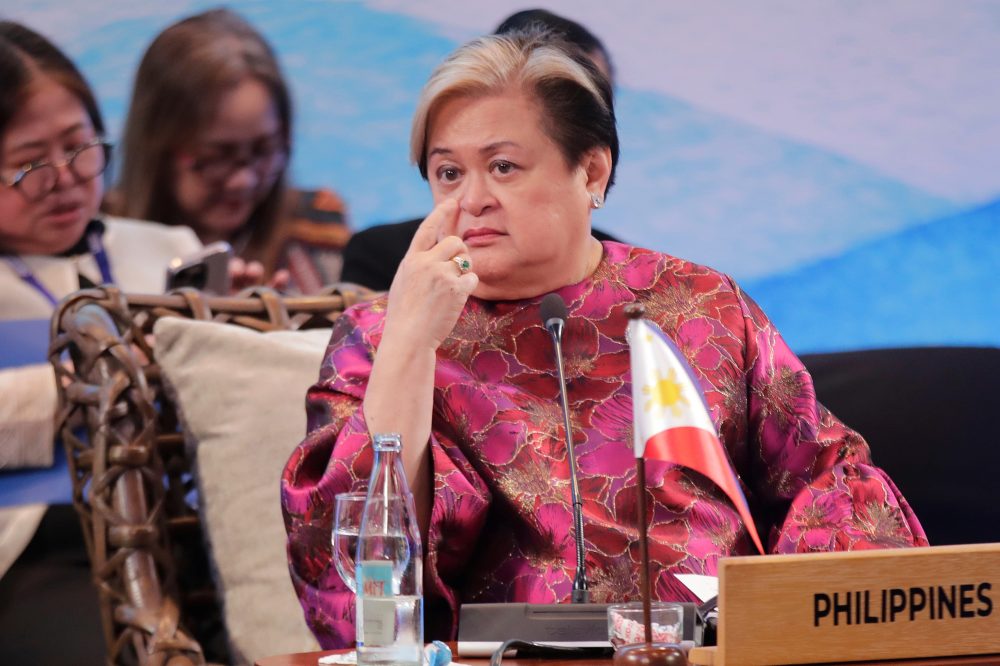

MANILA, Philippines — The foreign ministers of Southeast Asian nations kicked off three days of high-level security discussions in the Philippine capital on Tuesday, facing a packed agenda shaped by some of the world’s most pressing crises — chief among them the escalating war involving Iran and a violent new incident in the contested South China Sea.
Meeting behind closed doors, the foreign ministers of the Association of Southeast Asian Nations, known as ASEAN, emerged with a joint statement demanding an immediate end to the fighting in the Middle East and calling for the full and safe reopening of the Strait of Hormuz.
“We expressed serious concern over the rapidly evolving situation in the Middle East, particularly the renewed hostilities involving the United States of America and the Islamic Republic of Iran,” the ASEAN ministers stated in their communiqué.
The ministers also reaffirmed that all nations are bound to resolve their disputes peacefully while respecting the sovereignty and territorial integrity of other states.
Southeast Asia is home to more than 680 million people and depends heavily on oil and gas supplies from the Middle East. The region has been hard hit by the fuel and price shocks triggered by the Iran conflict. The Philippine president declared a national energy emergency in March to safeguard the supply of fuel, food, and other essential goods and to crack down on hoarding and price gouging.
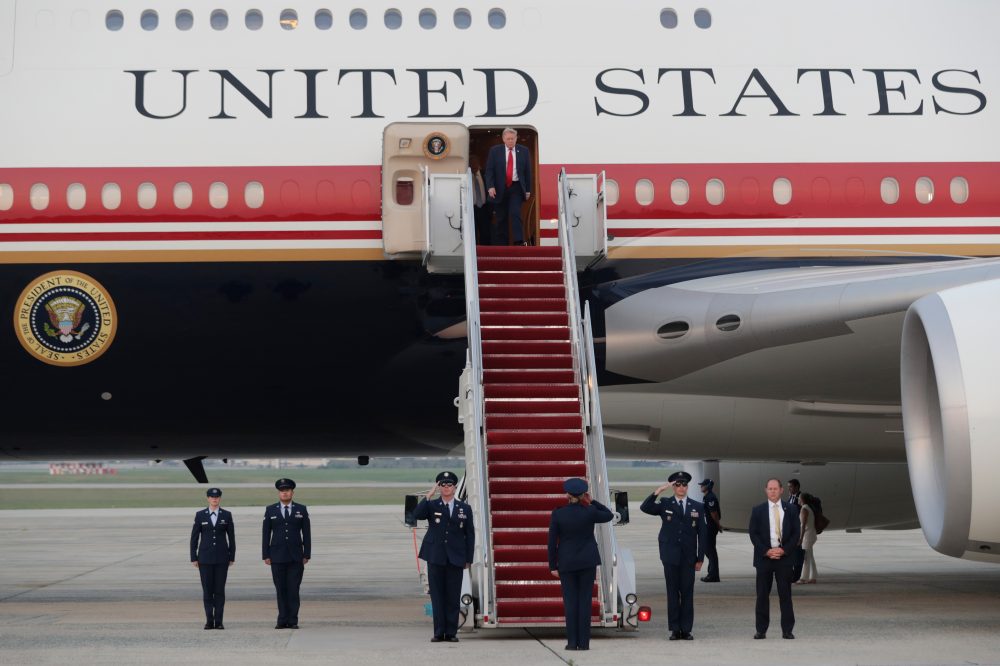
U.S. Secretary of State Marco Rubio touched down in Manila Tuesday morning ahead of his scheduled Wednesday meeting with ASEAN foreign ministers. The Middle East crisis is expected to be near the top of the agenda, alongside other security and economic matters.
Rubio is also set to participate in the ASEAN Regional Forum, a broader security gathering that will include the European Union, Russian Foreign Minister Sergey Lavrov, and Chinese Foreign Minister Wang Yi.
None of the three — Rubio, Wang, or Lavrov — have publicly signaled plans for any sideline meetings. However, if Rubio and Wang do speak, it would mark the most senior direct contact between the United States and China since President Donald Trump traveled to Beijing in May for talks with Chinese President Xi Jinping. Those discussions centered on the U.S.-Israel war on Iran, trade relations, and the status of Taiwan, among other topics.
All three officials are expected to attend the East Asia Summit on Thursday, a forum bringing together 18 Western and Asian nations — including the 11-member ASEAN bloc — to address geopolitical, economic, and security issues.
On Wednesday, ASEAN ministers are scheduled to sit down with Chinese Foreign Minister Wang Yi to discuss progress on a long-stalled agreement known as a “code of conduct” for the South China Sea. The proposed pact is designed to keep territorial disputes in those waters from escalating into open conflict. Negotiations between China and ASEAN have been ongoing for roughly two decades, with both sides aiming to wrap up talks by year’s end.
The urgency of that agreement was underscored by a fresh confrontation in the disputed waters on Monday. The Philippine military reported that Chinese coast guard personnel boarded a motorboat and repeatedly struck a Filipino sailor on the head with a wooden baton, injuring him and damaging his vessel. The incident occurred at the disputed Second Thomas Shoal.
Philippine officials strongly condemned the Chinese coast guard’s actions. China’s coast guard, for its part, placed the blame on the Filipinos for initiating the confrontation. In response, the Philippine president summoned China’s ambassador for a meeting Tuesday afternoon, according to a spokesperson, though no further details were provided.