
U.S. forces carried out overnight airstrikes on targets in southern Iran after President Donald Trump vowed that Tehran would pay a heavy price for the deaths of American troops. Iran responded by striking U.S.-linked sites in Bahrain, Kuwait, and Jordan, while a tanker was hit in the critical Strait of Hormuz waterway.
The back-and-forth attacks came one day after Yemen’s Iran-aligned Houthi movement announced it would impose a naval blockade on Saudi Arabia — a move that threatens to open a new front in the conflict and put global energy supplies and trade at serious risk.
Even as the cycle of violence has largely destroyed an interim peace agreement reached last month, indications that both Tehran and Washington are open to resuming diplomatic talks helped prevent a sharp rise in oil prices.
U.S. Central Command announced it had completed its most recent round of strikes against Iran, reporting that it hit Iranian military command centers, maritime capabilities, missile and drone launch sites, and air defense systems.
Explosions were reported in and around the southern Iranian city of Shiraz, while the coastal cities of Konarak and Chabahar were also struck, according to Iranian state media.
Iran fired back with a new wave of attacks across the Gulf region, where earlier strikes on desalination plants had already raised alarms about potential water shortages and the growing danger to civilian infrastructure.
Iran’s Revolutionary Guards said they targeted infrastructure in Bahrain belonging to U.S. tech company Amazon, calling it retaliation for what they described as a U.S. strike on the construction site of Iran’s planned Darkhovin nuclear power plant.
Iranian state media also reported that Iranian forces struck housing facilities used by U.S. military personnel at Bahrain’s Sheikh Isa Air Base. Neither the U.S. military, Bahrain, nor Amazon immediately responded to those claims, which Reuters was unable to independently confirm.
The Iranian army said it launched drone strikes against three U.S. military bases in Kuwait. The Revolutionary Guards also claimed an attack on a U.S. military site in Jordan, while Jordanian officials said their forces intercepted and shot down five Iranian drones.
In the Strait of Hormuz, the United Kingdom Maritime Trade Operations agency reported that a tanker was struck by an unknown projectile, forcing its crew to abandon ship and take to a lifeboat. Iran’s Revolutionary Guards separately said two oil tankers caught fire following explosions while attempting to pass through the strait’s southern route, though the exact timing of those incidents remained unclear.
Iran had previously been pressing the Houthis to shut down the Bab el-Mandeb gateway to the Red Sea if U.S. attacks on Iranian power infrastructure continued — a move that would put two of the world’s most critical energy corridors at risk. A full closure of Bab el-Mandeb could reduce global oil supply by 7%, leaving the bulk of Saudi oil exports trapped in the region. That would compound an already significant disruption — the Gulf conflict has already cut global oil shipments by 10%.
Following the Houthi blockade announcement, the Saudi-led coalition in Yemen said it had begun taking protective measures for its vessels moving through the Bab el-Mandeb Strait. Oil markets weighed the shipping threats against reports of diplomatic activity aimed at containing the conflict, with benchmark Brent crude prices dipping slightly in early trading.
A senior Iranian official told Reuters on Monday that Tehran had received a proposal from mediators for a 10-day ceasefire in an effort to salvage the interim deal — an agreement intended to lay the groundwork for a lasting end to the war, which began on February 28 with U.S.-Israeli strikes on Iran. Iranian Interior Minister Eskandar Momeni asked Pakistan to resume its role as a mediator in the conflict and later traveled to Islamabad for further discussions.
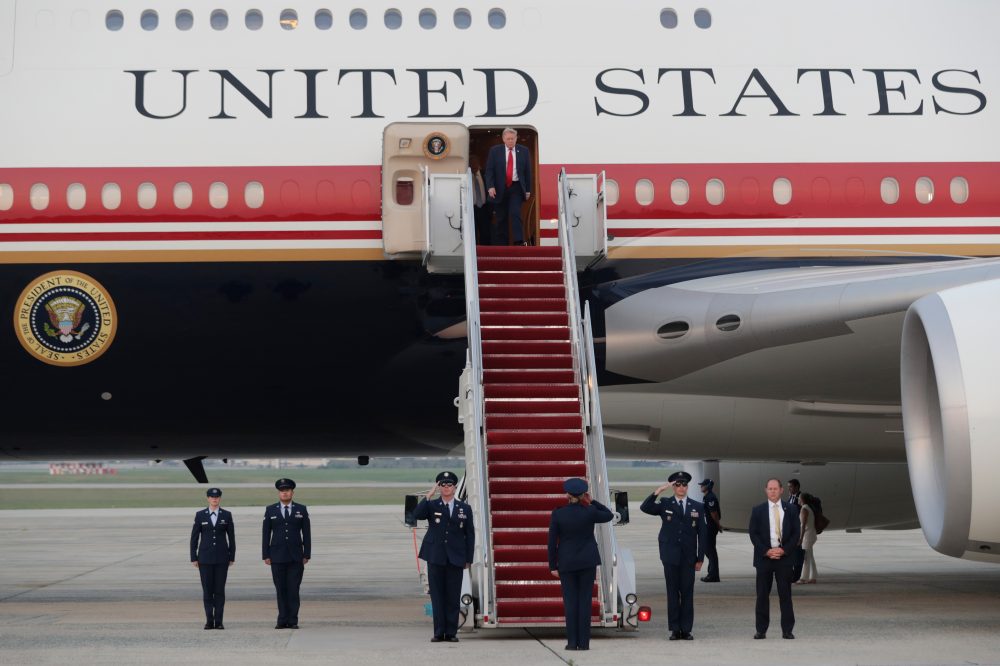
The latest phase of fighting has been among the deadliest for U.S. forces since the conflict began, with American troop deaths climbing to 17 over the weekend. Trump, facing growing pressure at home over rising gasoline prices tied to the war, said the latest strikes were carried out in honor of the fallen service members.
“Every time Iran kills an American Soldier they will pay for that killing many times over! This directive has been passed on to Secretary of War, Pete Hegseth, Chairman of the Joint Chiefs of Staff, Daniel Caine, and every Leader in the Military,” Trump wrote on Truth Social on Monday.
The war has claimed thousands of lives, primarily in Iran and Lebanon. Parts of Lebanon remain under Israeli occupation following attacks on Israel by Hezbollah fighters, who said they acted in solidarity with Iran. Lebanese President Joseph Aoun is scheduled to meet with Trump at the White House on Tuesday to present a plan for disarming the Iran-aligned Hezbollah group and securing an Israeli withdrawal from Lebanese territory.