
A major trade agreement between the United States and Indonesia has been finalized, bringing significant reductions in American tariffs on goods from the Southeast Asian nation. The deal lowers U.S. import duties from 32% down to 19% on Indonesian products.
Indonesia’s senior economic minister Airlangga Hartarto and U.S. Trade Representative Jamieson Greer completed the signing ceremony in Washington following extensive negotiations that lasted several months.
“This deal respects the sovereignty of both countries,” Airlangga stated during a virtual news briefing, characterizing the arrangement as a “win-win” for both nations.
A key victory for Indonesia was securing duty-free status for palm oil, which represents approximately 9% of the country’s total export revenue. Additional Indonesian products that will enter the U.S. market without tariffs include coffee, cocoa, rubber and various spices, according to Airlangga.
The 19% tariff rate puts Indonesia on equal footing with other Southeast Asian trading partners like Malaysia, Cambodia, Thailand and the Philippines in their commercial relationships with America. Vietnam faces a slightly higher 20% rate.
This trade breakthrough arrives during a challenging period for Indonesian financial markets. Recent setbacks include MSCI’s warning last month about potentially downgrading the country’s equity market to “frontier” classification due to transparency concerns, plus Moody’s decision two weeks ago to lower Indonesia’s credit rating outlook over policy-making predictability issues.
Yose Rizal Damuri, executive director of CSIS Indonesia, believes investor confidence could rebound if Jakarta leverages this U.S. agreement to drive broader reforms.
“If Indonesia could multilateralize some of its commitments to the United States and use them as a basis for deregulation, that would increase trust in Indonesia and that’s something that should be taken advantage of, optimized,” he explained.
The agreement establishes a quota system for Indonesian textile imports that will face zero tariffs. The specific quota amounts will depend on how much American cotton and synthetic fibers are incorporated into the textile production.
According to Airlangga, the United States withdrew demands to include non-economic clauses in the deal, such as provisions concerning nuclear reactor development and South China Sea matters.
In exchange, Indonesia has committed to eliminating tariff obstacles on most American goods across various industries and addressing non-tariff trade barriers including domestic content mandates, based on White House documentation.
Indonesia will also adopt American product standards for automotive safety, emissions controls, medical equipment and pharmaceutical products.
The agreement appears designed to address Washington’s concerns about China’s dominance in critical mineral markets and Chinese companies relocating operations to countries like Indonesia.
Under the new terms, Indonesia will impose limits on “excess production” at foreign-controlled mineral processing plants by ensuring output aligns with Indonesian mining quotas. These restrictions apply to minerals such as nickel, cobalt, bauxite, copper and manganese.
Jakarta has also committed to taking measures against foreign government-controlled companies operating within Indonesia when their activities damage U.S. commercial interests.
Additionally, Indonesia will promote American investment in critical minerals and energy resources while collaborating with U.S. firms to accelerate development of its rare-earth mineral industry.
The trade deal will become effective 90 days after both countries complete necessary legal processes, Airlangga noted, adding that modifications remain possible if both parties reach mutual agreement.
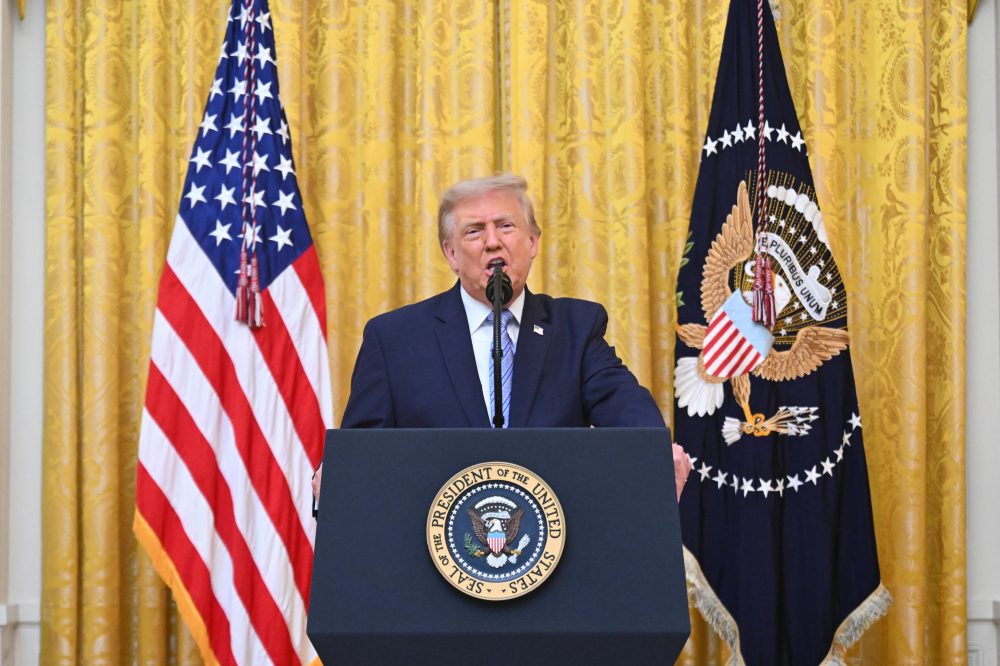
Indonesian President Prabowo Subianto traveled to Washington for the agreement signing and to participate in the inaugural meeting of President Donald Trump’s Board of Peace.
On Friday, Prabowo and Trump signed a document called “Implementation of the Agreement Toward a NEW GOLDEN AGE for the U.S.-Indonesian Alliance,” which the White House says will help both nations strengthen economic security and promote growth.
Earlier this week, Indonesian and American companies announced business deals totaling $38.4 billion.