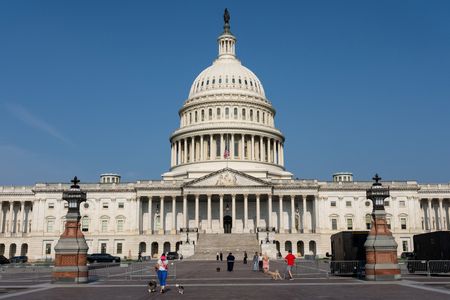

WASHINGTON — The U.S. House of Representatives squeaked through its version of the annual defense policy bill on Wednesday, with a razor-thin vote of 216 to 212, even as Democrats raised serious objections to the legislation’s enormous cost, the war with Iran, and a measure that would deepen American military ties with Israel.
The bill — formally known as the fiscal 2027 National Defense Authorization Act, or NDAA — would authorize a record-breaking $1.15 trillion for the U.S. military, a figure that has never before been reached in the history of the legislation.
The vote fell almost entirely along party lines. Only seven Republicans broke with their party to vote against the measure, while only six Democrats crossed over to support it.
Democrats argued that authorizing such an enormous sum for the Pentagon is difficult to justify at a time when President Donald Trump and his Republican allies are cutting spending on social programs. They also expressed opposition to the ongoing war with Iran, which the Pentagon has said has cost the United States $37.5 billion so far — a conflict that polls show is deeply unpopular with the American public.
Republicans countered that the trillion-dollar price tag is necessary to support the military during the Iran conflict, fund the development of new defense systems, purchase equipment, and provide service members with benefits including pay raises of as much as 7% and improved barracks and family housing.
Another flashpoint in the debate was a provision that would greatly expand cooperation on military technology between the U.S. and Israel. Many Americans — particularly those on the political left — have called on Washington to scale back its support for Israel due to the heavy civilian casualties resulting from Israeli military operations in Gaza.
The NDAA has historically been considered “must-pass legislation” by both parties, having been signed into law for 65 consecutive years. But this year’s version faces an unusually rocky road, with deep divisions in Congress over the military budget’s size, the Iran war, assistance to Israel and Ukraine, and disputes over issues such as the treatment of transgender troops.
Complicating matters further, House Republicans voted to attach the defense bill to the “SAVE America Act” — Trump-backed legislation that would tighten voting restrictions — before sending it to the Senate. Whether that move will hurt or help the NDAA’s chances in the Senate remains unclear, as there are currently not enough votes in that chamber to pass the voting law on its own.
Senate Democrats blocked that chamber’s version of the NDAA just last week. Republican Senate leaders have said they plan to try again to move the bill forward before Congress leaves Washington for its August recess.
The process, however, is still in its early stages. Under normal procedure, both chambers pass their own versions of the bill before negotiators from the Armed Services committees work out a compromise. That compromise version must then pass both the House and Senate before heading to the White House, where President Trump would either sign it into law or veto it.