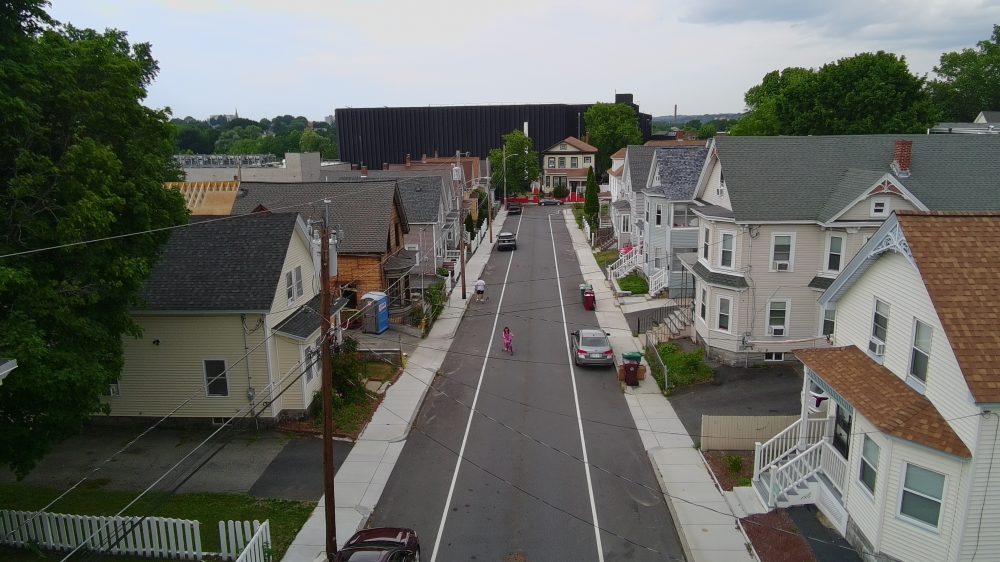

LOWELL, Mass. — An 82-year-old woman named Eileen Castle has a swimming pool in her yard — the only one for blocks in her neighborhood — that used to be a gathering spot for local children on hot days. But despite a heat wave this week, she says she has no plans to fill it, not with a data center sitting directly behind her home, its massive industrial air conditioning units humming constantly and its backup diesel generators kicking on without warning.
“I think about the air quality, the water, what effects it has on the kids in the area,” Castle said from her front stoop as children rode past on bicycles.
When temperatures spike across the eastern United States, data centers draw even more electricity, putting added pressure on power grids and degrading air quality in the communities that surround them. The situation in Lowell’s racially diverse Sacred Heart neighborhood illustrates why the artificial intelligence industry is facing mounting scrutiny over the rapid expansion of these facilities.
Across the country, data centers have been increasingly blamed for a range of environmental problems. Some voices in the tech industry argue the facilities have become stand-ins for broader anxieties about the economic and social disruption brought on by the AI boom.
But on a scorching day, the effects on Castle’s neighborhood are difficult to ignore. The state government has designated the area as one facing elevated environmental and health risks, partly because its population has historically been left out of political decision-making.
“It’s majority low-income and working family, family members who are working hard every day to just try to put food on the table,” said state Rep. Tara Hong, a Democrat representing a heavily Cambodian American district in Lowell, a city of roughly 115,000 people located northwest of Boston. “It’s an inclusive place there and that data center is just smack in the middle of everything,” she added.
A heat wave is “almost the worst situation for data center operation,” according to Shaolei Ren, a professor at the University of California, Riverside, who has spent years researching AI’s environmental impact. The racks of computer servers inside data centers generate enormous heat, creating simultaneous challenges for both the power grid and water supply, Ren explained.
There are essentially two ways to keep a data center running during extreme heat, Ren said: refrigeration-based cooling, which consumes large amounts of electricity, and evaporative cooling, which requires significant quantities of water.
Data centers sometimes fire up backup diesel generators as a precaution against outages, Ren noted. When the grid is under severe stress, grid operators may even ask data center operators to switch on those generators as “the last line of defense.” Diesel exhaust poses health risks even with brief exposure, and if too many generators run simultaneously during a heat wave, Ren warned it could be “a disaster for the local air quality.”
The Markley Group, which operates the Lowell data center, says it has planted more than 2,000 trees in the surrounding area to help improve air quality. CEO Jeff Markley said in a statement to the Associated Press that the company has activated its generators in a true emergency only a small number of times. “They are not run proactively or continuously; they engage only during an actual power disruption to keep critical systems online, plus brief weekly testing of about five minutes per unit, run one generator at a time,” he said.
Markley said he selected Lowell because of its plentiful water supply for cooling — drawn from the same Merrimack River that drove 19th century cotton mills during the Industrial Revolution. He said the facility uses approximately 118,000 gallons of water per day at the height of summer, which he described as a small fraction of the city’s total daily water consumption.
Castle, who has lived in Lowell her entire life, was actually among those who welcomed the Markley Group about a decade ago when construction began on the site of a long-shuttered Prince spaghetti factory that had given jobs to generations of neighborhood residents from 1939 to 1997. However, roughly two years ago, after the company installed a second cooling tank directly behind her above-ground pool and added a growing number of surveillance cameras, her support turned to opposition.
Reflecting the broader community frustration, Lowell’s City Council voted unanimously, 10-0, in February to impose a one-year moratorium blocking any further expansion of data centers in the city.
Jonathan Koomey, a researcher who has studied data centers for three decades, acknowledged that electricity use by these facilities has grown in recent years. But he characterized it as “very much a local phenomenon.” On a national scale, he said demand growth has been moderate and he does not expect that to change significantly. “This is not a national crisis. It’s not explosive growth nationally,” Koomey said. Still, he noted that communities near data centers face real environmental costs, local economic impacts, traffic concerns, and other issues that must be addressed.
When temperatures reach triple digits — as forecasters expected this week in New England — it becomes harder to expel heat from a data center, requiring even more power to maintain safe operating temperatures. That can strain power grids and create a “real risk” of outages, Koomey said.
That strain differs from the usual summer air conditioning surge. When individuals turn on home AC units, grid operators are managing many small, uncoordinated loads — which actually works in the system’s favor, Koomey explained. “One of the challenges that the data center operators face is that these data centers are pretty big loads. They are big enough that they have to think about how to coordinate them and make sure that they’re not all cutting off at the same time or coming on at the same time,” he said.
The North American Electric Reliability Corporation, a nonprofit that sets and enforces standards for the utility industry, recently issued an alert warning of “unprecedented challenges from a surge in large power consumers” and released guidelines aimed at reducing the “immediate risks posed” by AI data centers.
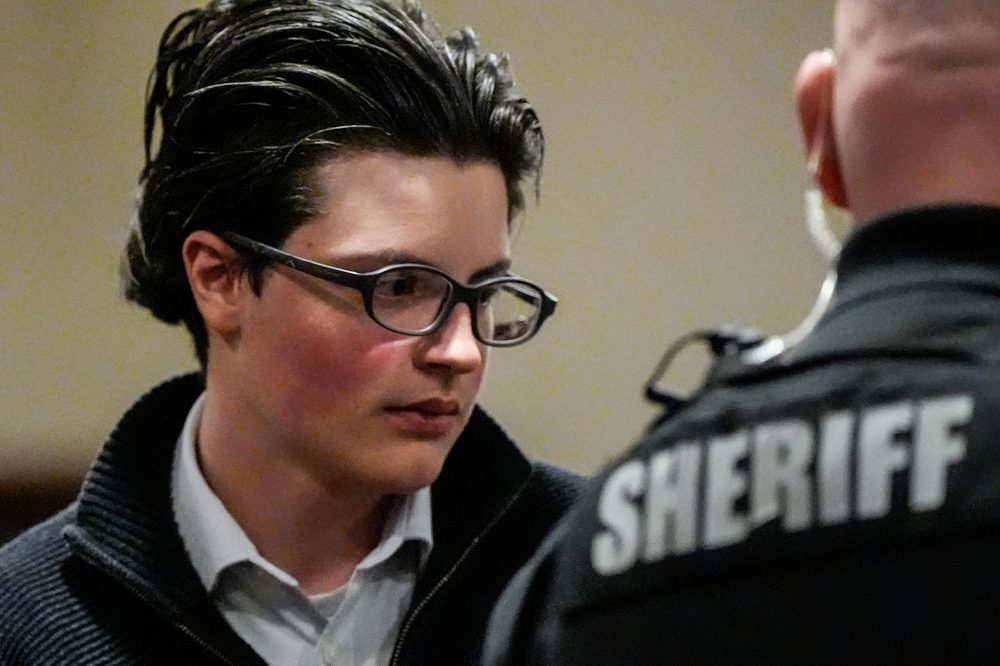
Tensions in Lowell boiled over this week when police briefly detained a 14-year-old girl who spoke out of turn during a city-organized community forum on data center zoning. “I’m not hurting anyone,” the girl shouted Monday evening as officers escorted her from a middle school auditorium. “We just don’t want data centers!”
A coalition opposing data center expansion has been clashing with electricians employed by the Markley Group and other supporters who argue the facility strengthens Lowell’s connection to the technology industry.
Lowell Mayor Erik Gitschier, whose office is nonpartisan, faced criticism for calling police to the tense meeting and for asking an officer to remove the girl. He told local talk radio station WCAP that he was unaware of her age at the time and defended his attempt to maintain order during a discussion he said warrants serious debate. “It was warm out,” he said. “You had people who had definite, passionate positions and they were screaming.”