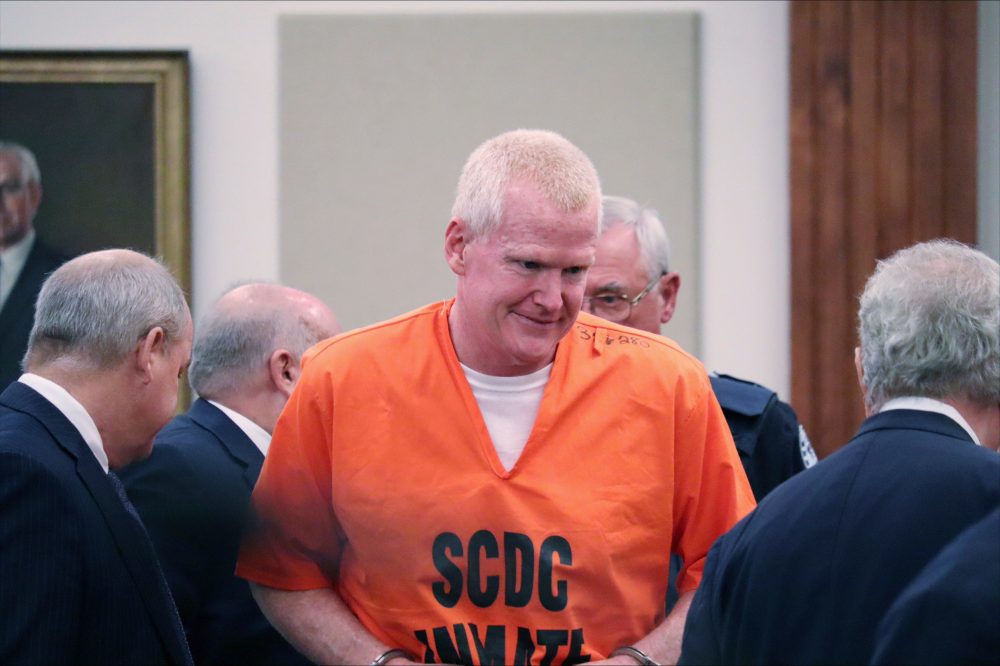

COLUMBIA, S.C. — South Carolina’s highest court has thrown out the murder conviction and life sentence for former attorney Alex Murdaugh in the fatal shootings of his wife and son on Wednesday.
The state Supreme Court issued a unanimous decision stating that the court clerk’s behavior “egregiously attacked Murdaugh’s credibility” by hinting to jury members that his testimony was unreliable. The justices also determined that the trial judge improperly permitted evidence about Murdaugh’s financial misconduct during the murder proceedings.
However, Murdaugh will remain behind bars. The 57-year-old admitted guilt to embezzling approximately $12 million from his legal clients and is currently serving a 40-year federal prison term.
Nevertheless, the state Supreme Court decision represents a victory for Murdaugh, who acknowledges being a criminal, dishonest person, insurance fraudster and incompetent attorney, but has consistently maintained his innocence in the deaths of his wife Maggie and younger son Paul after discovering their bodies at their residence in 2021.
State prosecutors have not yet announced whether they intend to pursue a new murder trial against Murdaugh given his lengthy sentence for financial offenses. The initial trial lasted six weeks.
The court determined that Colleton County Clerk of Court Becky Hill, who was responsible for managing evidence and jury oversight during the trial, swayed jurors toward a guilty verdict. Her motivation was to boost sales of a book she was authoring about the case.
Hill’s book was titled “Behind the Doors of Justice: The Murdaugh Murders.” Publishers withdrew it after facing accusations of plagiarism.
“As her book’s title suggests, it turns out Hill was quite busy behind the doors of justice, thwarting the integrity of the justice system she was sworn to protect and uphold,” the justices wrote in an unsigned 27-page ruling.
Hill has subsequently admitted guilt to providing false information about her statements and actions to another judge.
Defense attorneys for Murdaugh also contended before the Supreme Court that the presiding judge in his 2023 trial made decisions that compromised fairness, including permitting testimony about Murdaugh’s client theft that was unrelated to the homicides but prejudiced jurors against him.
They emphasized the absence of physical evidence — investigators found no DNA or blood spatter on Murdaugh or his clothing, despite the close-range killings with high-powered firearms that were never recovered.
State attorneys maintained that the clerk’s remarks were brief and the case against Murdaugh was compelling. His defense team argued that was irrelevant because the comments a juror reported she made — encouraging jurors to observe Murdaugh’s body language and pay close attention to his testimony — eliminated his presumption of innocence before jury deliberations began.
The Murdaugh legal saga remains fascinating to the public. Multiple streaming series, bestselling publications and numerous true crime podcasts have explored how the wealthy Southern attorney whose family dominated the legal system in small Hampton County wound up in a maximum security South Carolina penitentiary.
In their decision, the justices commended prosecutors, defense counsel and the judge for exceptional performance, placing complete responsibility for necessitating a new trial on Hill.
Hill’s criminal defense attorney did not respond to requests for comment via phone or email.
Hill “placed her fingers on the scales of justice, thereby denying Murdaugh his right to a fair trial by an impartial jury,” the justices wrote. “Our justice system provides — indeed demands — that every person is entitled to a fair trial.”