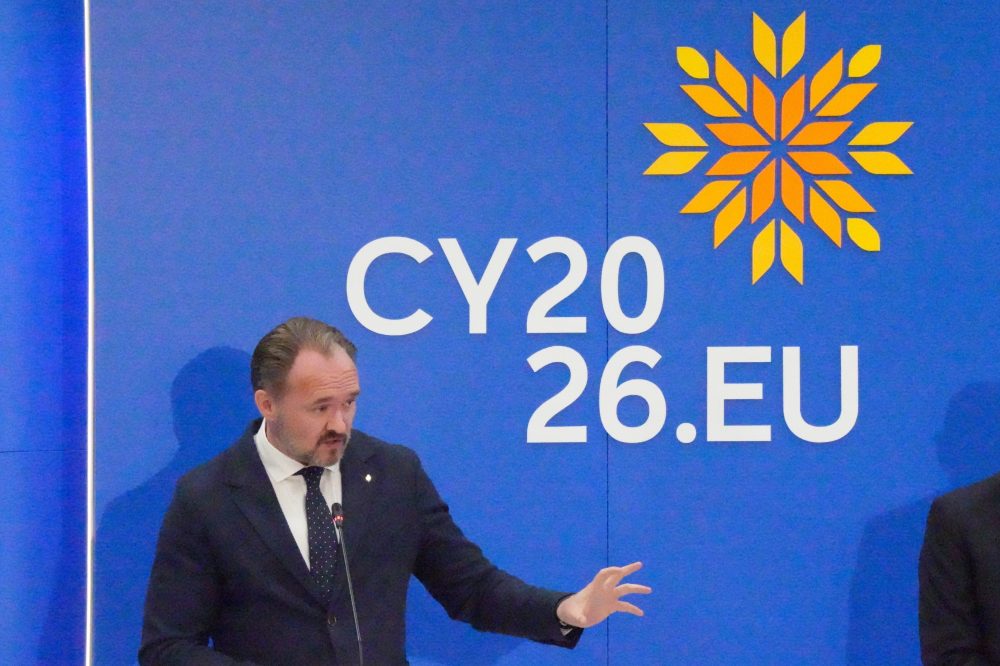

NICOSIA, Cyprus (AP) — A senior European Union energy official cautioned Wednesday that although aviation fuel supplies face no immediate danger, extended shortages remain a possibility that cannot be dismissed.
Energy Commissioner Dan Jørgensen informed the media that potential fuel shortages will hinge on developments in the Iran conflict and conditions in the Strait of Hormuz, along with airline industry responses after carriers such as Lufthansa’s German parent company grounded substantial numbers of flights.
Conflicts near the Strait of Hormuz, a critical waterway through which approximately one-fifth of global oil shipments travel, have interrupted supply chains and triggered worldwide fuel price increases.
Though Jørgensen stated “we’re not there yet” regarding aviation fuel shortages, he indicated that the EU’s executive branch will begin discussions with member nations “on how best to address the situation,” while declining to provide specific details.
The Iran conflict has driven jet fuel costs to more than twice their previous levels in certain markets since late February, creating particular vulnerability for airlines since fuel expenses represent a substantial portion of their operational budgets.
The commissioner noted that the bloc’s payment of an additional 35 billion euros ($41 billion) for identical fuel quantities since the Iran war began highlights the urgent need to accelerate the shift away from fossil fuel dependence.
“Really, this is not an energy crisis. This is a fossil fuel crisis,” Jørgensen stated, emphasizing that despite the EU’s energy supply diversification, improved efficiency, and increased renewable energy adoption following Russia’s 2022 Ukraine invasion, challenges persist.
Cyprus Energy Minister Michael Damianos, representing the country that currently leads the EU’s rotating presidency, indicated that fossil fuels including natural gas will continue as part of the bloc’s energy portfolio for the near future, even while maintaining the firm objective of achieving a 90% reduction in greenhouse emissions by 2040. He noted that natural gas from newly discovered deposits off Cyprus’ southern coastline could reach European markets between late next year and early 2028.
Jørgensen emphasized the EU’s continued strong commitment to rapid greenhouse gas emission reductions, stating that “the climate crisis will not go away.”
Looking ahead, the EU commissioner revealed ongoing discussions with Gulf region countries aimed at restoring energy flows from that area once a negotiated peace agreement with Iran is established.
Last month, EU Council President Antonio Costa and EU Commission President Ursula von der Leyen announced the bloc’s readiness to collaborate with Persian Gulf nations on new energy transport projects that would not be vulnerable to warfare or geopolitical conflicts.