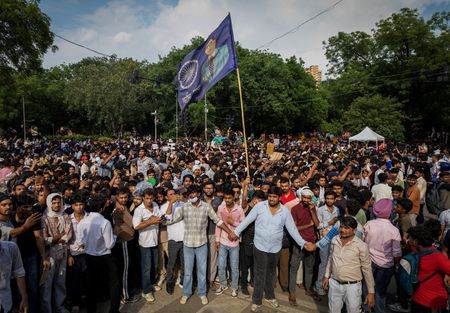

NEW DELHI — Tensions boiled over in the Indian capital late Wednesday as youth demonstrators and police clashed in the streets of New Delhi, with officers deploying tear gas and striking protesters with canes in an effort to disperse the crowd, according to police and eyewitnesses on the scene.
Local media estimated more than 10,000 people had converged on the Jantar Mantar protest site in central New Delhi. Leaders of the so-called “cockroach” movement pledged to keep the month-long demonstration going until Education Minister Dharmendra Pradhan steps down over exam paper leaks that affected approximately 2 million students back in May.
The movement has grown into the most significant youth-led challenge to Prime Minister Narendra Modi since he first came to power in 2014. Opposition political parties have aligned themselves with the protesters’ demands, using the issue to disrupt the monsoon session of parliament, which opened earlier this week.
Earlier in the week, tens of thousands of marchers headed toward parliament on Monday in defiance of a prohibition on such demonstrations. Police and paramilitary forces attempted to stop them using tear gas and canes.
On Wednesday evening, the crowd at Jantar Mantar swelled and spilled beyond the protest site into surrounding streets before violence broke out. Some in the crowd hurled stones and plastic bottles at officers, injuring several police personnel who were taken to a hospital, according to news agency ANI, citing Delhi Police.
Video footage circulated on the social media platform X — including clips posted by local journalists — showed small groups of individuals in confrontations with police wielding canes and firing tear gas. Reuters was unable to independently confirm the authenticity of those videos.
The movement, which calls itself the Cockroach Janta Party, or CJP, began as an online satirical effort involving only a few hundred young people before rapidly gaining momentum.
CJP founder Abhijeet Dipke addressed the crowd late Wednesday night, making clear the group’s position. “It has been 25 days so far. Even if it takes 25 months, that is acceptable, but we will not move from here,” he said.
Delhi Metro Rail Corp. announced it would close 16 stations in and around central New Delhi on Thursday until further notice — the second major shutdown of its kind this week, driven by security concerns surrounding the protests.
Modi’s government has responded to the mounting pressure by holding one round of discussions with CJP leaders and pledging to take their demands under consideration. Officials have also offered to debate the matter in parliament and pursue reforms to the country’s exam system.
Opposition groups, led by the Congress party, have thrown their weight behind the protesters. Congress leader Rahul Gandhi personally led a demonstration outside Modi’s residence and near the parliament building. Gandhi stated that the resignation of Pradhan is non-negotiable and that opposition leaders would convene Thursday morning to map out their next steps in parliament.
The CJP’s rapid rise in popularity reflects widespread frustration among India’s young population over issues including a shortage of jobs and recurring exam leaks, which protesters say are a persistent problem. The movement has also handed opposition parties a rare opportunity to apply pressure on Modi and his Bharatiya Janata Party, which has long counted young voters among its core supporters. The BJP has won several state elections since a surprising outcome in the 2024 national election, in which Modi failed to secure an outright parliamentary majority.