
WASHINGTON — Jay Clayton, President Donald Trump’s choice to lead the country’s intelligence agencies, is set to testify before the Senate Intelligence Committee on Wednesday — a confirmation hearing that was delayed for weeks after Trump abruptly put the brakes on the nomination process.
Both Republicans and a number of Democrats have been pushing to get Clayton confirmed without delay. Clayton currently serves as the U.S. attorney for the Southern District of New York and previously led the Securities and Exchange Commission. Their urgency stems in part from concerns about who has been filling the role in the meantime: interim appointee Bill Pulte, who took office on June 19. Pulte is a former housing official with no known background in intelligence, and he reportedly used his previous government position to go after individuals seen as opponents of the president.
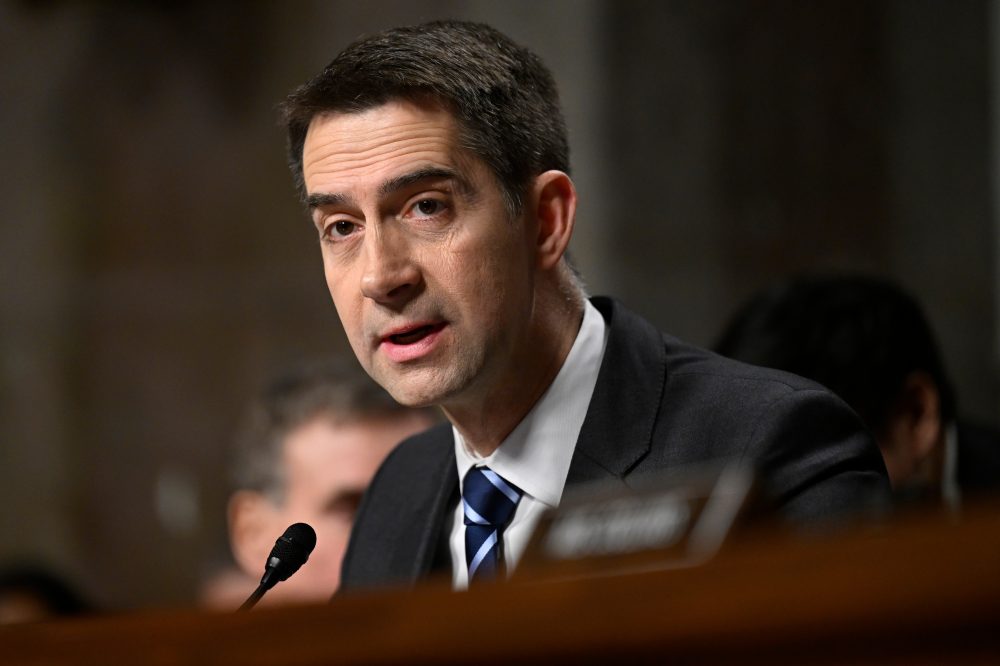
Senate Intelligence Committee Chairman Tom Cotton, a Republican from Arkansas, made no secret of his frustration when Trump delayed Clayton’s nomination through a social media post last month, effectively handing the job to Pulte. Cotton noted at the time that Clayton had been told not to show up for his originally scheduled hearing. Three weeks later, Cotton rescheduled the hearing, apparently with the White House’s blessing.
“Mr. Clayton is a patriot and a highly qualified nominee, as the president has said repeatedly,” Cotton stated.
Although Clayton has drawn praise from members of both parties, Democrats are widely expected to push him hard on how he plans to handle the issue of election interference. That scrutiny is heightened by the fact that Trump has announced he will deliver a primetime address on Thursday centered on elections — raising concerns that he may revisit thoroughly discredited theories about his 2020 loss to Democrat Joe Biden.
“Trump made it clear that he expects whomever is Director of National Intelligence to promote his baseless election conspiracy theories,” said Oregon Sen. Ron Wyden, a Democratic member of the intelligence panel, when the nomination was first delayed last month.
Virginia Sen. Mark Warner, the top Democrat on the Senate Intelligence Committee, said in June that he has “known and respected Jay Clayton for many years and believe he is a capable public servant.” However, he has not committed to casting a vote in Clayton’s favor.
Connecticut Rep. Jim Himes, the leading Democrat on the House intelligence panel, noted that he worked alongside Clayton during his time heading the Securities and Exchange Commission. “During that time, he had the independence of mind and respect for the law that are necessary for any Director of National Intelligence,” Himes said.
Despite those kind words, most Democrats are still anticipated to vote against confirming Clayton. Connecticut Sen. Richard Blumenthal said Tuesday that he plans to oppose the nomination — but added that he and fellow Democrats might not stand in the way if Republicans want to fast-track the confirmation vote to remove Pulte from the position.
“I’m not going to vote for him,” Blumenthal said. “But I wouldn’t object to an accelerated vote.”
As U.S. attorney for the Southern District of New York — widely regarded as the most prominent federal prosecution office in the country — Clayton has handled a broad range of cases, from terrorism and espionage to securities fraud and public corruption.
Democrats are also expected to question Clayton about his office’s recent decision to subpoena four New York Times journalists who reported on security concerns surrounding the new Air Force One, which was gifted by Qatar. The Committee to Protect Journalists described the subpoenas as “an extraordinary escalation in President Trump’s efforts to threaten and intimidate independent news organizations and have a chilling effect on the work of journalists across the country.”
Additionally, Clayton’s office oversaw the release of thousands of pages of sealed court documents tied to the prosecutions of Jeffrey Epstein and Ghislaine Maxwell, made public as part of a broader Justice Department records release. His office has also been handling the prosecution of former Venezuelan President Nicolás Maduro and his wife, Cilia Flores, on drug trafficking charges.
Clayton’s confirmation could also help break a legislative logjam over Section 702 of the Foreign Intelligence Surveillance Act, known as FISA. That renewal effort stalled last month after Democrats said they would withhold the votes needed to pass the bill unless Pulte’s temporary appointment was pulled. The law, which is designed to help prevent terrorist attacks by allowing surveillance of targeted foreign nationals outside the U.S., expired in June.
Even if Democrats drop their opposition to the FISA renewal, it remains uncertain whether Trump would sign it. In the same social media post in which he delayed Clayton’s nomination, Trump said he would refuse to sign the FISA renewal unless it was paired with legislation requiring proof of citizenship for all voters — a measure that currently lacks the Senate votes to pass.
South Dakota Sen. Mike Rounds, a member of the intelligence panel, said getting Clayton confirmed “would be a good first step” toward reviving the FISA renewal effort. He added that Republicans are hoping to move the nomination through the process quickly, provided Democrats do not block it.
“We’re looking forward to getting him into that position as quickly as possible,” Rounds said.