
NEW YORK (AP) — When midterm season kicked off, both major political parties had straightforward strategies. Republicans planned to hammer home border security and an economy finally pulling out of years of high inflation. Democrats intended to make President Donald Trump the centerpiece of their campaign, hoping his unpopularity would drive voters to the polls.
Neither plan has gone smoothly. With just over three months remaining before Election Day, both parties are dealing with self-created problems and stumbles that have made the road to victory far more complicated.
Trump steered the nation into an ongoing conflict with Iran, disrupting global oil supplies and sending gas prices higher. He continues to focus on removing dissenting voices from within his own party and relitigating his election loss from six years ago. He is scheduled to visit Georgia on Wednesday, ostensibly to promote new investment accounts for children — though what he will actually say remains unclear.
Across the aisle, Democrats are locked in an internal battle between their moderate and progressive wings. Democratic socialists have successfully knocked out incumbent lawmakers in places like New York and Denver, and some candidates have collapsed in dramatic fashion, threatening races the party had counted on winning.
The turmoil has taken on an existential quality, with each party facing a critical crossroads. Democrats are still reeling from Trump’s reelection and are searching for a way back to power, while Republicans are quietly beginning to think about a future beyond Trump — even as he maintains a firm hold on the party.
Longtime pollster Frank Luntz described the year as being consumed by “a sense of chaos and confusion.”
“We really do not know what’s going to happen in November,” he said.
Among the most recent flashpoints for Democrats is Wisconsin, one of the country’s most closely divided battleground states. Lt. Gov. Sara Rodriguez dropped out of the gubernatorial race following a campaign finance scandal, just as she appeared to be gaining momentum. Party leaders are now worried her exit could boost Francesca Hong, a democratic socialist they view as a potentially weak general election candidate against U.S. Rep. Tom Tiffany, the expected Republican nominee.
Following Rodriguez’s departure, David Crowley, the Milwaukee County executive, re-entered the race and received an unusual endorsement from Gov. Tony Evers, the Democratic incumbent.
“If we lose, Trump’s most loyal lackey in Congress takes control of Wisconsin, and that’s turned regular Democratic angst into flop sweats,” said longtime Wisconsin liberal activist Scot Ross. Even so, he predicted that once the primary is settled, “Democratic unity will be so high in Wisconsin we’ll all be getting nosebleeds.”
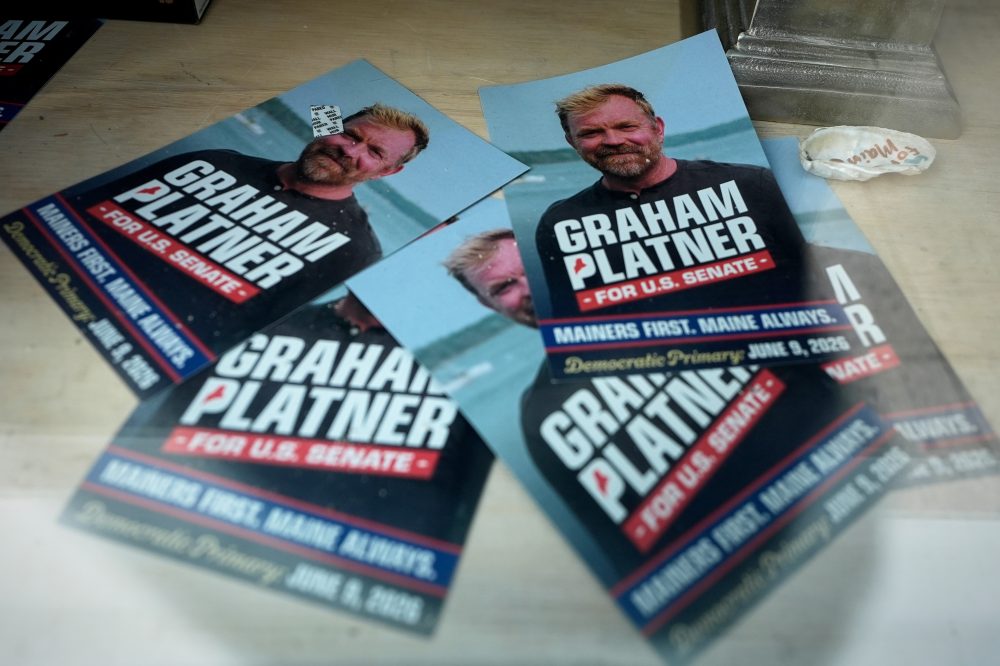
Perhaps the most damaging Democratic setback occurred in Maine, where the party was eager to unseat Republican Sen. Susan Collins as part of a broader effort to retake the Senate. Graham Platner, an oyster farmer and political outsider, rode a wave of grassroots momentum to defeat the establishment-backed candidate, Gov. Janet Mills, in the Democratic primary — only to withdraw after facing a sexual assault allegation, which he denies.
His supporters had viewed him as the kind of candidate who could win back white working-class voters, despite controversies that included a tattoo widely identified as a Nazi symbol and a record of inflammatory social media activity. Democrats are now holding a convention this weekend to select a replacement.
Democratic pollster and consultant Celinda Lake said activists and primary voters have shown a willingness to overlook serious red flags when backing outsider candidates.
“There is something in the air that has made these candidates incredibly reckless and thinking that they can get away with it,” she said, pointing to the president as a possible explanation. “I think Trump has kind of created a high-risk environment.”
Marc Short, who served as chief of staff to Trump’s first-term vice president Mike Pence, said the situation echoed the tea party era, when a surge of untested Republican candidates won primaries but lost general elections — costing the party Senate seats even as it made House gains.
“I feel like when there is a lot of energy on one side that you can tend to nominate candidates that create hurdles for you and limit what your gains could be,” Short said, noting the dynamic has now shifted to the Democratic side.
In Michigan, progressive favorite Abdul El-Sayed has drawn concern from party leaders, including Senate Democratic leader Chuck Schumer, who worry he may be too far left to win in that competitive state. Democrats need to hold the Michigan seat vacated by retiring Sen. Gary Peters to have any chance at winning a Senate majority.
The race also highlights a deep division over Israel. El-Sayed, who is running to become the first Muslim U.S. senator, has characterized Israel’s military campaign in Gaza as a genocide — an accusation rejected by both Israel and the White House. The American Israel Public Affairs Committee, known as AIPAC, and its affiliated organizations have poured nearly $30 million into backing his primary rival, Haley Stevens, marking their largest-ever investment in a single race.
Adam Green, co-founder of the Progressive Change Campaign Committee, argued that voters across the country are pushing back against a political system they feel is rigged, and are seeking candidates willing to fight for them. He said candidates like El-Sayed would demonstrate heading into 2028 that “bold, shake-up-the-system economic fighters” are more electable in competitive states than “stale, status quo corporate-aligned Democrats.”
Sen. Chris Murphy, D-Conn., pushed back on the idea that ideological fights spell trouble for Democrats. “A healthy party is a party that has arguments,” he said. “I think our party should be debating ideas. We should be having hotly contested primaries.”
Republicans are navigating their own set of challenges as they try to defy historical trends and hold onto congressional control. Trump has reshaped this year’s Senate map by pushing out some Republican incumbents and elevating loyalists in their place. In Texas, he successfully forced out longtime Sen. John Cornyn, whom he viewed as insufficiently loyal, and threw his support behind Ken Paxton, a fiery conservative with a long record of corruption allegations. Republican leaders had cautioned that Paxton’s nomination would put the state in play and force the party to spend heavily defending what should have been a safe seat.
In North Carolina, Sen. Thom Tillis chose not to seek reelection after clashing with Trump over healthcare spending. Democrats are hoping to flip that seat with former Gov. Roy Cooper.
Republican pollster and strategist Whit Ayres said Trump “has exacerbated the problem” of a political culture that produces more extreme candidates on both sides, driven in part by closed primary systems.
Republicans have historically underperformed when Trump is not on the ballot — but he also carries the risk of dragging candidates down. Just 37% of U.S. adults approve of how he is handling the presidency, according to the most recent AP-NORC poll, which reflects significant dissatisfaction with his management of the economy and other issues.
Rather than keeping attention on lowering consumer prices, Trump has continued military operations against Iran in a struggle for control of the Strait of Hormuz, a vital waterway for global oil shipments. He also delivered a primetime national address in which he again cast doubt on the integrity of U.S. elections, repeated his dispute of his 2020 loss to Democrat Joe Biden, and called for stricter voting laws.
“Trump is our biggest ally,” said Lake, the Democratic pollster. “He’s the best things that Democrats have going. And it’s the gift that keeps on going.”
But Jenny Beth Martin, chair of the grassroots conservative group Tea Party Patriots Action, saw it differently. “President Trump is the single greatest advantage Republicans have in the midterm elections,” she said in a statement. “The energy and enthusiasm he generates is incomparable, and we’re counting on him to motivate his supporters to go to the polls.”