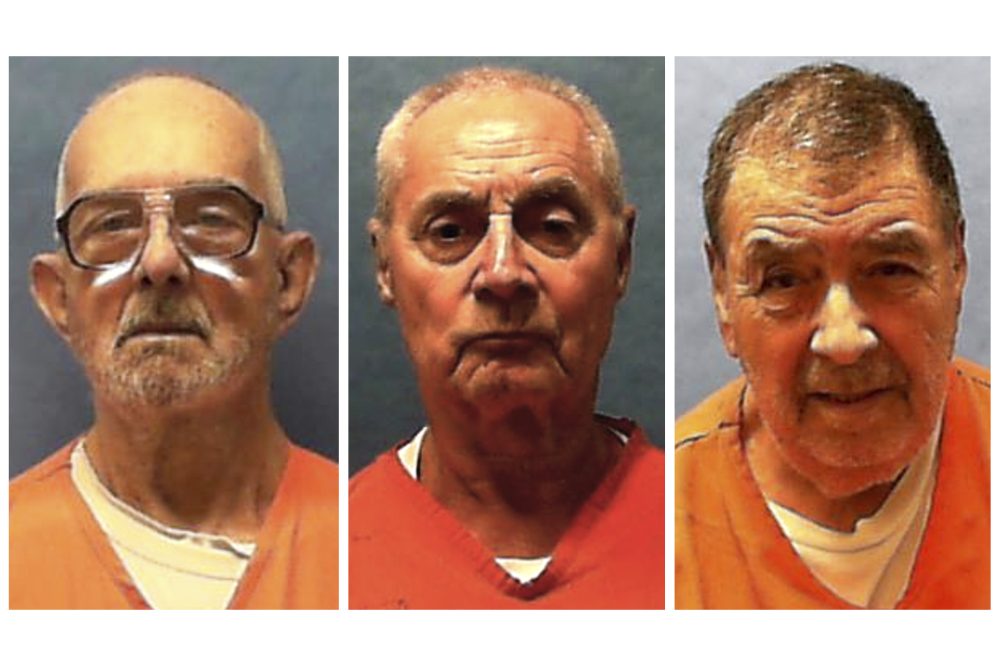

MIAMI — Florida recently executed its oldest death row inmate in modern history, and the next two prisoners scheduled to die are even older, shining a spotlight on the nation’s rapidly aging death row population.
On June 25, Dusty Ray Spencer, 74, was put to death after being convicted of fatally stabbing his wife in 1992. The U.S. Supreme Court had turned down his appeal, which argued that his liver disease would make lethal injection especially painful. Spencer became the oldest person Florida has executed in the modern era.
Now, two more elderly inmates are scheduled to die before the end of July. Dennis Sochor, convicted of murdering 18-year-old Patricia Gifford on New Year’s Day in 1982 — just hours after meeting her at a party — is set to be executed Tuesday. He would be just one week older than Spencer was at the time of his execution.
Marilyn Gifford, the victim’s sister, said her family plans to witness the execution. “I’m just happy it’s ever happening in our lifetime,” she said. “I wish my mother was alive to see it.”
A childhood family friend of the Giffords, Frank Frandel, who grew up in Portland, Michigan, recalled Sochor as a bully. “I could believe he could be violent like that,” Frandel said. He dismissed any sympathy for Sochor’s age, noting that Sochor’s father is turning 99 this year. “He could live another 20 years. So no, I don’t feel sorry for him being at that age,” Frandel said.
At the time Patricia Gifford disappeared, Sochor had been free on probation stemming from a 1980 rape conviction.
The second upcoming execution involves Dominick Anthony Occhicone, 80, who has been on death row for nearly 40 years after being convicted in the murders of his ex-girlfriend’s parents in 1986. He is scheduled to die on July 28. If carried out, Occhicone would become the second oldest prisoner known to be executed in the United States. The oldest was Walter Moody Jr., who was 83 when Alabama put him to death in 2018 for killing a federal judge and a Black civil rights attorney. There are currently three inmates on Florida’s death row who are even older than Occhicone.
Occhicone’s attorneys say he suffers from multiple age-related health problems, including kidney and prostate issues, and that he requires assistance getting in and out of the shower.
The back-to-back scheduling of these executions has raised questions, though the reasons behind it remain unclear. Maria DeLiberato, legal director of Floridians for Alternatives to the Death Penalty, pointed out that in Florida, the governor has nearly exclusive authority over when executions are scheduled — a power that differs from many other death penalty states, where the courts make that determination.
Gov. Ron DeSantis has overseen a record 19 executions in 2025, more than any other Florida governor in a single year since the state reinstated the death penalty in 1976. Nine inmates have been executed in Florida so far this year. DeSantis’ office did not respond to a request for comment on the upcoming executions.
Last year, DeSantis explained his approach, saying: “Some of these crimes were committed in the ’80s. Justice delayed is justice denied.”
The effort to schedule executions hasn’t always been swift. The family of one victim spent a full year writing and calling DeSantis’ office requesting that a death warrant be signed before the killer was finally executed earlier this year.
Nationally, the average age of executed inmates has climbed from the 30s to the 50s over the past 50 years, according to the Death Penalty Information Center. Lengthy appeals processes and mandatory reviews — designed to protect constitutional rights and prevent wrongful executions — have contributed to inmates spending decades behind bars, sometimes developing serious medical conditions in the process.
Under current Supreme Court precedent, individuals who were under 18 at the time of their crime cannot be executed. But age alone does not provide a legal basis for avoiding execution, according to Gerod Hooper, an attorney with Florida’s Capital Collateral Regional Counsel, a state agency that handles post-conviction legal representation.
“You’d have to say it’s unconstitutional to execute this 80-year-old because he’s mentally deficient, he doesn’t have capacity to be executed,” Hooper said. “Or because of some underlying medical condition, the drug cocktail they inject would cause undue pain and suffering.”
In other states, some death row inmates with dementia in Utah and Alabama have avoided execution and later died of natural causes. An inmate in Idaho has received at least one stay of execution due to cancer and other health issues, though state officials continue to pursue his execution.
The Rev. Dustin Feddon, a Catholic priest who has ministered to Florida death row inmates since 2013, questioned the ethics of executing the elderly. Reflecting his church’s opposition to capital punishment, he asked: “Is this intentional, as though to say, we’re not going to let a natural death help you escape executions?” He added: “To execute those that are the most frail and elderly is even more cruel and unusual.”
About half of Florida’s 242 death row inmates have exhausted their appeals and could have a death warrant issued against them at any time.