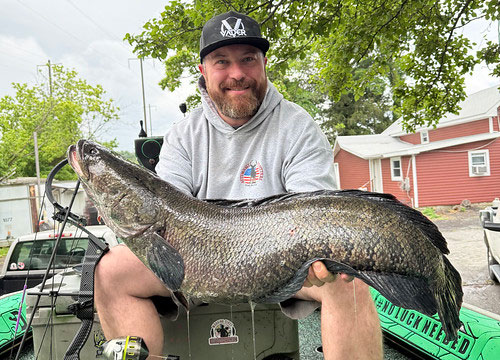

Bow hunters are proving to be the most effective weapon in the battle against invasive northern snakehead fish in Chesapeake Bay waters, according to new research from Maryland’s Department of Natural Resources.
The recently published study in Integrated and Comparative Biology shows that bowfishing and gigging with pronged spears have become the dominant methods for catching these unwanted fish, far outpacing traditional rod-and-reel fishing, commercial operations, and state management efforts.
What makes this finding particularly significant is that bow hunters are successfully targeting the larger female snakeheads that carry more eggs, which is crucial for controlling population growth of these Asian natives that were illegally released into Maryland waters in the early 2000s.
“Bowfishing is an important component of the fishery, annually removing approximately 20% of the population in the upper Chesapeake Bay,” explained Dr. Joseph Love, the study’s lead author and DNR biologist. “We are always looking for creative, responsible ways to get us closer to our needed targets for managing these populations.”
The invasive species presents a significant challenge for fisheries managers because these fish are naturally equipped with traits that help them thrive and multiply rapidly in environments where they face few natural threats. Northern snakeheads have spread so extensively throughout the Chesapeake Bay region that completely eliminating them is no longer considered feasible.
Instead, wildlife officials are concentrating on reducing their numbers and finding ways to use them beneficially to minimize their damage to local ecosystems that support valuable recreational and commercial fish species.
Bowfishing has gained popularity among anglers as an alternative to conventional fishing methods. Rather than using bait and waiting for a bite, bowfishers shoot arrows attached to retrieval lines at fish they can see in the water.
Between 2022 and 2024, researchers collaborated with the U.S. Fish and Wildlife Service’s Maryland office to track snakeheads with tags and gather information from charter boat operators who specialize in bowfishing trips. The team collected data through multiple approaches: accompanying bowfishing charters in person, reviewing trip logs maintained by charter captains, and tracking reports when tagged fish were caught by both bow hunters and conventional anglers.
The 2024 data alone reveals the scope of bowfishing activity: ten charter boat captains logged over 550 bowfishing excursions across 17 different rivers. These outings typically lasted around five hours with four participants each. While results varied dramatically – from catching nothing to landing more than 30 fish per trip – the average expedition removed approximately ten snakeheads. Activity peaked during spring and fall seasons, particularly during full and new moon phases.
“We learned how many they harvested per night, but needed to learn more about what that meant for the fishery,” Love noted.
The tagging portion of the research involved placing 657 tags on northern snakeheads in the upper Chesapeake Bay. Of the 149 tags that were reported back to researchers, 80 came from bowfishers compared to 65 from traditional anglers. After accounting for differences in reporting habits between the two groups, scientists determined that bowfishing accounts for a larger share of the total snakehead harvest than rod-and-reel fishing.
State removal efforts through electrofishing surveys contributed only a small portion of annual catches, confirming what managers and fishers already suspected – bowfishers are harvesting substantial numbers of snakeheads.
Because northern snakeheads have been shown to negatively affect native fish populations, the department urges anglers to keep every snakehead they catch. There are no bag limits or closed seasons for these invasive fish, and they’re considered excellent table fare. Their widespread distribution means anglers have numerous locations to try their luck at catching them.