
BEIRUT (AP) — A Lebanese mother was preparing her family’s pre-dawn meal during Ramadan when Israeli jets began bombing southern Lebanon in response to rocket and drone attacks launched by Hezbollah.
The family quickly gathered their belongings and fled toward Beirut, joining tens of thousands of others escaping another deadly confrontation between Israel and Hezbollah on March 2. Their typical one-hour journey from Nabatiyeh stretched to 15 grueling hours due to the massive exodus.
“I am against giving pretexts to Israel,” said the 45-year-old woman, who requested anonymity due to fears of retaliation from Hezbollah supporters in her community.
“I am totally against Hezbollah’s decision to start with the first strike,” added the woman, who now shares a converted school shelter in the Lebanese capital with her husband, two children ages 17 and 12, and her mother-in-law.
Just 15 months following the end of the previous Israel-Hezbollah conflict that concluded with a U.S.-brokered ceasefire in November 2024, the Iran-backed militant organization and political party finds itself confronting growing grassroots opposition from within its own support base and mounting pressure from Lebanese officials.
The renewed hostilities began on March 2, when Hezbollah launched missiles and drones at Israel for the first time in over a year, coming two days after U.S. and Israeli strikes on Iran sparked broader Middle Eastern warfare.
Massive displacement has followed Israeli warnings to residents of southern Lebanon, the eastern Bekaa valley, and Beirut’s southern suburbs that their areas would face targeting.
This latest round of violence strikes Shiite communities still recovering from the previous war’s devastating impact. That conflict claimed over 4,000 Lebanese lives and inflicted $11 billion in damages, according to World Bank estimates.
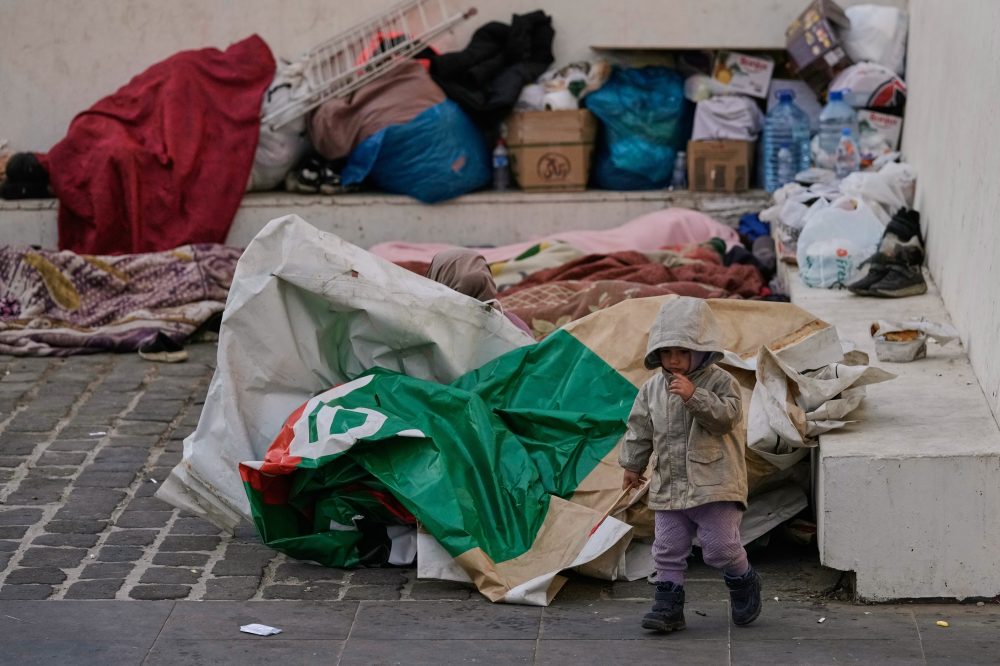
Breaking from past patterns where public criticism of Hezbollah was rare due to fear, some Lebanese Shiites are now openly holding the militant group responsible for their current hardships as they endure homelessness, living in public spaces or with others during cold weather while observing Ramadan fasting.
Hussein Ali faces his second forced evacuation from his Haret Hreik home in Beirut’s southern suburbs in under two years. The vegetable vendor lost his apartment during the last Israel-Hezbollah war and now fears history repeating itself.
“No one wanted this war,” said the man, who currently resides in the school shelter and depends on aid for survival. “People haven’t recovered from the previous war.”
Following Lebanon’s civil war conclusion in 1990, militias faced disarmament requirements, but Hezbollah received exemption due to its fight against Israel’s southern Lebanon occupation.
The Lebanese government now seeks to dismantle the group’s military wing and eliminate its status as an independent armed force operating beyond state authority.
This transformation became evident on March 2 when the Lebanese government voted to declare Hezbollah’s military operations illegal, with 22 of 24 Cabinet ministers supporting the measure; only the two Hezbollah ministers opposed it. Even ministers from Hezbollah’s closest ally, Parliament Speaker Nabih Berri’s Amal group, backed the decision.
“The government confirms that the decision of war and peace is only in the hand of the state,” Prime Minister Nawaf Salam declared, adding that the government “orders the immediate ban on all of Hezbollah’s military activities as they are illegal and it should be forced to hand over its weapons to the Lebanese state.”
Lebanese army forces have begun enforcement actions, arresting three Hezbollah members last week for weapons transportation at a checkpoint, though the individuals were released on bail Monday.
Government officials have accused Hezbollah of repeatedly making unilateral military decisions that should fall under state control. On October 8, 2023, the organization began attacking Israel one day after Hamas’s Iranian-backed assault on southern Israel triggered the Gaza war.
Currently, the group has joined the conflict to support Iran following the death of its supreme leader, Ayatollah Ali Khamenei, and in response to what it claims are Israeli violations of the November 2024 ceasefire.
Lebanese journalist Ali al-Amin, a vocal Hezbollah critic, noted that while some people now voice more criticism of the militant group than previously, many remain silent due to safety concerns.
“Criticism could have a high cost and not all people express their opinions,” said al-Amin, a Shiite Muslim from south Lebanon, explaining that many impoverished Shiites depend on aid that Hezbollah or the allied Amal group could terminate.
Previously, individuals who criticized Hezbollah on social media sometimes faced physical intimidation from supporters and were compelled to record retractions claiming they were mistaken.
However, the organization retains significant support. Backers argue that Hezbollah’s decision to attack was warranted because Israel failed to honor the November 2024 ceasefire.
Since the ceasefire implementation, Israel has maintained nearly daily airstrikes against Hezbollah, killing approximately 400 people, including numerous civilians, while preventing reconstruction of damaged areas.
“We cannot tolerate that anymore,” said Ali Saleh, who was forced to leave his southern village near Nabatiyeh. “I pray for God to protect our young men and make them victorious against Israel.”
Even the Shiite woman who condemned Hezbollah’s initial strike acknowledged that inaction might have produced identical results.
“If we attack they will attack us and if we don’t attack they would have attacked us,” she explained.
Sadek Nabulsi, a Lebanese University political science professor whose views align with Hezbollah, dismissed the recent complaints as routine and argued they don’t indicate weakening grassroots support for the Iranian-allied militants. Similar outcries occurred during the 14-month Israel-Hezbollah war ending in 2024 and the monthlong 2006 conflict, he noted.
“Hezbollah’s base of support is known for … tolerating pain,” Nabulsi stated. “If you look at this base of support, despite all the harsh conditions, it is still coherent, patient and waiting for salvation.”