
A new World Bank report reveals that two devastating earthquakes that struck Venezuela on June 24 caused an estimated $19.6 billion in direct physical damage — and the full cost of reconstruction could be twice that amount or even higher.
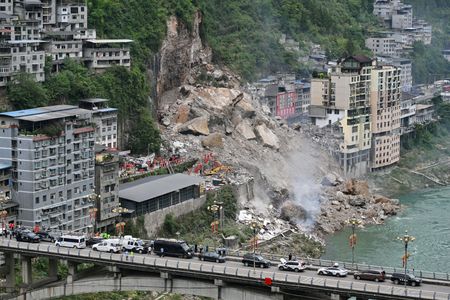
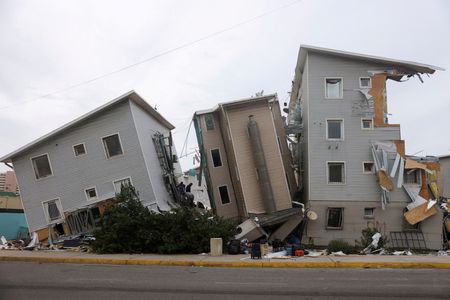
The two quakes, measuring 7.2 and 7.5 in magnitude, are the deadliest to hit Venezuela since 1812. According to the government, approximately 5,000 people lost their lives. Nearly 17,000 others were injured, and close to 18,000 people remain without homes. The destruction was widespread across northern parts of the country, including the capital city of Caracas, with residential buildings, infrastructure, and commercial structures all suffering major damage.
The catastrophe struck a nation already struggling economically. The World Bank noted that Venezuela had a poverty rate exceeding 76% before the disaster, and roughly 7.9 million residents have left the country since 2015.
Susana Cordeiro Guerra, the World Bank vice president responsible for Latin America and the Caribbean, described the financial toll in stark terms. “The earthquake caused an estimated $19.6 billion in direct physical damage, a staggering figure for any economy and one that demands a coordinated response,” she said.
She also warned of long-term consequences if action is not taken quickly. “Without timely additional investment, the negative impact on productive capacity and living standards will slow the path to recovery,” Cordeiro Guerra added.
The World Bank produced its findings through what it calls a Global Rapid Damage Estimation, or GRADE — a process that draws on earthquake modeling, local seismic data, satellite imagery, and damage reports from government agencies and humanitarian organizations operating in the field.
The $19.6 billion figure covers only direct physical losses. It does not account for the cost of upgrading structures or building more resilient replacements. When those factors — along with debris removal — are included, the total price tag could rise to two or two-and-a-half times the basic replacement cost, potentially pushing the overall figure toward $50 billion.
The assessment also does not capture broader economic losses. Labor supply is expected to shrink by 1% this year as a result of the disaster.
A breakdown of the damage shows that nearly half — 47% — occurred in residential buildings. Infrastructure accounted for 27% of losses, while non-residential buildings made up the remaining 26%.
The bank cautioned that without significantly increased public and private investment, Venezuela’s economy could remain below pre-earthquake levels until at least 2036. The World Bank said it is collaborating with the Venezuelan government, the Inter-American Development Bank, and the Development Bank of Latin America on a more thorough assessment of recovery and reconstruction needs — a process that typically takes several months, compared to the few weeks required for a GRADE assessment.
While taking on additional debt would add to Venezuela’s already substantial financial obligations, the World Bank said increased borrowing could help fuel stronger economic growth and gradually improve the country’s fiscal standing.